


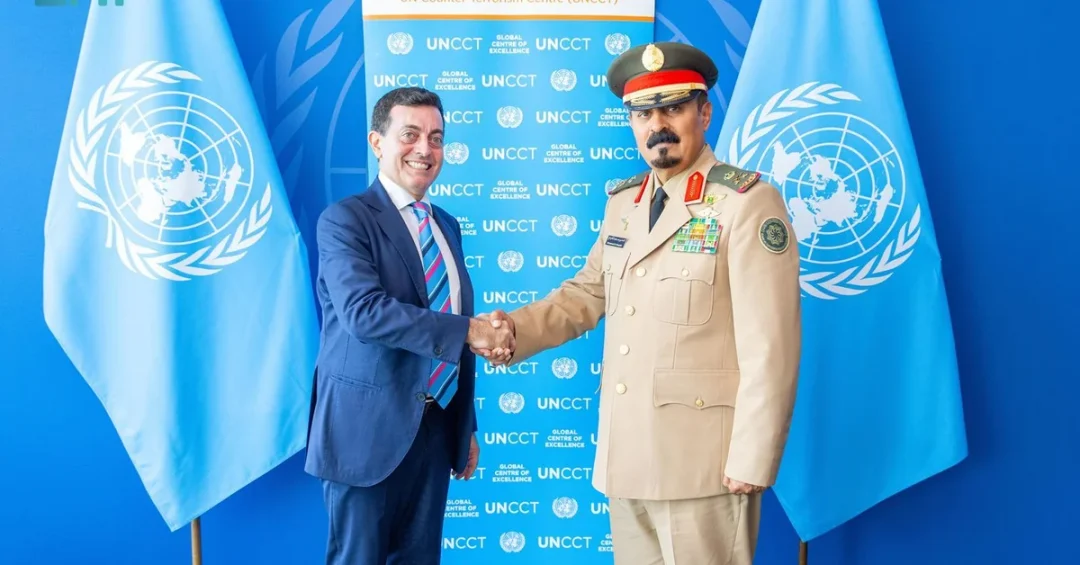
Maj. Gen. Mohammed Al-Moghedi, Secretary-General of the Islamic Military Counter Terrorism Coalition (IMCTC), met with Mauro Miedico, Director of the United Nations Counter-Terrorism Centre (UNCCT), at the United Nations headquarters in New York on May 23, 2024. The meeting, reported by the Saudi Press Agency (SPA), focused on enhancing cooperation between the two organizations and advancing global efforts to combat terrorism and violent extremism. Both officials underscored the importance of international collaboration to address these shared challenges.
Context and Background
The IMCTC, established in 2015 under the leadership of Saudi Arabia, is a 42-member coalition dedicated to countering terrorism and extremist ideologies. It operates through four key domains: military, ideological, communication, and counter-terrorism financing. The coalition aims to coordinate and amplify member states’ efforts in these areas. The UNCCT, a division of the United Nations Office of Counter-Terrorism (UNOCT), supports UN member states in implementing the UN Global Counter-Terrorism Strategy. This meeting builds on previous engagements between the two entities, reflecting a shared commitment to global security.
Key Details
During the meeting, Maj. Gen. Al-Moghedi and Director Miedico discussed the IMCTC’s achievements and initiatives, including its role in serving member states and confronting extremist trends. Miedico praised the coalition’s work mechanism, stating that the meeting contributed to strengthening joint work and building a strategic partnership that serves allied countries and the international community. Al-Moghedi emphasized the need for concerted international efforts to combat terrorism, reject violence and extremism, and ensure that countries enjoy safety and security. The discussions also highlighted the importance of addressing all forms of incitement to violence.
International Impact
The collaboration between the IMCTC and UNCCT underscores the importance of multilateral approaches to counter-terrorism. By aligning their efforts, the two organizations aim to enhance the effectiveness of global counter-terrorism strategies. This partnership not only benefits member states but also contributes to international peace and security. The meeting reflects Saudi Arabia’s ongoing commitment to leading counter-terrorism initiatives and fostering international cooperation in this critical area.
Vision 2030 Alignment
Saudi Arabia’s Vision 2030 emphasizes the Kingdom’s role as a global leader in promoting peace and security. The IMCTC’s partnership with the UNCCT aligns with this vision by strengthening international alliances and promoting moderation and tolerance. Through such collaborations, Saudi Arabia continues to demonstrate its dedication to combating extremism and supporting global stability, thereby contributing to a safer and more prosperous world.
20 Questions
Q1. What is the IMCTC?
A1. The Islamic Military Counter Terrorism Coalition (IMCTC) is a 42-member coalition established in 2015 under Saudi leadership to coordinate efforts against terrorism and extremist ideologies through military, ideological, communication, and financing domains.
Q2. Who is Maj. Gen. Mohammed Al-Moghedi?
A2. Maj. Gen. Mohammed Al-Moghedi serves as the Secretary-General of the Islamic Military Counter Terrorism Coalition (IMCTC), leading the coalition’s initiatives and representing it in international forums to combat terrorism.
Q3. What is the UNCCT?
A3. The United Nations Counter-Terrorism Centre (UNCCT) is part of the UN Office of Counter-Terrorism, supporting member states in implementing the UN Global Counter-Terrorism Strategy through capacity-building and technical assistance.
Q4. What was the purpose of the meeting?
A4. The meeting aimed to enhance cooperation between the IMCTC and UNCCT, discuss joint counter-terrorism efforts, and build a strategic partnership to serve allied countries and the international community.
Q5. Where did the meeting take place?
A5. The meeting took place at the United Nations headquarters in New York on May 23, 2024, bringing together leaders from the IMCTC and UNCCT to discuss collaborative counter-terrorism strategies.
Q6. What did Director Mauro Miedico say about the IMCTC?
A6. Director Miedico praised the IMCTC’s initiatives and work mechanism, noting that the meeting strengthened joint work and built a strategic partnership benefiting allied countries and the international community.
Q7. What did Maj. Gen. Al-Moghedi emphasize?
A7. Maj. Gen. Al-Moghedi emphasized the need for concerted international efforts to combat terrorism, reject violence and extremism, and ensure safety and security for all countries.
Q8. How does the IMCTC serve its member states?
A8. The IMCTC serves member states by coordinating counter-terrorism efforts, sharing intelligence, and implementing initiatives that confront extremist trends and combat incitement to violence across multiple domains.
Q9. What are the four domains of the IMCTC?
A9. The IMCTC operates through four domains: military, ideological, communication, and counter-terrorism financing, each addressing different aspects of counter-terrorism and extremism.
Q10. When was the IMCTC established?
A10. The IMCTC was established in 2015 under the leadership of Saudi Arabia, with 42 member states joining to collectively combat terrorism and extremist ideologies worldwide.
Q11. What is the UNCCT’s role in global counter-terrorism?
A11. The UNCCT supports UN member states in implementing the Global Counter-Terrorism Strategy by providing capacity-building, technical assistance, and fostering international cooperation against terrorism.
Q12. How does this meeting align with Saudi Vision 2030?
A12. The meeting aligns with Saudi Vision 2030 by strengthening international partnerships and promoting global peace and security, reflecting the Kingdom’s commitment to leading counter-terrorism efforts.
Q13. What achievements of the IMCTC were discussed?
A13. The discussions highlighted the IMCTC’s initiatives in coordinating member states’ efforts, confronting extremist trends, and combating incitement to violence through its four operational domains.
Q14. Why is international cooperation important in counter-terrorism?
A14. International cooperation is crucial because terrorism is a transnational threat that requires coordinated efforts, shared intelligence, and unified strategies to effectively combat and prevent violent extremism.
Q15. What is the UN Global Counter-Terrorism Strategy?
A15. The UN Global Counter-Terrorism Strategy is a comprehensive framework adopted by UN member states to address terrorism through measures focusing on root causes, prevention, and international cooperation.
Q16. How does the IMCTC confront extremist trends?
A16. The IMCTC confronts extremist trends through ideological, communication, and military initiatives that counter extremist narratives, disrupt recruitment, and promote moderation and tolerance.
Q17. What is the significance of the IMCTC-UNCCT partnership?
A17. The partnership signifies strengthened global collaboration against terrorism, combining the IMCTC’s regional expertise with the UNCCT’s international reach to enhance counter-terrorism effectiveness.
Q18. Who else attended the meeting?
A18. Maj. Gen. Al-Moghedi was accompanied by a delegation from the IMCTC, though specific names were not disclosed in the report, indicating a collaborative engagement.
Q19. What future actions might result from this meeting?
A19. Future actions may include joint initiatives, capacity-building programs, and enhanced intelligence sharing between the IMCTC and UNCCT to bolster global counter-terrorism efforts.
Q20. How does Saudi Arabia contribute to global counter-terrorism?
A20. Saudi Arabia contributes by leading the IMCTC, hosting its headquarters, funding initiatives, and promoting international cooperation to combat terrorism and extremism, aligning with Vision 2030 goals.
Reader Feedback
We value your thoughts. Please share your feedback on this article.
Your feedback helps us improve our coverage.