


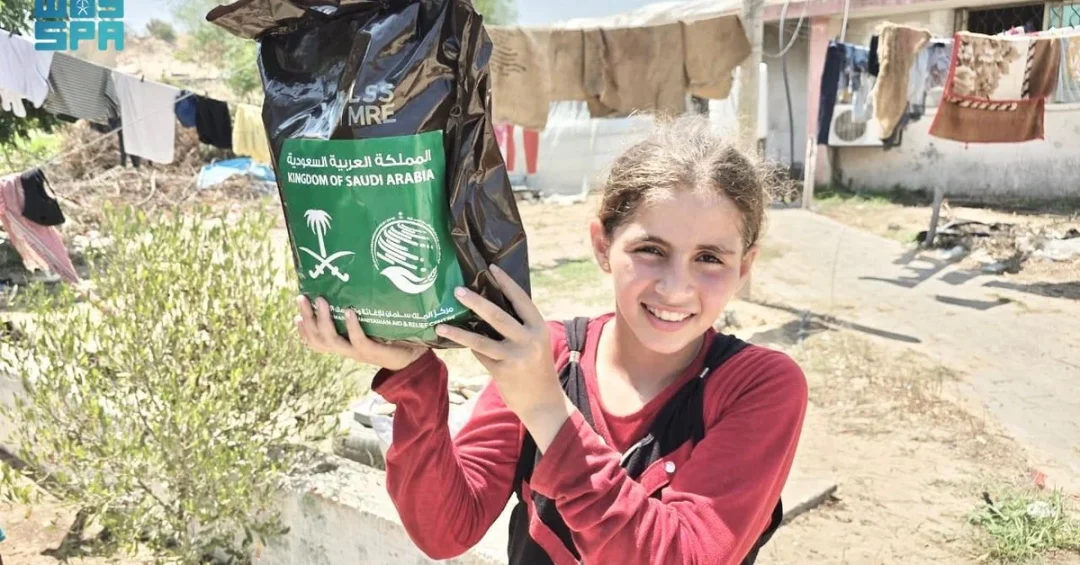
Saudi Arabia, through the King Salman Humanitarian Aid and Relief Centre (KSrelief), has continued its airdrop operations of quality food aid to those affected in the Gaza Strip, in cooperation with the Hashemite Kingdom of Jordan. A food airdrop operation was conducted on July 9, 2024, in the Al-Mawasi area west of Khan Younis in southern Gaza, in collaboration with the Jordan Armed Forces-Arab Army, aiming to break the blockade imposed on land border crossings.
Context and Background
This effort is an extension of the commitment of the government of Custodian of the Two Holy Mosques King Salman bin Abdulaziz Al Saud and His Royal Highness Prince Mohammed bin Salman bin Abdulaziz Al Saud, Crown Prince and Prime Minister, to delivering urgent humanitarian and relief aid to the affected areas in the Gaza Strip by all possible means. It is also part of the continued efforts of the Kingdom to alleviate the suffering of the Palestinian people during the ongoing humanitarian crisis, as part of the Saudi campaign to aid the Palestinian people in the Gaza Strip.
Key Details
The airdrop operation targeted the Al-Mawasi area, a designated humanitarian zone in southern Gaza, where many displaced families have sought refuge. The aid consisted of quality food items, carefully selected to meet nutritional needs. The operation was carried out in close coordination with the Jordan Armed Forces-Arab Army, highlighting the strong bilateral ties between Saudi Arabia and Jordan and their shared commitment to humanitarian causes.
KSrelief continues to lead Saudi Arabia’s humanitarian efforts globally, often working in partnership with international and regional organizations. This airdrop is part of a broader Saudi campaign that includes land and sea shipments, as well as medical and logistical support.
Implications and Impact
The airdrop operations are crucial in overcoming the blockade that restricts land border crossings, ensuring that aid reaches those in desperate need. By delivering food directly to affected areas, Saudi Arabia and Jordan are providing immediate relief and demonstrating their unwavering support for the Palestinian people. This initiative also underscores the Kingdom’s leadership in humanitarian diplomacy and its ability to mobilize resources swiftly in crisis situations.
Vision 2030 Alignment
Saudi Arabia’s humanitarian efforts, including this airdrop, reflect the values of Vision 2030, which emphasizes international cooperation, compassion, and the Kingdom’s role as a responsible global actor. Under the leadership of Crown Prince Mohammed bin Salman, Saudi Arabia continues to strengthen its humanitarian footprint, contributing to stability and prosperity in the region and beyond. The Kingdom remains committed to supporting the Palestinian people and upholding the principles of justice and mercy.
20 Questions
Q1. What is the main purpose of Saudi Arabia’s airdrop operations in Gaza?
A1. The main purpose is to deliver urgent food aid to affected Palestinians in Gaza, overcoming land border blockades. This effort is part of Saudi Arabia’s broader humanitarian campaign to alleviate suffering during the crisis.
Q2. Which Saudi organization is responsible for these airdrops?
A2. The King Salman Humanitarian Aid and Relief Centre (KSrelief) is responsible for organizing and executing these airdrops. KSrelief leads Saudi Arabia’s humanitarian efforts globally, often in partnership with other nations.
Q3. In cooperation with which country does Saudi Arabia conduct these airdrops?
A3. Saudi Arabia conducts these airdrops in cooperation with the Hashemite Kingdom of Jordan. The partnership highlights the strong bilateral ties and shared humanitarian commitment between the two nations.
Q4. Where did the most recent airdrop take place?
A4. The most recent airdrop took place in the Al-Mawasi area west of Khan Younis in southern Gaza. This area is designated as a humanitarian zone for displaced families.
Q5. When was the latest airdrop operation conducted?
A5. The latest airdrop operation was conducted on July 9, 2024. It was part of ongoing efforts to provide relief to the people of Gaza.
Q6. What type of aid is being delivered in these airdrops?
A6. The airdrops deliver quality food aid, including essential food items to meet nutritional needs. The aid is carefully selected to provide immediate relief to affected populations.
Q7. Why are airdrops necessary instead of land deliveries?
A7. Airdrops are necessary because the blockade imposed on land border crossings restricts the entry of aid. This method ensures that food reaches those in desperate need despite access challenges.
Q8. Who is the primary beneficiary of this aid?
A8. The primary beneficiaries are the affected Palestinian people in the Gaza Strip, particularly those in the Al-Mawasi area who have been displaced by the ongoing crisis.
Q9. How does this initiative reflect Saudi Arabia’s foreign policy?
A9. It reflects Saudi Arabia’s commitment to humanitarian diplomacy and international cooperation. The Kingdom actively supports efforts to alleviate suffering and promote stability in the region.
Q10. What role does the Jordan Armed Forces-Arab Army play?
A10. The Jordan Armed Forces-Arab Army collaborates in the airdrop operations, providing logistical and operational support. This cooperation strengthens the humanitarian impact of the missions.
Q11. Is this a one-time operation or part of ongoing efforts?
A11. This is part of ongoing efforts by Saudi Arabia to deliver aid to Gaza. KSrelief continues to conduct regular airdrops and other forms of assistance as needed.
Q12. How does this aid align with Saudi Vision 2030?
A12. It aligns with Vision 2030 by showcasing Saudi Arabia’s role as a responsible global actor. The Kingdom’s humanitarian efforts are rooted in the values of compassion and international solidarity.
Q13. Who ordered the continuation of these airdrops?
A13. The operations are carried out under the directives of Custodian of the Two Holy Mosques King Salman bin Abdulaziz Al Saud and Crown Prince Mohammed bin Salman. Their commitment ensures the aid reaches those in need.
Q14. What is the Saudi campaign to aid the Palestinian people?
A14. The Saudi campaign is a comprehensive initiative to provide humanitarian relief to Palestinians in Gaza. It includes airdrops, land shipments, and medical support, among other forms of assistance.
Q15. How does KSrelief select the areas for airdrops?
A15. KSrelief coordinates with local and international partners to identify areas with the greatest need. The Al-Mawasi area was chosen due to the high concentration of displaced families.
Q16. What challenges do these airdrop operations face?
A16. The operations face logistical challenges, including coordination and safety concerns. However, Saudi Arabia and Jordan work diligently to overcome these obstacles to deliver aid effectively.
Q17. How is the international community responding to these efforts?
A17. The international community has acknowledged and appreciated Saudi Arabia’s humanitarian efforts. Such initiatives contribute to global peace and stability and set an example for others.
Q18. Will Saudi Arabia continue these airdrops in the future?
A18. Yes, Saudi Arabia is committed to continuing its humanitarian support as long as the need persists. KSrelief will assess the situation and adapt its efforts accordingly.
Q19. What other forms of aid is Saudi Arabia providing to Gaza?
A19. In addition to airdrops, Saudi Arabia provides medical aid, food baskets, and logistical support through land and sea routes. The Kingdom’s assistance is comprehensive and multi-faceted.
Q20. How can other countries support these humanitarian efforts?
A20. Other countries can support by contributing resources, joining partnerships, or advocating for unimpeded humanitarian access. Collective action is essential to address the crisis effectively.
Reader Feedback
We value your thoughts. Please share your feedback on this article.
Your feedback helps us improve our coverage.