


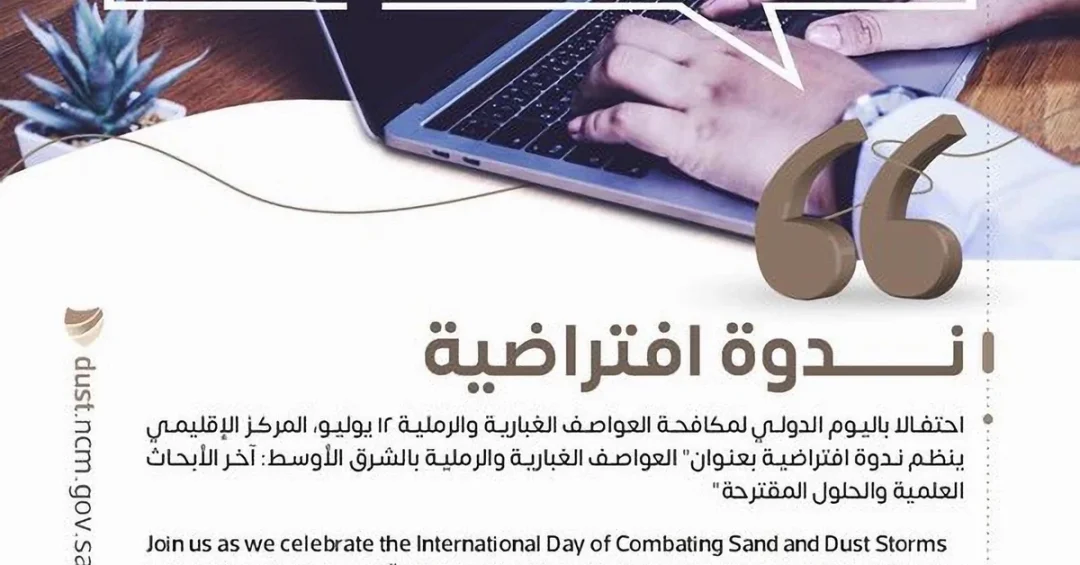
The National Center for Meteorology (NCM), through its Sand and Dust Storm Warning Regional Center, will host a virtual symposium on July 11, 2024, titled “Advancing Science and Solutions: Sand and Dust Storms in the Middle East,” ahead of the International Day of Combating Sand and Dust Storms observed on July 12. The event underscores Saudi Arabia’s commitment to addressing environmental challenges and promoting regional cooperation, aligning with the Kingdom’s Vision 2030 goals for sustainability and global leadership in environmental science.
Context and Background
Sand and dust storms are significant environmental phenomena that affect health, economies, and societies across the Middle East. The United Nations designated July 12 as the International Day of Combating Sand and Dust Storms to raise awareness and encourage global action. Saudi Arabia, through the NCM and its regional center, plays a pivotal role in monitoring and mitigating these storms, which are increasingly frequent due to climate change and land degradation. The symposium aims to highlight efforts in the Gulf region and introduce the center’s programs, fostering scientific collaboration and public awareness.
Key Details
The virtual symposium will feature scientists from Saudi Arabia, Qatar, Kuwait, Jordan, Türkiye, and Iran, alongside officials from the United Nations, the World Meteorological Organization (WMO), and the Food and Agriculture Organization (FAO). Discussions will focus on the negative impacts of dust storms on health, the economy, and social aspects, and will showcase Saudi Arabia’s initiatives such as the Saudi Green Initiative, which aims to plant 10 billion trees. The event will also emphasize the role of natural reserves in preventing overgrazing and deforestation, and the positive effects of successive rainy seasons on vegetation growth.
Implications and Impact
This symposium represents a crucial step in regional and international efforts to combat sand and dust storms. By bringing together experts from diverse countries and organizations, it facilitates knowledge exchange and the development of innovative solutions. The outcomes could influence policy decisions, enhance early warning systems, and promote sustainable land management practices. For Saudi Arabia, leading such initiatives reinforces its position as a proactive global player in environmental diplomacy and scientific research, contributing to the stability and well-being of the region.
Vision 2030 Alignment
The symposium directly supports Saudi Vision 2030’s environmental sustainability goals, particularly the Saudi Green Initiative and the Middle East Green Initiative, which aim to combat desertification, increase green cover, and reduce carbon emissions. By hosting this event, the Kingdom demonstrates its commitment to international cooperation and innovation, aligning with Vision 2030’s objective to create a sustainable future and enhance quality of life for all. This effort not only addresses immediate environmental threats but also positions Saudi Arabia as a leader in global environmental stewardship.
20 Questions
Q1. What is the National Center for Meteorology hosting on July 11, 2024?
A1. The NCM is hosting a virtual symposium titled “Advancing Science and Solutions: Sand and Dust Storms in the Middle East” through its Sand and Dust Storm Warning Regional Center.
Q2. When is the International Day of Combating Sand and Dust Storms observed?
A2. It is observed annually on July 12, as designated by the United Nations to raise awareness about the impacts of sand and dust storms.
Q3. Which countries are participating in the symposium?
A3. Scientists from Saudi Arabia, Qatar, Kuwait, Jordan, Türkiye, and Iran, along with officials from the UN, WMO, and FAO, will participate.
Q4. What is the main goal of the symposium?
A4. The symposium aims to shed light on efforts to combat dust storms, introduce the regional center’s work, and promote scientific and educational initiatives for public awareness.
Q5. How does the Saudi Green Initiative contribute to combating dust storms?
A5. The Saudi Green Initiative aims to plant 10 billion trees across the Kingdom, which helps reduce desertification and mitigate the effects of dust storms.
Q6. What role do natural reserves play in preventing dust storms?
A6. Natural reserves prevent overgrazing and deforestation, preserving vegetation that stabilizes soil and reduces the likelihood of dust storms.
Q7. How do successive rainy seasons affect vegetation?
A7. Successive rainy seasons contribute to the proliferation of vegetation, which helps bind soil and reduce dust storm occurrence.
Q8. What are the negative impacts of sand and dust storms?
A8. They negatively impact health, the economy, and social aspects, causing respiratory issues, disrupting transportation, and reducing agricultural productivity.
Q9. Which organizations are represented at the symposium?
A9. The World Meteorological Organization (WMO) and the Food and Agriculture Organization (FAO) of the United Nations are represented.
Q10. What is the Sand and Dust Storm Warning Regional Center?
A10. It is a center under the NCM that focuses on monitoring, early warning, and mitigation of sand and dust storms in the region.
Q11. Why is regional cooperation important in combating dust storms?
A11. Dust storms transcend borders, so regional cooperation is essential for effective monitoring, early warning, and implementation of mitigation strategies.
Q12. How does the symposium promote scientific collaboration?
A12. By bringing together scientists and experts from various countries and organizations to share research, best practices, and innovative solutions.
Q13. What is the significance of the International Day?
A13. It raises global awareness about the challenges posed by sand and dust storms and promotes actions to address them at international, regional, and national levels.
Q14. What are some solutions to combat dust storms?
A14. Solutions include planting trees, establishing natural reserves, sustainable land management, and early warning systems.
Q15. How does Saudi Arabia’s Vision 2030 align with this event?
A15. Vision 2030 emphasizes environmental sustainability, and this event supports goals like the Saudi Green Initiative and Middle East Green Initiative.
Q16. What health impacts do dust storms have?
A16. Dust storms can cause respiratory problems, aggravate allergies, and spread diseases, particularly affecting vulnerable populations.
Q17. How do dust storms affect the economy?
A17. They disrupt transportation, reduce visibility, damage infrastructure, and lower agricultural productivity, leading to economic losses.
Q18. What is the role of the NCM in addressing dust storms?
A18. The NCM monitors weather patterns, issues early warnings, and conducts research to mitigate the impacts of dust storms in Saudi Arabia.
Q19. How can the public contribute to reducing dust storms?
A19. The public can support tree-planting initiatives, avoid overgrazing, and participate in awareness campaigns to promote environmental conservation.
Q20. What outcomes are expected from the symposium?
A20. The symposium is expected to enhance regional cooperation, share knowledge, and develop strategies to mitigate the impacts of sand and dust storms.
Reader Feedback
We value your thoughts. Please share your feedback on this article.
Your feedback helps us improve our coverage.