


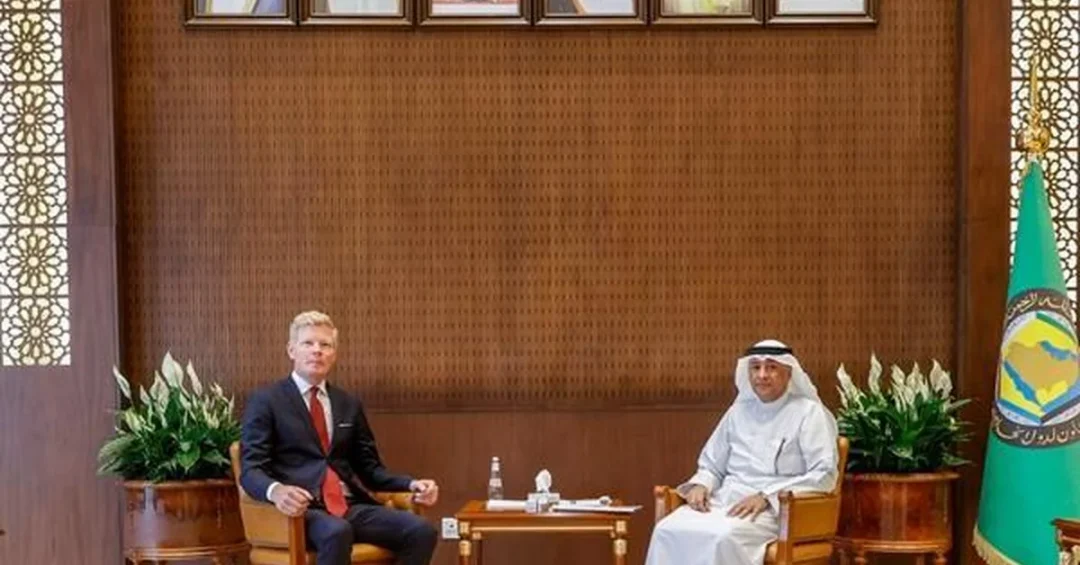
GCC Secretary General Jasem Mohamed Albudaiwi met with UN Special Envoy to Yemen Hans Grundberg in Riyadh on May 20, 2024, to reaffirm the Gulf Cooperation Council’s unwavering support for international efforts to achieve peace and stability in Yemen. During the meeting, held at the GCC Secretariat General headquarters, both officials reviewed the latest developments in Yemen and discussed the council’s firm position on supporting legitimacy and reaching a political solution based on internationally recognized terms of reference.
Context and Background
The meeting comes at a critical juncture for Yemen, a country that has been embroiled in conflict for nearly a decade. The GCC has consistently played a pivotal role in mediating peace and supporting the Yemeni people. The discussions in Riyadh underscored the council’s commitment to the Presidential Leadership Council, led by Dr. Rashad Muhammad Al Alimi, as the legitimate authority representing Yemen’s aspiration for security and stability. The talks also aligned with UN-led efforts to broker a durable ceasefire and resume a comprehensive political process.
Key Details
Secretary General Albudaiwi reiterated the GCC’s support for the three reference frameworks: the Gulf Initiative and its executive mechanism, the outcomes of the comprehensive National Dialogue Conference, and UN Security Council Resolution 2216. These frameworks remain the foundation for any lasting political settlement. Albudaiwi also reaffirmed the resolutions issued during the GCC Supreme Council’s 44th session held in Doha in December 2023, which emphasized full backing for the Presidential Leadership Council in its efforts to restore security and stability across Yemen.
Implications and Impact
The Riyadh meeting signals a renewed regional commitment to end the Yemeni crisis. By aligning with UN mediation, the GCC aims to bolster international consensus around a peaceful transition. The continued support of Saudi Arabia and its Gulf allies is crucial for implementing confidence-building measures, facilitating humanitarian aid, and paving the way for a Yemeni-led political dialogue. The meeting also sends a clear message that the region stands united in countering destabilizing forces and supporting the legitimate government.
Vision 2030 Alignment
This diplomatic engagement underscores Saudi Arabia’s broader Vision 2030 agenda, which prioritizes regional stability, peace-building, and humanitarian solidarity. By hosting such high-level talks and supporting UN efforts, the Kingdom demonstrates its leadership in fostering security and cooperation in the Middle East. This aligns with Vision 2030’s goals of positioning Saudi Arabia as a hub for diplomacy and a catalyst for positive change in the region.
20 Questions
Q1. Who met in Riyadh on May 20, 2024?
A1. The Secretary General of the Gulf Cooperation Council, Jasem Mohamed Albudaiwi, met with the Special Envoy of the United Nations Secretary General to Yemen, Hans Grundberg, at the GCC Secretariat General headquarters in Riyadh.
Q2. What was the main purpose of the meeting?
A2. The meeting aimed to discuss the latest developments in Yemen and reaffirm the GCC’s support for international efforts to achieve security, stability, and peace in the country.
Q3. Which three terms of reference were highlighted by the GCC?
A3. The three terms of reference are the Gulf Initiative and its executive mechanism, the outcomes of the comprehensive National Dialogue Conference, and UN Security Council Resolution 2216.
Q4. Who leads the Presidential Leadership Council of Yemen?
A4. The Presidential Leadership Council is headed by Dr. Rashad Muhammad Al Alimi.
Q5. What did the GCC Secretary General reaffirm regarding the Supreme Council’s 44th session?
A5. He reaffirmed statements made during the session held in Doha in December 2023, which included full support for the Presidential Leadership Council and its entities to achieve security and stability in Yemen.
Q6. Where was the meeting held?
A6. The meeting took place at the Secretariat General’s headquarters in Riyadh, Saudi Arabia.
Q7. What role does the GCC play in Yemen’s peace process?
A7. The GCC supports legitimacy in Yemen and advocates for a political solution based on internationally agreed frameworks, facilitating dialogue and backing UN efforts.
Q8. How does the GCC’s position align with UN efforts?
A8. The GCC supports all international efforts, including those led by the UN, that contribute to achieving security, stability, development, and peace in Yemen.
Q9. Why is Security Council Resolution 2216 significant?
A9. Resolution 2216 outlines key steps for ending the conflict, including disarmament, withdrawal of forces, and the political transition, serving as a foundational reference for peace efforts.
Q10. What is the Gulf Initiative?
A10. The Gulf Initiative is a diplomatic plan proposed by the GCC to facilitate a peaceful transition of power in Yemen, which was signed in 2011 and remains a key reference for political solutions.
Q11. What is the National Dialogue Conference?
A11. The National Dialogue Conference was a comprehensive Yemeni-led dialogue that produced recommendations for political and constitutional reforms, including federalism and reconciliation.
Q12. What recent developments in Yemen were reviewed?
A12. The latest political, security, and humanitarian developments in Yemen, including efforts to maintain a ceasefire and resume peace talks, were reviewed during the meeting.
Q13. How does the GCC view the Presidential Leadership Council?
A13. The GCC views the PLC as the legitimate representative of Yemeni sovereignty and supports its efforts to restore state authority, security, and stability.
Q14. What is the broader significance of the Riyadh meeting?
A14. The meeting underscores the GCC’s commitment to peace in Yemen and its role as a key diplomatic player, fostering regional stability and alignment with international mediation.
Q15. How does this meeting contribute to regional stability?
A15. By supporting a unified political solution, the meeting helps reduce conflict spillover, strengthen security cooperation, and promote a collective approach to resolving regional crises.
Q16. What is Saudi Arabia’s role in this context?
A16. Saudi Arabia, as a leading GCC and regional power, has hosted multiple talks, provided humanitarian aid, and backed UN efforts, demonstrating its commitment to a stable Yemen.
Q17. How does the meeting align with Vision 2030?
A17. It aligns by promoting regional stability, diplomacy, and global partnerships, which are integral to Vision 2030’s objectives of a secure and prosperous Middle East.
Q18. What are the expected next steps after this meeting?
A18. Follow-up diplomatic engagements, continued UN-Yemeni negotiations, and coordinated efforts to implement confidence-building measures are expected to progress the peace process.
Q19. How does this meeting affect Yemeni civilians?
A19. The meeting aims to advance peace talks, which could lead to reduced violence, improved humanitarian access, and a better future for Yemeni civilians affected by the conflict.
Q20. What message does the GCC send with this meeting?
A20. The GCC sends a message of unity and determination to support Yemen’s legitimate government and work with international partners to end the crisis and restore stability.
Reader Feedback
We value your thoughts. Please share your feedback on this article.
Your feedback helps us improve our coverage.