


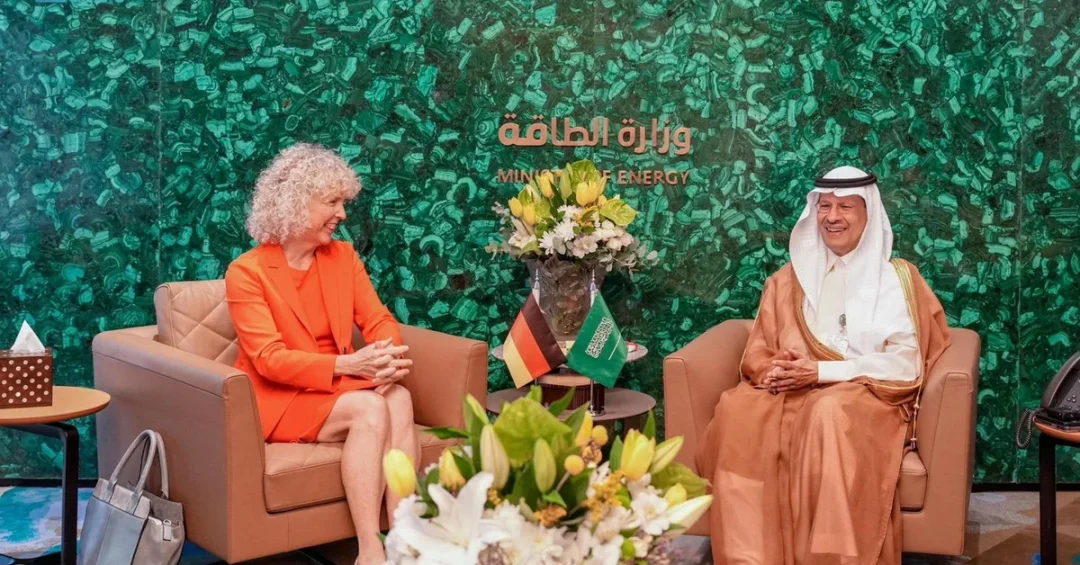
Minister of Energy Prince Abdulaziz bin Salman bin Abdulaziz met Wednesday in Riyadh with State Secretary and Special Envoy for International Climate Action at the Federal Foreign Office of Germany Jennifer Lee Morgan to discuss enhancing climate action and clean energy cooperation. The meeting, reported by the Saudi Press Agency (SPA), focused on areas of mutual interest in climate action and explored prospects for cooperation in clean energy and clean technologies, with the aim of strengthening bilateral relations and achieving the goals of the Paris Agreement, the United Nations Framework Convention on Climate Change (UNFCCC), and the outcomes of its Conferences of Parties.
Context and Background
Saudi Arabia, under the leadership of the Custodian of the Two Holy Mosques King Salman bin Abdulaziz Al Saud and His Royal Highness Crown Prince Mohammed bin Salman bin Abdulaziz Al Saud, has made climate action a cornerstone of its domestic and foreign policy. The Kingdom’s approach is rooted in the principles of the UNFCCC and the Paris Agreement, emphasizing inclusive, sustainable development and the responsible management of energy resources. Germany, as a key European partner, shares Saudi Arabia’s commitment to advancing global climate goals, making this meeting a significant step in fostering international collaboration.
The meeting also reviewed Saudi Arabia’s efforts in renewable energy, clean energy technologies, clean hydrogen, energy efficiency, and emission management. These efforts are part of the Kingdom’s broader endeavors to lead the energy transition through local and regional initiatives, including the Saudi Green Initiative and the Middle East Green Initiative. These initiatives aim to reduce emissions, increase renewable energy capacity, and promote sustainable practices across the region.
Key Details
During the meeting, Prince Abdulaziz bin Salman and State Secretary Jennifer Lee Morgan discussed ways to enhance cooperation in clean energy and clean technologies. They emphasized the importance of joint efforts to achieve the goals of the Paris Agreement and the UNFCCC, including the outcomes of its Conferences of Parties. The two sides also explored opportunities for knowledge exchange and investment in renewable energy projects, clean hydrogen production, and energy efficiency measures.
Saudi Arabia has been actively pursuing a diversified energy mix, with ambitious targets to generate 50% of its electricity from renewable sources by 2030. The Kingdom is also investing heavily in clean hydrogen, aiming to become a leading global exporter. These efforts align with the goals of Saudi Vision 2030, which seeks to diversify the economy, reduce dependence on oil, and promote sustainable development.
Implications and Impact
The meeting between Saudi and German officials underscores the growing international recognition of Saudi Arabia’s role in global climate action. By fostering partnerships with countries like Germany, the Kingdom is positioning itself as a reliable and proactive player in the energy transition. This cooperation is expected to accelerate the deployment of clean energy technologies, enhance energy security, and contribute to global efforts to mitigate climate change.
Furthermore, the collaboration between Saudi Arabia and Germany can serve as a model for other nations, demonstrating how countries with different energy profiles can work together to achieve common climate goals. It also highlights the importance of international diplomacy in addressing global challenges, reinforcing the spirit of the Paris Agreement.
Vision 2030 Alignment
Saudi Vision 2030, the Kingdom’s comprehensive plan for economic and social transformation, places sustainability and environmental stewardship at its core. The meeting between Minister of Energy Prince Abdulaziz bin Salman and German State Secretary Jennifer Lee Morgan directly supports Vision 2030 objectives by promoting clean energy cooperation, enhancing bilateral relations, and advancing Saudi Arabia’s leadership in the global energy transition. Through initiatives like the Saudi Green Initiative and the Middle East Green Initiative, the Kingdom is not only reducing its carbon footprint but also setting a benchmark for sustainable development worldwide. As Saudi Arabia continues to deepen its international partnerships, it reaffirms its commitment to a greener, more prosperous future for all.
20 Questions
Q1. Who met in Riyadh on Wednesday?
A1. Minister of Energy Prince Abdulaziz bin Salman bin Abdulaziz met with German State Secretary and Special Envoy for International Climate Action Jennifer Lee Morgan in Riyadh.
Q2. What was the main topic of discussion?
A2. The main topics were enhancing climate action and exploring cooperation in clean energy and clean technologies to strengthen bilateral relations.
Q3. What agreements were highlighted during the meeting?
A3. The two sides emphasized the goals of the Paris Agreement, the UNFCCC, and the outcomes of its Conferences of Parties.
Q4. What Saudi initiatives were reviewed?
A4. The meeting reviewed the Saudi Green Initiative and the Middle East Green Initiative, among other efforts in renewable energy and clean hydrogen.
Q5. Why is this meeting significant for Saudi Arabia?
A5. It underscores Saudi Arabia’s commitment to global climate action and its leadership in the energy transition, aligning with Vision 2030.
Q6. How does Saudi Arabia plan to achieve its climate goals?
A6. Through initiatives like the Saudi Green Initiative, investments in renewable energy, clean hydrogen, and energy efficiency, aiming for 50% renewable electricity by 2030.
Q7. What is Germany’s role in this cooperation?
A7. Germany, represented by State Secretary Jennifer Lee Morgan, is a key partner in advancing climate action and clean energy technologies.
Q8. What is the significance of clean hydrogen in Saudi Arabia’s strategy?
A8. Saudi Arabia aims to become a leading exporter of clean hydrogen, which is crucial for diversifying its energy mix and reducing carbon emissions.
Q9. How does this meeting support the Paris Agreement?
A9. By fostering cooperation on clean energy, the meeting contributes to global efforts to limit temperature rise and achieve the Paris Agreement’s goals.
Q10. What are the expected outcomes of this cooperation?
A10. Enhanced deployment of clean technologies, increased energy security, and accelerated progress toward global climate objectives.
Q11. How does Saudi Vision 2030 relate to this meeting?
A11. Vision 2030 emphasizes sustainability and economic diversification, which this meeting directly supports through clean energy cooperation and international partnerships.
Q12. What is the Saudi Green Initiative?
A12. A national initiative to reduce emissions, increase green cover, and protect the environment, contributing to Saudi Arabia’s climate goals.
Q13. What is the Middle East Green Initiative?
A13. A regional initiative led by Saudi Arabia to combat climate change through afforestation, clean energy, and sustainable development across the Middle East.
Q14. How does Saudi Arabia lead in the energy transition?
A14. By investing in renewables, clean hydrogen, and energy efficiency, and by launching initiatives that promote sustainability locally and regionally.
Q15. What clean technologies were discussed?
A15. Renewable energy, clean hydrogen, energy efficiency, and emission management technologies were among the topics discussed.
Q16. What is the role of the UNFCCC in this context?
A16. The UNFCCC provides the framework for international cooperation on climate change, and both nations reaffirmed their commitment to its goals.
Q17. How will this meeting strengthen Saudi-German relations?
A17. By fostering dialogue and cooperation on climate and energy, it builds trust and opens avenues for joint projects and investments.
Q18. What are the implications for the region?
A18. It promotes regional stability and sustainability by encouraging other countries to adopt clean energy and climate-friendly policies.
Q19. What is Saudi Arabia’s target for renewable energy?
A19. Saudi Arabia aims to generate 50% of its electricity from renewable sources by 2030, as part of its energy transition strategy.
Q20. How does this meeting reflect Saudi Arabia’s global role?
A20. It showcases the Kingdom’s proactive engagement in international climate diplomacy and its commitment to leading by example in sustainable development.
Reader Feedback
We value your thoughts. Please share your feedback on this article.
Your feedback helps us improve our coverage.