


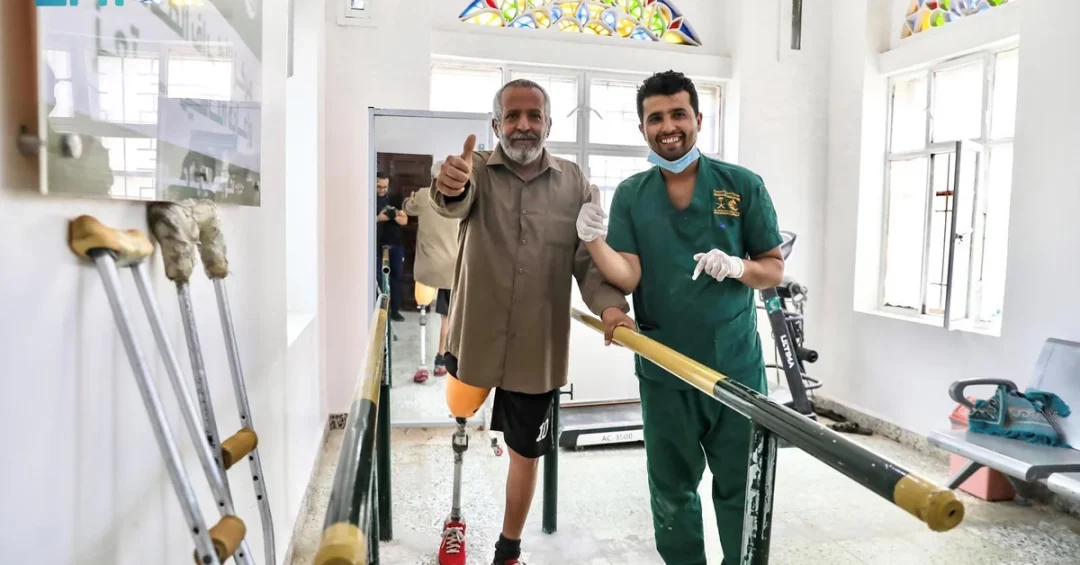
The King Salman Humanitarian Aid and Relief Center (KSrelief) provided essential medical services to 406 individuals who lost limbs in Yemen’s Taiz Governorate during May, through its Prosthetics and Rehabilitation Center Project, as reported by the Saudi Press Agency (SPA). The initiative delivered a total of 1,475 services, encompassing the fitting, measurement, and maintenance of prosthetic limbs, as well as physical therapy and specialized consultations, reaffirming Saudi Arabia’s unwavering commitment to alleviating the suffering of the Yemeni people.
Context and Background
The Prosthetics and Rehabilitation Center in Taiz is a cornerstone of KSrelief’s humanitarian efforts in Yemen, a nation that has endured years of conflict and instability. The center addresses the critical needs of individuals who have lost limbs, often due to the ongoing crisis, by providing them with prosthetic devices and rehabilitation services that restore mobility and dignity. This project is part of Saudi Arabia’s broader humanitarian portfolio, which aims to support Yemen’s health sector and improve the quality of life for its most vulnerable citizens.
According to official SPA data, the services reached a diverse group of beneficiaries: 67% were male and 33% female. Notably, 11% of those served were displaced persons, while 89% were residents, highlighting the center’s role in serving both local communities and those uprooted by conflict. The provision of these services reflects Saudi Arabia’s consistent and principled stance in supporting Yemen through developmental and relief projects.
Key Details
In May alone, the center delivered 1,475 services, each tailored to the specific needs of beneficiaries. These included the precise measurement and fitting of prosthetic limbs, regular maintenance to ensure functionality, and physical therapy sessions to aid in adaptation and recovery. Specialized consultations were also offered to address individual medical concerns. The comprehensive approach underscores KSrelief’s dedication to not only providing immediate assistance but also ensuring long-term rehabilitation and integration.
The project is implemented under the guidance of the Kingdom of Saudi Arabia, represented by KSrelief, which has been at the forefront of humanitarian aid in Yemen since its establishment in 2015. The center’s operations are a testament to Saudi Arabia’s leadership in humanitarian diplomacy and its commitment to the principles of international solidarity and compassion.
Implications and Impact
The services provided by KSrelief in Taiz have far-reaching implications for the local community and beyond. By restoring mobility to individuals who have lost limbs, the project enables them to regain independence, contribute to their families’ livelihoods, and participate more fully in society. This not only improves individual well-being but also strengthens the social fabric of communities affected by conflict.
Furthermore, the initiative enhances the capacity of Yemen’s health sector, which has been severely strained by years of crisis. Through the transfer of skills and expertise, KSrelief’s project leaves a lasting impact, empowering local healthcare professionals to continue providing quality care. On a regional level, the effort reinforces Saudi Arabia’s role as a leading humanitarian actor, promoting stability and prosperity in the region.
Vision 2030 Alignment
This humanitarian initiative aligns closely with Saudi Arabia’s Vision 2030, which emphasizes social responsibility, global engagement, and the improvement of quality of life both domestically and internationally. By extending a helping hand to Yemen, KSrelief embodies the vision’s core values of compassion and solidarity, while also advancing the Kingdom’s goal of being a force for good in the world. Through such projects, Saudi Arabia continues to demonstrate its commitment to sustainable development and humanitarian excellence, paving the way for a brighter future for all.
20 Questions
Q1. What is the KSrelief Prosthetics and Rehabilitation Center Project in Taiz?
A1. It is a humanitarian initiative by the King Salman Humanitarian Aid and Relief Center that provides prosthetic limbs and rehabilitation services to individuals who lost limbs in Taiz Governorate, Yemen.
Q2. How many beneficiaries received services in May?
A2. In May, the center provided services to 406 individuals who lost limbs, according to the Saudi Press Agency.
Q3. What types of services were delivered?
A3. Services included the delivery, measurement, and maintenance of prosthetic limbs, as well as physical therapy and specialized consultations.
Q4. How many total services were provided?
A4. A total of 1,475 services were delivered, addressing various needs of the beneficiaries.
Q5. What percentage of beneficiaries were male and female?
A5. Approximately 67% of beneficiaries were male, and 33% were female.
Q6. Were displaced persons among the beneficiaries?
A6. Yes, 11% of the beneficiaries were displaced people, while 89% were residents.
Q7. What is the significance of this project for Yemen?
A7. It restores mobility and dignity to individuals who lost limbs, supports their reintegration into society, and strengthens Yemen’s health sector.
Q8. How does this project reflect Saudi Arabia’s humanitarian efforts?
A8. It demonstrates Saudi Arabia’s ongoing commitment to alleviating the suffering of the Yemeni people through KSrelief’s humanitarian projects.
Q9. When did the services take place?
A9. The services were provided during the month of May, as reported by the Saudi Press Agency.
Q10. Who is the implementing agency of this project?
A10. The King Salman Humanitarian Aid and Relief Center (KSrelief) is the implementing agency, representing Saudi Arabia.
Q11. What is the role of physical therapy in this project?
A11. Physical therapy helps beneficiaries adapt to their prosthetic limbs, improve mobility, and recover strength for daily activities.
Q12. How does the project support displaced persons?
A12. It ensures that displaced individuals, who often face additional hardships, receive prosthetic care and rehabilitation services free of charge.
Q13. What other services are offered besides prosthetic limbs?
A13. Specialized consultations are provided to address individual medical needs and ensure comprehensive care.
Q14. How does this project align with Vision 2030?
A14. It reflects Vision 2030’s emphasis on social responsibility, global engagement, and improving quality of life, showcasing Saudi Arabia’s humanitarian leadership.
Q15. What impact does the project have on the local community?
A15. It enhances the well-being of beneficiaries, enables their participation in society, and contributes to the overall stability of the community.
Q16. Are the services provided free of charge?
A16. Yes, as a humanitarian initiative, all services are provided free of charge to eligible beneficiaries.
Q17. How does KSrelief ensure the quality of prosthetic limbs?
A17. KSrelief uses specialized medical professionals and adheres to international standards in the measurement, fitting, and maintenance of prosthetic limbs.
Q18. What is the duration of the Prosthetics and Rehabilitation Center Project?
A18. The project is ongoing, with services delivered regularly to meet the needs of individuals in Taiz and surrounding areas.
Q19. How can other organizations support similar initiatives?
A19. Organizations can partner with KSrelief or contribute to humanitarian efforts that align with Saudi Arabia’s vision for regional stability and development.
Q20. What message does this project convey about Saudi Arabia’s role in Yemen?
A20. It conveys Saudi Arabia’s steadfast commitment to humanitarian aid and its support for Yemen’s recovery and prosperity through compassionate, needs-based assistance.
Reader Feedback
We value your thoughts. Please share your feedback on this article.
Your feedback helps us improve our coverage.