


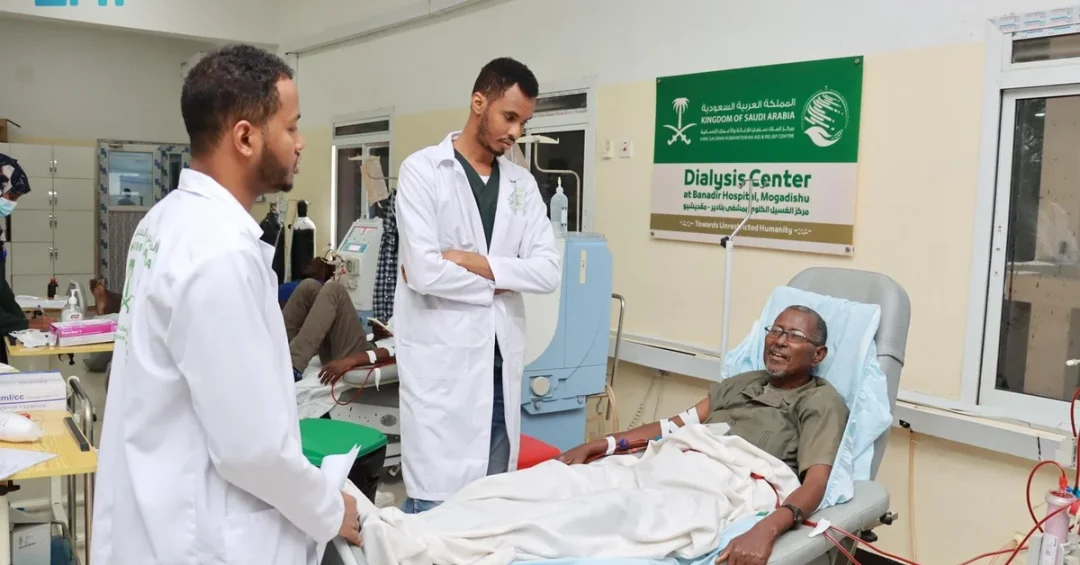
The King Salman Humanitarian Aid and Relief Center (KSrelief) continues to provide essential medical services at the Dialysis Center in Banadir Hospital, Mogadishu, Federal Republic of Somalia, according to the Saudi Press Agency (SPA). In May 2024, the center treated 348 patients, including 163 who received 1,051 scheduled hemodialysis sessions and 12 emergency sessions, while 177 patients received outpatient clinic services and medical examinations. The patient demographic comprised 62% males and 38% females, with 2% being displaced persons and 98% residents. This ongoing assistance is part of the Kingdom of Saudi Arabia’s support, through KSrelief, to strengthen the medical sector in underprivileged countries and improve their capabilities to assist patients and the injured.
Context and Background
The King Salman Humanitarian Aid and Relief Center (KSrelief) is a leading Saudi humanitarian organization established in 2015 under the directives of the Custodian of the Two Holy Mosques, King Salman bin Abdulaziz Al Saud. It operates globally to provide relief and aid to countries affected by crises, conflicts, and natural disasters. In Somalia, KSrelief has been actively involved in various health projects, including the Dialysis Center at Banadir Hospital, which addresses the critical need for renal care in a country with limited healthcare infrastructure. The center’s work aligns with Saudi Arabia’s broader humanitarian commitment, as outlined in Vision 2030, to contribute to global stability and well-being.
Key Details
In May 2024, the KSrelief Dialysis Center at Banadir Hospital demonstrated significant impact. The 1,051 scheduled hemodialysis sessions and 12 emergency sessions were provided to 163 patients, ensuring continuous care for those with kidney failure. Additionally, 177 patients benefited from outpatient clinic services and medical examinations, highlighting the center’s comprehensive approach to patient care. The demographic breakdown shows that the majority of beneficiaries were residents (98%), with a small proportion of displaced persons (2%), indicating the center’s role in serving both local and vulnerable populations. The gender distribution (62% male, 38% female) reflects the center’s accessibility to all segments of society.
Implications and Impact
The ongoing operation of the KSrelief Dialysis Center has profound implications for Somalia’s healthcare landscape. By providing free dialysis and related services, KSrelief alleviates the financial burden on patients and their families, many of whom cannot afford such treatments. This initiative also strengthens the local health system by building the capacity of Banadir Hospital and its staff. Furthermore, it underscores Saudi Arabia’s role as a global humanitarian leader, fostering goodwill and international cooperation. The center’s success serves as a model for similar projects in other underprivileged regions, demonstrating the Kingdom’s commitment to sustainable development and health equity.
Vision 2030 Alignment
This humanitarian effort is closely aligned with Saudi Arabia’s Vision 2030, which emphasizes the Kingdom’s global role and its dedication to humanitarian causes. Through KSrelief, Saudi Arabia aims to contribute to international peace, stability, and prosperity by supporting health initiatives in developing countries. The Dialysis Center at Banadir Hospital exemplifies how Vision 2030 extends beyond domestic development to include global outreach, reinforcing the Kingdom’s position as a responsible and compassionate actor on the world stage. As KSrelief continues to expand its operations, it remains a key instrument in achieving the Vision’s objectives of enhancing Saudi Arabia’s international standing and promoting sustainable development worldwide.
20 Questions
Q1. What is the KSrelief Dialysis Center at Banadir Hospital?
A1. The KSrelief Dialysis Center at Banadir Hospital is a medical facility in Mogadishu, Somalia, established by the King Salman Humanitarian Aid and Relief Center to provide dialysis treatments and outpatient care to patients in need.
Q2. How many patients received hemodialysis sessions in May 2024?
A2. In May 2024, 163 patients received 1,051 scheduled hemodialysis sessions and 12 emergency sessions at the KSrelief Dialysis Center, ensuring critical care for kidney patients.
Q3. What percentage of patients were male and female in May 2024?
A3. According to SPA, 62% of patients were male and 38% were female, reflecting the center’s equitable access to care for all segments of society.
Q4. How many patients received outpatient clinic services?
A4. A total of 177 patients received outpatient clinic services and medical examinations in May 2024, complementing the dialysis treatments provided at the center.
Q5. What is the significance of the 2% displaced persons statistic?
A5. The 2% displaced persons figure indicates that the center extends its services to vulnerable populations, including those displaced by conflict or natural disasters, aligning with KSrelief’s humanitarian mandate.
Q6. What is KSrelief and when was it established?
A6. KSrelief, or the King Salman Humanitarian Aid and Relief Center, was established in 2015 by Saudi Arabia to provide international humanitarian assistance, including medical aid, to countries in need.
Q7. Why is the Dialysis Center important for Somalia?
A7. Somalia faces significant healthcare challenges, including limited access to dialysis. The center provides free, life-saving treatments, reducing the burden on patients and strengthening the local health system.
Q8. How does this project align with Saudi Vision 2030?
A8. It aligns with Vision 2030 by enhancing Saudi Arabia’s global humanitarian role, promoting international cooperation, and contributing to sustainable development in underprivileged countries.
Q9. What types of services does the center offer?
A9. The center offers scheduled and emergency hemodialysis sessions, outpatient clinic services, and medical examinations, providing comprehensive renal care to patients in Mogadishu.
Q10. How many total patients were served in May 2024?
A10. In May 2024, the center served 348 patients, including those receiving dialysis and outpatient services, demonstrating its wide-reaching impact on the community.
Q11. What percentage of patients were residents of Somalia?
A11. An overwhelming 98% of patients were residents, indicating that the center primarily serves the local population in and around Mogadishu, with a small percentage being displaced persons.
Q12. What is the role of the Saudi Press Agency in reporting this?
A12. The Saudi Press Agency (SPA) is the official news agency of Saudi Arabia, providing verified information about KSrelief’s activities and other governmental initiatives to the public.
Q13. How does KSrelief fund its operations?
A13. KSrelief is funded by the Saudi government and receives donations from various sources, enabling it to carry out humanitarian projects worldwide, including the dialysis center in Somalia.
Q14. What other countries does KSrelief assist?
A14. KSrelief provides aid to numerous countries across Asia, Africa, and the Middle East, focusing on health, food security, education, and emergency relief in crisis-affected regions.
Q15. What is the significance of the emergency sessions provided?
A15. The 12 emergency sessions ensure that patients with acute kidney failure receive immediate life-saving treatment, highlighting the center’s readiness to handle urgent medical needs.
Q16. How does the center contribute to capacity building in Somalia?
A16. By training local medical staff and providing equipment, the center helps build sustainable healthcare capacity, enabling Somali professionals to better manage dialysis and related services.
Q17. What is the demographic breakdown of beneficiaries?
A17. Beneficiaries include 62% males, 38% females, 2% displaced persons, and 98% residents, reflecting the center’s broad reach across different segments of society.
Q18. How does this project reflect Saudi Arabia’s humanitarian values?
A18. It exemplifies Saudi Arabia’s commitment to compassion and global solidarity, as guided by its leadership and Vision 2030, to alleviate suffering and promote health equity worldwide.
Q19. What impact does the center have on the local community?
A19. The center provides free, essential care that would otherwise be inaccessible, improving health outcomes, reducing financial hardship, and fostering goodwill toward Saudi Arabia among Somalis.
Q20. What are the future plans for the center?
A20. While specific plans are not detailed, KSrelief aims to sustain and expand its services based on needs, continuing to support Somalia’s health sector in line with its humanitarian mission.
Reader Feedback
We value your thoughts. Please share your feedback on this article.
Your feedback helps us improve our coverage.