


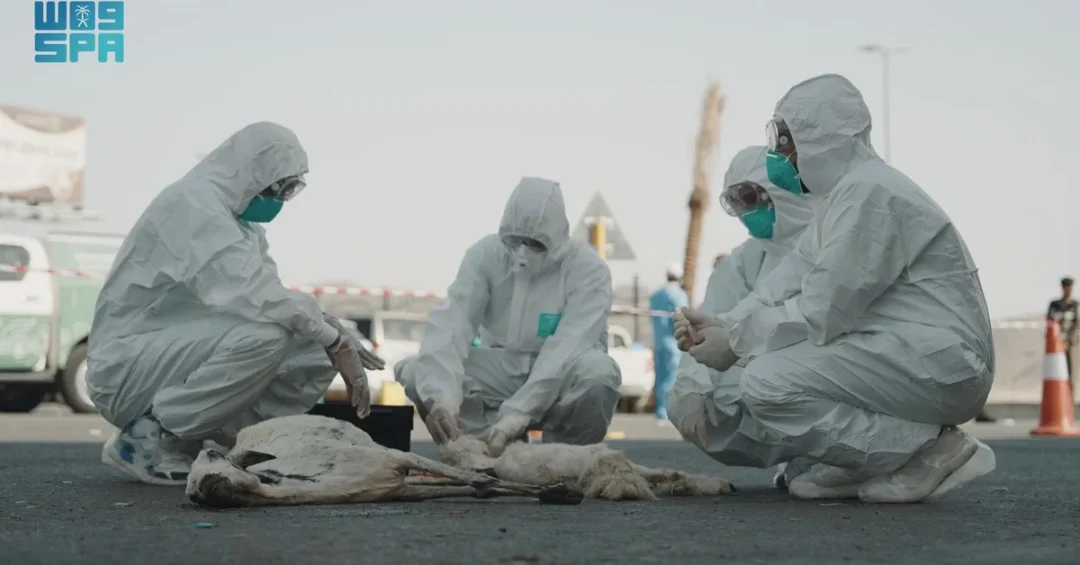
The National Center for the Prevention and Control of Plants Pests and Animal Diseases (Weqaa) conducted a simulated disease response exercise in Makkah on May 20, 2024, to test readiness for potential outbreaks among livestock gathered for the upcoming Hajj season. The drill, involving specialized teams from various government agencies, focused on inspection and control procedures to limit the spread of a hypothetical contagious or zoonotic disease, as reported by the Saudi Press Agency (SPA).
Context and Background
Hajj, the annual Islamic pilgrimage to Makkah, draws millions of Muslims from around the world, along with significant numbers of livestock for ritual sacrifices and sustenance. Ensuring the health and safety of these animals is a critical public health priority, as diseases can spread rapidly in dense gatherings and potentially transmit to humans. Weqaa, established under Saudi Vision 2030 to strengthen biosecurity, is tasked with safeguarding the Kingdom’s plant and animal health. This mock exercise is part of a series of preventive measures implemented ahead of Hajj to mitigate disease risks.
Key Details
Specialized teams simulated real-time scenarios, testing their ability to detect, contain, and respond to a disease outbreak. Dr. Sanad Al-Harbi, head of the animal health sector at Weqaa, emphasized the importance of veterinary inspections and vector control programs to protect public health. ‘We implement a series of preventive measures, including veterinary inspections and vector control programs, to safeguard public health by ensuring the health and safety of livestock arriving in Makkah,’ he said. Dr. Ghaleb Al-Saedi, director general of Weqaa’s Makkah branch, stressed that the exercise enhances field workers’ skills and strengthens collaboration among participating agencies, ensuring a well-coordinated response to any potential outbreak during Hajj.
Implications and Impact
This proactive approach reinforces Saudi Arabia’s commitment to global health security and its role as a responsible host for one of the world’s largest religious gatherings. By testing and improving its response capabilities, Weqaa helps prevent animal disease outbreaks that could disrupt Hajj logistics or threaten public health. Successful execution of such exercises also builds confidence among international pilgrims and partner countries, showcasing the Kingdom’s preparedness and reliability. Moreover, the collaboration among government agencies during the drill exemplifies a unified governance model, which is essential for addressing complex biosecurity challenges.
Vision 2030 Alignment
The mock exercise directly supports Saudi Vision 2030’s goals of enhancing public health, promoting sustainability, and building institutional excellence. By investing in advanced biosecurity measures and workforce development, Weqaa contributes to the Kingdom’s transformation into a regional leader in health and safety standards. As Saudi Arabia continues to modernize its infrastructure and services, initiatives like this ensure that the nation’s growth is anchored in the well-being of its people and visitors. This commitment will further solidify the Kingdom’s position as a trusted global hub, in line with the visionary goals of Vision 2030.
20 Questions
Q1. What is Weqaa?
A1. Weqaa is the National Center for the Prevention and Control of Plants Pests and Animal Diseases, a Saudi government agency dedicated to protecting plant and animal health, thereby supporting agricultural sustainability and public health.
Q2. What was the purpose of the mock exercise?
A2. The mock exercise aimed to test and improve response capabilities for potential animal disease outbreaks among livestock gathered in Makkah for the Hajj season, ensuring a swift and coordinated reaction.
Q3. When and where did the exercise take place?
A3. The exercise took place in Makkah on May 20, 2024, as announced by the Saudi Press Agency.
Q4. Which agencies participated in the exercise?
A4. Specialized teams from various government agencies participated, though the specific agencies were not named in the SPA report; they likely include health, agriculture, and municipal bodies.
Q5. What scenarios were simulated?
A5. The scenarios simulated inspection and control procedures to limit the spread of a hypothetical contagious and zoonotic disease, testing preparedness for diseases transmissible between animals and humans.
Q6. Who is Dr. Sanad Al-Harbi?
A6. Dr. Sanad Al-Harbi is the head of the animal health sector at Weqaa, who highlighted the preventive measures such as veterinary inspections and vector control programs.
Q7. Who is Dr. Ghaleb Al-Saedi?
A7. Dr. Ghaleb Al-Saedi is the director general of Weqaa’s Makkah branch, who stressed the exercise’s role in enhancing skills and collaboration.
Q8. Why is this exercise important for public health?
A8. It helps safeguard public health by preventing animal disease outbreaks that could spread to humans, especially during the large gatherings at Hajj.
Q9. What is a zoonotic disease?
A9. A zoonotic disease is an infectious disease that can be transmitted from animals to humans, such as avian influenza or brucellosis.
Q10. How does this exercise support Hajj safety?
A10. By ensuring health and safety of livestock and testing response plans, it reduces the risk of disease outbreaks that could impact pilgrims, thus enhancing overall Hajj safety.
Q11. What are vector control programs?
A11. Vector control programs involve measures to manage or eliminate vectors like insects and rodents that can transmit diseases, for example by spraying or using traps.
Q12. How does the exercise enhance field workers’ skills?
A12. It provides hands-on training in realistic scenarios, allowing workers to practice their response, improve coordination, and learn from mistakes without real-world consequences.
Q13. What role did collaboration play in the exercise?
A13. Collaboration among agencies is crucial for a unified response, ensuring that all parties know their roles and can communicate effectively during an actual outbreak.
Q14. Is this the first such exercise by Weqaa?
A14. The SPA report does not specify if it was the first; however, it is part of a series of preventive measures, suggesting regular drills may be conducted.
Q15. How does this align with Vision 2030?
A15. It aligns with Vision 2030 by promoting public health, institutional excellence, and sustainability, key pillars of the Kingdom’s transformation plan.
Q16. What is the Saudi Press Agency?
A16. The Saudi Press Agency (SPA) is the official news agency of Saudi Arabia, providing reliable news coverage of government activities and national events.
Q17. How can such exercises prevent disease outbreaks?
A17. They identify procedural gaps, test equipment and protocols, and improve coordination, thus enabling faster and more effective containment if an outbreak occurs.
Q18. What types of livestock are typically present in Makkah for Hajj?
A18. Sheep, goats, cattle, and camels are commonly brought for sacrifice (Qurbani) and consumption during Hajj.
Q19. How does this exercise affect international pilgrims?
A19. It reassures them that health and safety measures are in place, promoting confidence in the Hajj experience and the Kingdom’s commitment to their well-being.
Q20. What are the future implications of this exercise?
A20. It sets a precedent for continuous improvement in biosecurity, potentially leading to more advanced surveillance systems and stronger health protections for future Hajj seasons.
Reader Feedback
We value your thoughts. Please share your feedback on this article.
Your feedback helps us improve our coverage.