


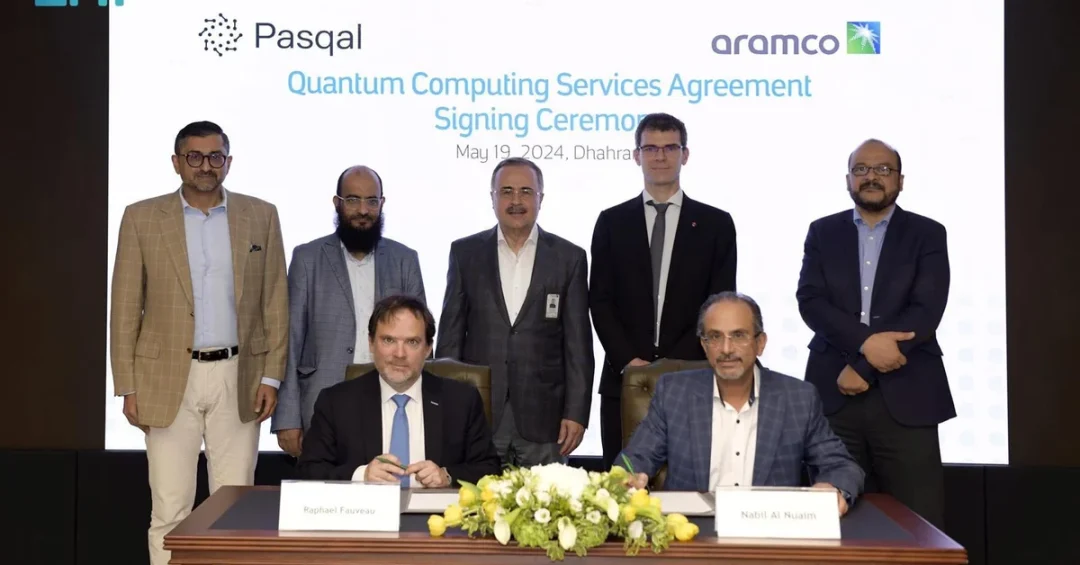
DHAHRAN, May 20, 2024 – Aramco, one of the world’s leading integrated energy and chemicals companies, announced today that it has signed an agreement with Pasqal, a global leader in neutral atom quantum computing, to install the first quantum computer in the Kingdom of Saudi Arabia. The announcement, made via the Saudi Press Agency, marks a significant milestone in Saudi Arabia’s technological advancement and aligns with the nation’s Vision 2030 goals of diversifying the economy and fostering innovation.
Context and Background
This agreement builds on a growing partnership between Aramco and Pasqal. In 2022, the two entities signed a Memorandum of Understanding (MoU) to explore quantum computing capabilities and applications in the energy sector. In 2023, Aramco’s venture capital arm, Wa’ed Ventures, participated in Pasqal’s Series B fundraising round, demonstrating a deepening commitment to the technology. Pasqal also established an office in the Kingdom in 2023, signaling its intent to expand its presence in the region.
The deployment of the quantum computer is scheduled for the second half of 2025, with the system initially operating in the “analog mode.” Within a year, it is expected to be upgraded to a more advanced hybrid “analog-digital mode,” which promises to solve even more complex problems, according to the official statement.
Key Details
The agreement entails Pasqal installing, maintaining, and operating a 200-qubit quantum computer. Quantum computing has the potential to revolutionize industries by processing information at unprecedented speeds, enabling solutions to problems that are currently intractable for classical computers.
Aramco Executive Vice President of Technology and Innovation, Ahmad Al-Khowaiter, emphasized the strategic importance of the partnership: “Aramco is delighted to partner with Pasqal to bring cutting-edge, high-performance quantum computing capabilities to the Kingdom. In a rapidly evolving digital landscape, we believe it is crucial to seize opportunities presented by new, impactful technologies and we aim to pioneer the use of quantum computing in the energy sector.”
Pasqal CEO and Co-founder Georges-Olivier Reymond echoed this sentiment: “The era of quantum computing is no longer confined to theory; it is transitioning to real-world applications, empowering organizations to solve previously intractable problems at scale.” He added that the agreement would accelerate the commercial adoption of this transformative technology in Saudi Arabia.
Implications and Impact
The installation of the first quantum computer in Saudi Arabia is expected to position the Kingdom as a regional leader in quantum research and development. Aramco and Pasqal plan to leverage the technology to identify new use cases and aim to establish a powerhouse for quantum research. This initiative involves collaborating with leading academic institutions to foster breakthroughs in quantum algorithm development, which is crucial for unlocking the technology’s full potential.
This development also underscores Saudi Arabia’s broader ambitions under Vision 2030, which emphasizes economic diversification, technological advancement, and the creation of a knowledge-based economy. By investing in cutting-edge technologies like quantum computing, the Kingdom is not only modernizing its energy sector but also building capabilities that can benefit various industries, from healthcare to finance.
Vision 2030 Alignment
The agreement between Aramco and Pasqal is a clear demonstration of Saudi Arabia’s commitment to innovation and technological leadership in line with Vision 2030. By bringing quantum computing to the Kingdom, Aramco is spearheading the nation’s drive to become a global hub for advanced technologies. This initiative will likely attract further investment, foster local talent, and strengthen Saudi Arabia’s position as a key player in the global digital economy.
As the Kingdom continues to invest in science, technology, and research, the deployment of the first quantum computer is a significant step forward. It not only promises to solve complex problems in the energy sector but also pave the way for new discoveries and innovations that will contribute to a prosperous and sustainable future for Saudi Arabia and the world.
20 Questions
Q1. What is the significance of Aramco’s agreement with Pasqal?
A1. The agreement marks the first deployment of a quantum computer in Saudi Arabia, positioning the Kingdom as a leader in advanced computing technology and aligning with its Vision 2030 goals to drive innovation and economic diversification.
Q2. Who are the key parties involved in this agreement?
A2. The agreement is between Aramco, a leading integrated energy and chemicals company, and Pasqal, a global leader in neutral atom quantum computing. The deal was announced via the Saudi Press Agency.
Q3. What is the timeline for the deployment of the quantum computer?
A3. The 200-qubit quantum computer is scheduled for deployment in the second half of 2025, with the system initially using the analog mode and later upgrading to the more advanced hybrid analog-digital mode within a year.
Q4. What are the technical specifications of the quantum computer?
A4. The quantum computer will have 200 qubits. It will first operate in the analog mode, which is less complex, and then be upgraded to the hybrid analog-digital mode, which is more powerful and capable of solving more complex problems.
Q5. How will the quantum computer be installed and operated?
A5. Pasqal will be responsible for installing, maintaining, and operating the quantum computer. This includes ensuring the system is properly set up and functioning optimally in the Kingdom.
Q6. What is the ‘analog mode’ and ‘hybrid analog-digital mode’ of quantum computing?
A6. The analog mode is a simpler form of quantum computing that uses continuous variables to simulate problems. The hybrid analog-digital mode combines analog and digital techniques, offering greater power and flexibility to tackle more complex issues.
Q7. Who from Aramco commented on this agreement?
A7. Ahmad Al-Khowaiter, Aramco’s Executive Vice President of Technology and Innovation, commented on the agreement, expressing delight in partnering with Pasqal to bring cutting-edge quantum computing capabilities to the Kingdom.
Q8. What did Pasqal’s CEO say about the technology’s potential?
A8. Pasqal’s CEO and Co-founder, Georges-Olivier Reymond, said that the era of quantum computing is transitioning to real-world applications, empowering organizations to solve previously intractable problems at scale.
Q9. What is Pasqal’s history with Saudi Arabia?
A9. Pasqal established an office in Saudi Arabia in 2023 and signed an MoU with Aramco in 2022 to collaborate on quantum computing capabilities. In 2023, Aramco’s Wa’ed Ventures participated in Pasqal’s Series B funding round.
Q10. How does this agreement align with Vision 2030?
A10. It supports Vision 2030’s goal of economic diversification by fostering technological innovation, creating a knowledge-based economy, and positioning Saudi Arabia as a hub for advanced research and development.
Q11. What are the intended uses of the quantum computer?
A11. The quantum computer will be used to identify new use cases, particularly in the energy sector, and to advance quantum research. It aims to foster breakthroughs in quantum algorithm development with academic institutions.
Q12. What is a quantum computer and why is it important?
A12. A quantum computer uses qubits to perform calculations at speeds unattainable by classical computers. It is important because it can solve complex problems in fields like chemistry, logistics, and materials science, driving innovation.
Q13. Who is Wa’ed Ventures and what role did it play?
A13. Wa’ed Ventures is Aramco’s venture capital arm. It participated in Pasqal’s Series B fundraising round in 2023, demonstrating Aramco’s financial and strategic support for quantum technology.
Q14. What is the expected impact on Saudi Arabia’s technology sector?
A14. The deployment is expected to attract further investment, foster local talent, and position Saudi Arabia as a regional leader in quantum computing, potentially spurring a new industry around quantum technologies.
Q15. How does this partnership contribute to Aramco’s innovation strategy?
A15. It aligns with Aramco’s commitment to leverage advanced technologies to enhance its operations and stay at the forefront of energy sector innovation, exploring new frontiers like quantum computing.
Q16. What are the broader implications for the energy industry?
A16. Quantum computing could revolutionize energy exploration, optimize supply chains, and improve simulation processes, leading to cost savings and operational efficiencies, thus benefiting the whole industry.
Q17. What are the challenges in deploying quantum computers in Saudi Arabia?
A17. Challenges include the need for specialized infrastructure, skilled personnel, and a conducive regulatory environment. However, the partnership with Pasqal and involvement of academic institutions aims to overcome these hurdles.
Q18. What does the future hold for quantum computing in Saudi Arabia?
A18. The future looks bright, with the establishment of a quantum research powerhouse. The technology is expected to mature and find applications in various sectors, contributing to the Kingdom’s digital transformation.
Q19. How can Saudi Arabia benefit economically from quantum computing?
A19. Quantum computing can enhance productivity, drive new business models, and attract high-tech investments, diversifying the economy beyond oil and creating high-value jobs.
Q20. What is the long-term vision for this collaboration?
A20. The long-term vision is to create a thriving quantum ecosystem in Saudi Arabia, fostering innovation and breakthroughs that will benefit the Kingdom’s economy and society, supporting Vision 2030.
Reader Feedback
We value your thoughts. Please share your feedback on this article.
Your feedback helps us improve our coverage.