


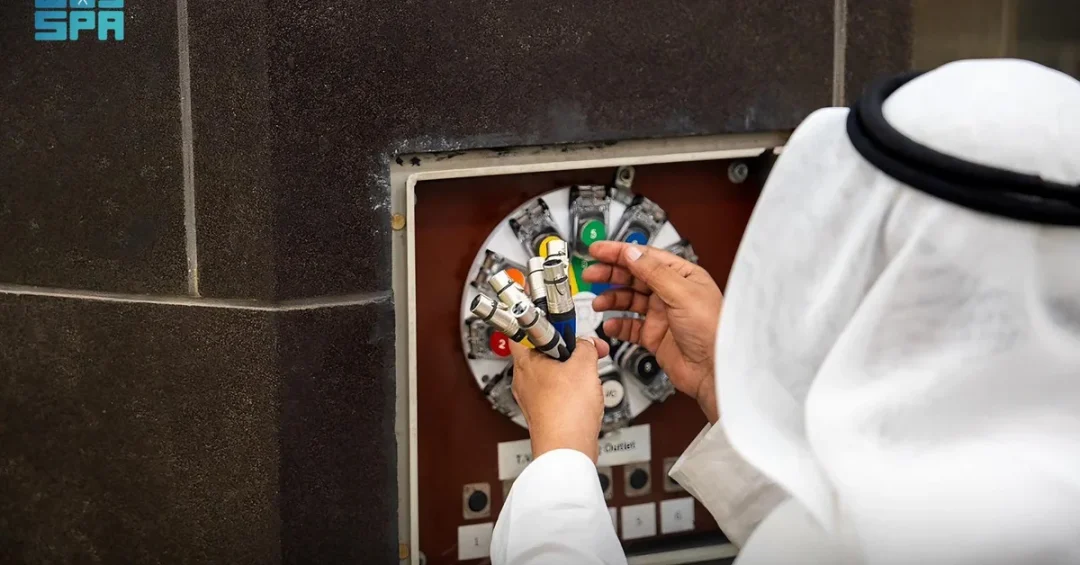
The General Authority for the Care of the Affairs of the Two Holy Mosques has announced comprehensive maintenance operations at the Grand Mosque in Makkah, ensuring a seamless experience for millions of visitors, pilgrims, and Umrah performers. The authority’s tireless efforts prioritize the upkeep of the mosque, adhering to the highest standards of service and safety.
Context and Background
The Grand Mosque, Islam’s holiest site, welcomes millions of worshippers throughout the year, especially during Ramadan and Hajj seasons. The maintenance program is a year-round endeavor, meticulously planned and executed to ensure that every aspect of the mosque’s infrastructure operates flawlessly. This includes regular inspections of critical systems such as sound, lighting, and safety equipment.
The authority’s commitment to excellence is reflected in its comprehensive approach, which covers the mosque’s interior, surrounding courtyards, and auxiliary buildings. By focusing on preventive maintenance, they minimize disruptions and enhance the spiritual experience for all visitors.
Key Details
The maintenance schedule includes the regular inspection and servicing of 8,000 loudspeakers, 120,000 lighting units, and hundreds of escalators, elevators, fire extinguishers, and sanitation systems. The authority also ensures the smooth operation of the mosque’s sound system, fire alarms, and backup power plant.
These efforts are guided by a master plan established annually by the general administration of operation and maintenance at the mosque. Constant monitoring of weekly, monthly, and annual schedules guarantees optimal functioning of all facilities, ensuring that the Grand Mosque remains a safe, serene, and welcoming environment for all.
Implications and Impact
The thorough maintenance not only ensures a seamless experience for visitors but also underscores the Kingdom’s commitment to providing world-class services to pilgrims from around the globe. By maintaining state-of-the-art facilities, Saudi Arabia reinforces its role as a leader in Islamic hospitality and sets a benchmark for other holy sites.
Moreover, the efficient operation of the Grand Mosque enhances the overall pilgrimage experience, aligning with Saudi Arabia’s broader goals of increasing capacity and improving services under Vision 2030.
Vision 2030 Alignment
This meticulous upkeep is directly aligned with Saudi Arabia’s Vision 2030, which prioritizes the development of the Two Holy Mosques and the enhancement of services for pilgrims. The Kingdom aims to host 30 million Umrah performers by 2030, and such dedicated maintenance programs are crucial to achieving this goal. By ensuring the highest standards of operation, Saudi Arabia not only preserves the sanctity of the mosque but also strengthens its position as a global hub for Islamic culture and spirituality.
20 Questions
Q1. What is the primary purpose of the maintenance work at the Grand Mosque?
A1. The primary purpose is to ensure a seamless and high-quality experience for visitors, pilgrims, and Umrah performers by keeping the mosque’s facilities in optimal condition.
Q2. Who is responsible for the maintenance of the Grand Mosque?
A2. The General Authority for the Care of the Affairs of the Two Holy Mosques is responsible for planning and executing maintenance tasks, adhering to the highest standards.
Q3. How many loudspeakers are regularly inspected?
A3. The authority regularly inspects 8,000 loudspeakers as part of its comprehensive maintenance program.
Q4. Why is the Grand Mosque’s lighting system important?
A4. The lighting system, including 120,000 units, is crucial for the safety and comfort of millions of worshippers, especially during night prayers and large gatherings.
Q5. What safety equipment is included in the maintenance schedule?
A5. The schedule includes inspections of fire extinguishers, fire alarms, and backup power plants to ensure the safety of all visitors.
Q6. How often are maintenance tasks performed?
A6. The authority monitors weekly, monthly, and annual maintenance schedules to guarantee optimal functioning of the mosque.
Q7. What is the master plan for maintenance?
A7. The master plan is a yearly blueprint established by the general administration of operation and maintenance, guiding all maintenance activities.
Q8. Which areas are covered under the maintenance program?
A8. The program covers the Grand Mosque, its surrounding areas, and auxiliary buildings, ensuring comprehensive upkeep.
Q9. How does maintenance affect visitors’ experience?
A9. Efficient maintenance ensures a seamless, safe, and comfortable environment, enhancing the spiritual journey for all visitors.
Q10. What is the role of escalators and elevators in the mosque?
A10. They provide ease of movement, especially for elderly and disabled visitors, and are regularly serviced to ensure reliability.
Q11. Why is the backup power plant essential?
A11. It ensures uninterrupted electricity supply during emergencies or outages, critical for the mosque’s operation and safety.
Q12. How does Saudi Arabia benefit from this maintenance?
A12. It reinforces Saudi Arabia’s reputation as a leader in Islamic hospitality and supports the Vision 2030 goal of enhancing pilgrimage services.
Q13. What is the target number of Umrah performers by 2030?
A13. Saudi Arabia aims to host 30 million Umrah performers by 2030, making such maintenance essential for capacity expansion.
Q14. Are there any environmental considerations in the maintenance?
A14. Yes, the authority prioritizes sustainable practices, including energy-efficient lighting and water conservation, in line with national goals.
Q15. How does the authority monitor maintenance effectiveness?
A15. Through constant monitoring and adherence to schedules, ensuring all systems are checked and serviced regularly.
Q16. What is the significance of fire safety systems in the mosque?
A16. With millions of visitors, fire safety is paramount; therefore, fire alarms and extinguishers are inspected to ensure rapid response in emergencies.
Q17. How does the maintenance program contribute to Vision 2030?
A17. It directly supports the Religious Tourism and other Vision 2030 goals by ensuring the holy sites are prepared for increased numbers of pilgrims.
Q18. Are there any challenges in maintaining such a large facility?
A18. Challenges include the high volume of visitors and the need for precision, but the authority’s skilled teams overcome these with meticulous planning.
Q19. What is the role of the general administration of operation and maintenance?
A19. It formulates the annual master plan and ensures its implementation across all maintenance activities.
Q20. How can the public stay informed about maintenance updates?
A20. The authority regularly communicates via official channels, including the Saudi Press Agency, ensuring transparency and public awareness.
Reader Feedback
We value your thoughts. Please share your feedback on this article.
Your feedback helps us improve our coverage.