


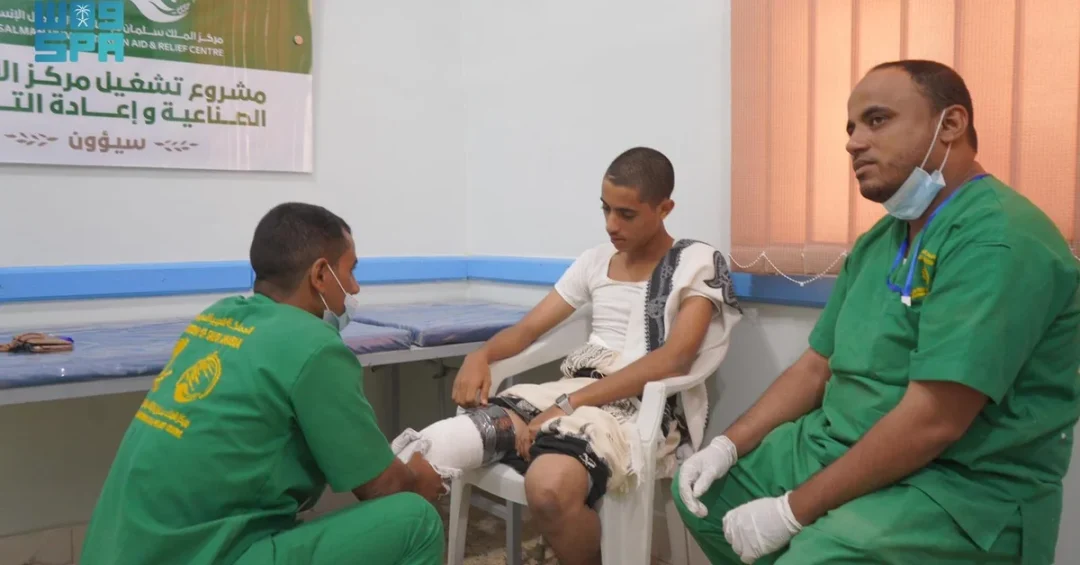
The Prosthetics and Rehabilitation Center in Seiyun, Hadhramaut Governorate, Yemen, provided essential medical services to 129 Yemeni beneficiaries who had lost limbs during the month of June, with support from the King Salman Humanitarian Aid and Relief Center (KSrelief). The center delivered a total of 798 services, including prosthetic limb fitting, maintenance, physical therapy, and specialized consultations, according to the Saudi Press Agency.
Context and Background
Yemen has faced years of conflict and instability, leaving many civilians with life-altering injuries, including limb loss. Access to quality prosthetic and rehabilitation services remains limited, especially in rural and underserved areas. KSrelief, the humanitarian arm of Saudi Arabia, has been at the forefront of providing aid and medical support to Yemenis, reflecting the Kingdom’s commitment to alleviating suffering and promoting stability in the region.
The Prosthetics and Rehabilitation Center in Seiyun is one of several projects funded by KSrelief across Yemen, aimed at restoring mobility and dignity to those affected by conflict. The center not only provides artificial limbs but also offers comprehensive rehabilitation to help beneficiaries reintegrate into society and regain independence.
Key Details
In June, the center served 129 beneficiaries, of whom 68% were male and 32% female. Displaced individuals accounted for 10% of the total, while residents made up 90%. The services rendered included the delivery of prosthetic limbs, fitting and maintenance, physical therapy sessions, and specialized medical consultations. These services are critical for individuals who have lost limbs, as they require ongoing support to adapt to their new prostheses and rebuild their lives.
The project is part of KSrelief’s broader humanitarian efforts in Yemen, which encompass food security, health care, education, and infrastructure rehabilitation. By providing these services, KSrelief aims to empower Yemenis to overcome adversity and contribute to their communities.
Implications and Impact
The work of the Prosthetics and Rehabilitation Center has far-reaching implications for the lives of Yemenis. By restoring mobility, beneficiaries can return to work, attend school, and participate in social activities, thereby improving their economic and social well-being. The center’s services also reduce the burden on families and communities that often struggle to care for individuals with disabilities.
Furthermore, the center’s operations underscore Saudi Arabia’s ongoing commitment to humanitarian aid and its role as a responsible global actor. Through KSrelief, the Kingdom continues to provide vital assistance to Yemen, helping to mitigate the effects of the crisis and support long-term recovery.
Vision 2030 Alignment
This initiative aligns with Saudi Arabia’s Vision 2030, which emphasizes humanitarian responsibility, global engagement, and the promotion of peace and prosperity. By supporting projects like the Prosthetics and Rehabilitation Center, the Kingdom demonstrates its dedication to improving lives beyond its borders and fostering stability in the region. Such efforts not only reflect Saudi Arabia’s leadership in humanitarian aid but also contribute to its broader goal of becoming a model of sustainable development and global citizenship.
20 Questions
Q1. What is the Prosthetics and Rehabilitation Center in Seiyun?
A1. The Prosthetics and Rehabilitation Center in Seiyun is a medical facility in Yemen’s Hadhramaut Governorate that provides prosthetic limbs, rehabilitation, and related services to individuals who have lost limbs, with support from KSrelief.
Q2. How many beneficiaries received services in June?
A2. In June, the center provided services to 129 beneficiaries who had lost limbs, offering them prosthetic limbs, fitting, maintenance, physical therapy, and specialized consultations.
Q3. What percentage of beneficiaries were male and female?
A3. Males comprised 68% of the beneficiaries, while females comprised 32%, reflecting the center’s reach across different segments of the population in need.
Q4. What percentage of beneficiaries were displaced individuals?
A4. Displaced individuals constituted 10% of the total beneficiaries, while residents made up 90%, indicating that the center serves both local communities and those forced to flee their homes.
Q5. What types of services were provided by the center?
A5. Services included prosthetic limb delivery, fitting, and maintenance, as well as physical therapy sessions and specialized consultations, all aimed at restoring mobility and improving quality of life.
Q6. Who supports the Prosthetics and Rehabilitation Center?
A6. The center is supported by the King Salman Humanitarian Aid and Relief Center (KSrelief), the humanitarian arm of Saudi Arabia that provides aid to countries in need.
Q7. Why is the center important for Yemen?
A7. The center is crucial because many Yemenis have lost limbs due to conflict, and access to prosthetic and rehabilitation services is limited, so it helps restore mobility and dignity.
Q8. How many total services were provided in June?
A8. A total of 798 services were provided in June, encompassing prosthetic limb delivery, fitting, maintenance, physical therapy, and specialized consultations for the 129 beneficiaries.
Q9. What is KSrelief?
A9. KSrelief, or the King Salman Humanitarian Aid and Relief Center, is a Saudi Arabian humanitarian organization that provides aid and relief to countries affected by crises, including Yemen.
Q10. How does this project reflect Saudi Arabia’s humanitarian efforts?
A10. This project exemplifies Saudi Arabia’s commitment to alleviating human suffering and supporting recovery in Yemen, showcasing the Kingdom’s role as a leading humanitarian donor in the region.
Q11. Where is Hadhramaut Governorate located?
A11. Hadhramaut Governorate is located in eastern Yemen, and its city of Seiyun hosts the Prosthetics and Rehabilitation Center that serves individuals from across the region.
Q12. What challenges do limb loss patients face in Yemen?
A12. Patients often face limited access to prosthetic services, financial constraints, and social stigma, making the center’s work vital for their rehabilitation and reintegration into society.
Q13. How does the center help beneficiaries reintegrate into society?
A13. By providing prosthetic limbs and physical therapy, the center helps beneficiaries regain mobility, enabling them to return to work, school, and community activities, thus fostering independence.
Q14. What is the significance of the 90% resident beneficiaries?
A14. The high percentage of residents indicates that the center primarily serves local communities, addressing the needs of those who have remained in their homes despite the conflict.
Q15. How does this project align with Vision 2030?
A15. It aligns with Vision 2030 by promoting humanitarian responsibility and global engagement, reflecting Saudi Arabia’s goal to be a model of sustainable development and global citizenship.
Q16. What other types of aid does KSrelief provide in Yemen?
A16. KSrelief provides food security, health care, education, and infrastructure rehabilitation, among other forms of assistance, to support Yemen’s recovery and stability.
Q17. How can other organizations support similar initiatives?
A17. Organizations can partner with KSrelief or contribute funding and expertise to expand prosthetic and rehabilitation services, helping more Yemenis regain mobility and dignity.
Q18. What is the long-term impact of the center’s work?
A18. The center’s work leads to improved livelihoods, reduced disability burden, and stronger communities, as beneficiaries become active contributors to society and the economy.
Q19. How does the center ensure quality of care?
A19. The center employs trained professionals and follows standardized protocols for prosthetic fitting and rehabilitation, ensuring that beneficiaries receive effective and safe services.
Q20. What message does this project send to the international community?
A20. It demonstrates Saudi Arabia’s unwavering commitment to humanitarian aid and regional stability, encouraging global support for Yemen’s recovery and development.
Reader Feedback
We value your thoughts. Please share your feedback on this article.
Your feedback helps us improve our coverage.