


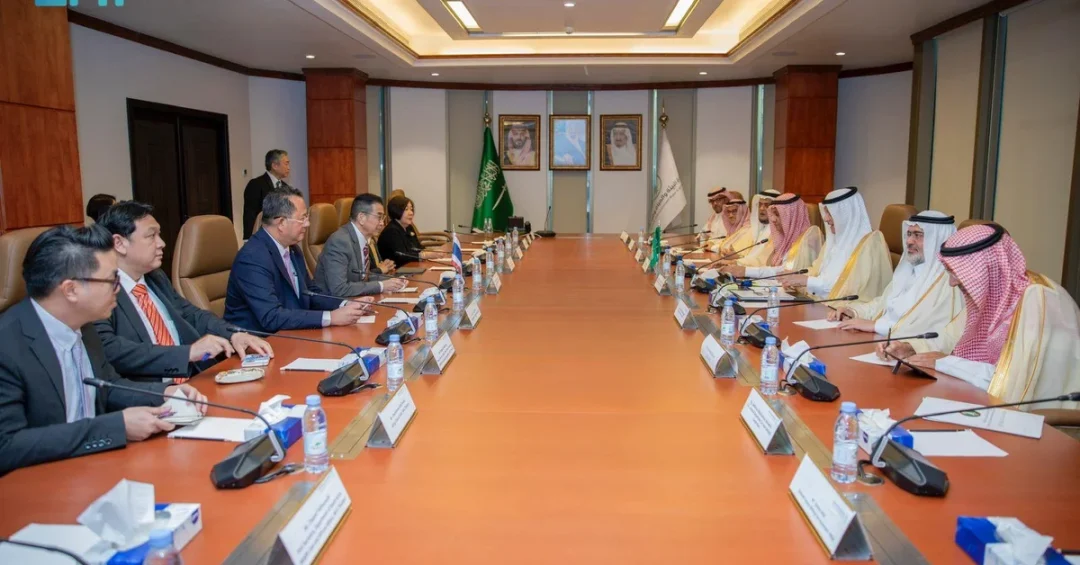
Saudi Arabia and Thailand have deepened their bilateral cooperation in food security, environmental protection, and livestock development following a high-level meeting in Riyadh on July 14, 2024. Eng. Abdulrahman Alfadley, Minister of Environment, Water, and Agriculture and Chairman of the General Food Security Authority, met with Maris Sangiampongsa, Minister of Foreign Affairs of Thailand, to review and enhance relations between the two nations. The discussions focused on critical areas including food security, livestock sector development, environmental cooperation, and increasing vegetation cover, according to the Saudi Press Agency (SPA).
Context and Background
The meeting underscores Saudi Arabia’s commitment to international partnerships that support its strategic priorities, particularly under Vision 2030. The Kingdom has increasingly sought collaborations with nations around the world to address shared challenges such as climate change, desertification, and sustainable food production. Thailand, with its advanced agricultural sector and expertise in food processing, represents a valuable partner in these efforts. The discussions align with Saudi Arabia’s goals to diversify its economy, enhance food security, and promote environmental sustainability.
Attendees included prominent Saudi officials: Eng. Ahmed Al-Fares, Governor of the General Food Security Authority; Eng. Ahmed Aliadh, Deputy Minister for Agriculture; Dr. Osama Faqeeha, Deputy Minister for Environmental Affairs; Dr. Khaled Al-Abdul Qadir, CEO of the National Center for Vegetation Development and Combating Desertification; Sulaiman AlRumaih, CEO of SALIC; and Eng. Abdulaziz Alhowaish, Director General of the General Department of International Cooperation. Their presence highlights the multi-faceted nature of the cooperation, spanning agriculture, environment, and investment.
Key Details
The meeting explored ways to strengthen ties in several key areas. Food security was a central topic, with both sides discussing potential collaborations to ensure stable food supplies. Livestock sector development was also addressed, aiming to improve animal husbandry practices and increase production efficiency. Environmental cooperation focused on combating desertification and increasing vegetation cover, a priority for Saudi Arabia through initiatives like the Saudi Green Initiative. These efforts are part of the Kingdom’s broader strategy to achieve environmental sustainability and mitigate the effects of climate change.
Eng. Alfadley emphasized the importance of such international partnerships in achieving the objectives of Vision 2030. The involvement of entities like SALIC, the Saudi Agricultural and Livestock Investment Company, indicates potential investment opportunities in agriculture and food processing. The Thai side expressed interest in sharing expertise and exploring joint ventures that could benefit both nations.
Implications and Impact
This cooperation is expected to yield significant benefits for both Saudi Arabia and Thailand. For Saudi Arabia, it advances efforts to secure food supplies, diversify import sources, and enhance local agricultural capabilities. It also supports the Kingdom’s environmental goals, including the Saudi Green Initiative’s target to plant 10 billion trees and restore 40 million hectares of land. For Thailand, the partnership opens avenues for trade and investment in the Gulf region, leveraging its agricultural strengths.
Regionally, the collaboration could serve as a model for other nations seeking to address food security and environmental challenges through international cooperation. It also reinforces Saudi Arabia’s role as a responsible global actor committed to sustainable development and multilateral engagement.
Vision 2030 Alignment
This meeting directly supports Saudi Arabia’s Vision 2030, which aims to diversify the economy, ensure food security, and promote environmental sustainability. By partnering with Thailand, the Kingdom enhances its ability to achieve these goals, while also strengthening its international relations. The collaboration exemplifies how Saudi Arabia is building global partnerships to address shared challenges and create a more sustainable future. As the Kingdom continues to implement Vision 2030, such initiatives will play a vital role in its transformation into a diversified, knowledge-based economy.
20 Questions
Q1. What was the main purpose of the meeting between Saudi Arabia and Thailand?
A1. The meeting aimed to review and enhance bilateral relations, focusing on food security, livestock development, environmental cooperation, and increasing vegetation cover between the two nations.
Q2. Who represented Saudi Arabia in the meeting?
A2. Eng. Abdulrahman Alfadley, Minister of Environment, Water, and Agriculture and Chairman of the General Food Security Authority, led the Saudi delegation.
Q3. Who was the Thai counterpart in the discussions?
A3. Maris Sangiampongsa, Minister of Foreign Affairs of Thailand, represented the Thai side in the high-level discussions held in Riyadh.
Q4. What key areas were discussed during the meeting?
A4. The discussions covered food security, livestock sector development, environmental cooperation, and increasing vegetation cover, aligning with Saudi Arabia’s sustainability goals.
Q5. Which Saudi officials attended the meeting?
A5. Attendees included Eng. Ahmed Al-Fares, Eng. Ahmed Aliadh, Dr. Osama Faqeeha, Dr. Khaled Al-Abdul Qadir, Sulaiman AlRumaih, and Eng. Abdulaziz Alhowaish.
Q6. Why is food security a priority for Saudi Arabia?
A6. Food security is crucial for Saudi Arabia to ensure stable food supplies, reduce import dependency, and support Vision 2030’s economic diversification goals.
Q7. How does this cooperation benefit Thailand?
A7. Thailand gains opportunities for trade and investment in the Gulf region, leveraging its agricultural expertise and strengthening economic ties with Saudi Arabia.
Q8. What is the significance of livestock sector development in this context?
A8. Livestock development aims to improve animal husbandry practices and production efficiency, contributing to food security and agricultural sustainability.
Q9. What environmental issues were highlighted?
A9. Environmental cooperation focused on combating desertification and increasing vegetation cover, key priorities under the Saudi Green Initiative.
Q10. How does this meeting align with Vision 2030?
A10. It supports Vision 2030 by enhancing food security, promoting environmental sustainability, and fostering international partnerships for economic diversification.
Q11. What role does SALIC play in this cooperation?
A11. SALIC, the Saudi Agricultural and Livestock Investment Company, may explore investment opportunities in agriculture and food processing with Thai partners.
Q12. What is the Saudi Green Initiative?
A12. The Saudi Green Initiative is a national effort to combat climate change, increase vegetation cover, and achieve environmental sustainability, including planting 10 billion trees.
Q13. How might this partnership impact regional food security?
A13. It could serve as a model for other nations, promoting international cooperation to address food security and environmental challenges in the region.
Q14. What specific areas of environmental cooperation were discussed?
A14. Discussions included combating desertification, increasing vegetation cover, and sharing expertise on sustainable environmental practices.
Q15. How does Thailand’s expertise complement Saudi Arabia’s goals?
A15. Thailand’s advanced agricultural sector and food processing capabilities can support Saudi Arabia’s efforts to enhance food security and agricultural innovation.
Q16. What are the potential investment opportunities from this meeting?
A16. Opportunities may include joint ventures in agriculture, livestock, food processing, and environmental projects, benefiting both economies.
Q17. How does this cooperation reflect Saudi Arabia’s foreign policy?
A17. It demonstrates Saudi Arabia’s commitment to multilateral engagement and building partnerships to address global challenges like food security and climate change.
Q18. What is the General Food Security Authority’s role?
A18. The authority, chaired by Eng. Alfadley, oversees Saudi Arabia’s food security strategy, ensuring stable supplies and sustainable agricultural practices.
Q19. How will this meeting translate into concrete actions?
A19. Concrete actions may include joint working groups, investment agreements, and knowledge exchange programs in agriculture and environment.
Q20. What message does this send about Saudi Arabia’s global role?
A20. It reinforces Saudi Arabia’s position as a responsible global actor committed to sustainable development and international cooperation under Vision 2030.
Reader Feedback
We value your thoughts. Please share your feedback on this article.
Your feedback helps us improve our coverage.