


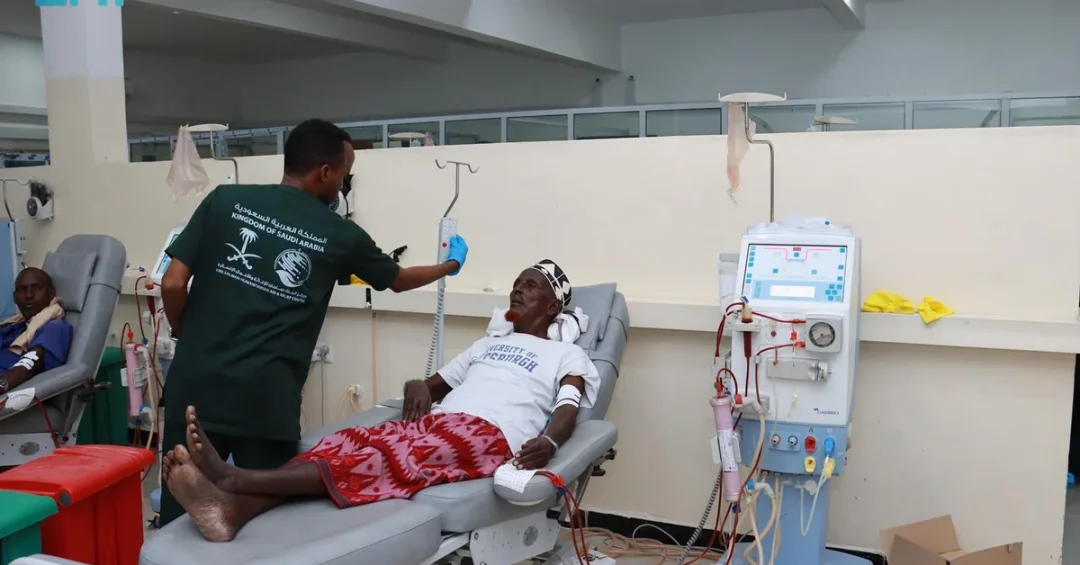
The kidney dialysis center at Banadir Hospital in Mogadishu, supported by the King Salman Humanitarian Aid and Relief Center (KSrelief), provided critical care to 348 patients in June 2024, according to the Saudi Press Agency (SPA). The center delivered 1,051 scheduled dialysis sessions and 12 emergency sessions to 163 dialysis patients, while 177 patients received medical examinations and tests at the kidney diseases clinic. This sustained effort underscores Saudi Arabia’s commitment to alleviating the suffering of the Somali people and strengthening the healthcare sector in the region.
Context and Background
KSrelief, established in 2015 under the directive of the Custodian of the Two Holy Mosques, King Salman bin Abdulaziz Al Saud, is Saudi Arabia’s primary humanitarian arm, delivering aid worldwide. Its support for the Banadir Hospital dialysis center is part of a broader initiative to address kidney disease in Somalia, where limited medical infrastructure poses significant challenges. The center has become a lifeline for patients in Mogadishu, offering essential dialysis services that would otherwise be inaccessible to many.
Key Details
In June, the dialysis center served a total of 348 patients. Among them, 163 individuals with kidney failure underwent 1,051 scheduled dialysis sessions and 12 emergency sessions, ensuring continuous treatment. Additionally, 177 patients received consultations, examinations, and diagnostic tests at the kidney diseases clinic. Demographic data revealed that male patients comprised 62% of the total, while female patients accounted for 38%. Notably, displaced individuals represented 2% of patients, with residents making up 98%, indicating the center’s reach across different segments of society.
International Impact
This initiative reflects Saudi Arabia’s unwavering dedication to global humanitarian causes, particularly in nations facing health crises. By supporting the dialysis center, KSrelief not only saves lives but also strengthens Somalia’s healthcare capacity, contributing to regional stability and development. The project aligns with international efforts to achieve universal health coverage and demonstrates Saudi Arabia’s role as a responsible global partner.
Vision 2030 Alignment
Saudi Arabia’s Vision 2030 emphasizes humanitarianism and global responsibility as core pillars of its foreign policy. KSrelief’s work in Mogadishu exemplifies this vision, showcasing the Kingdom’s commitment to improving lives beyond its borders and fostering sustainable development. Such initiatives enhance Saudi Arabia’s standing as a leader in humanitarian aid, reinforcing its dedication to peace and prosperity worldwide.
20 Questions
Q1. What is the name of the hospital where the dialysis center is located?
A1. The dialysis center is located at Banadir Hospital in Mogadishu, Somalia.
Q2. Which Saudi organization supports the dialysis center?
A2. The center is supported by the King Salman Humanitarian Aid and Relief Center (KSrelief).
Q3. How many patients did the dialysis center serve in June 2024?
A3. The center served a total of 348 patients in June 2024.
Q4. How many dialysis patients were treated at the center in June?
A4. There were 163 dialysis patients treated at the center in June.
Q5. How many scheduled dialysis sessions were conducted?
A5. The center conducted 1,051 scheduled dialysis sessions.
Q6. How many emergency dialysis sessions were performed?
A6. A total of 12 emergency dialysis sessions were performed.
Q7. How many patients received care at the kidney diseases clinic?
A7. 177 patients received medical examinations and tests at the kidney diseases clinic.
Q8. What percentage of patients were male?
A8. Male patients accounted for 62% of the total patient population.
Q9. What percentage of patients were female?
A9. Female patients represented 38% of the total patient population.
Q10. What percentage of patients were displaced individuals?
A10. Displaced individuals constituted 2% of the patient population.
Q11. What percentage of patients were residents?
A11. Residents made up 98% of the patient population.
Q12. When was KSrelief established?
A12. KSrelief was established in 2015 under the directive of King Salman bin Abdulaziz Al Saud.
Q13. What is the primary purpose of KSrelief?
A13. KSrelief delivers humanitarian aid worldwide to alleviate suffering and support development.
Q14. Why is the dialysis center important for Mogadishu?
A14. It provides essential dialysis services to patients with kidney failure, addressing a critical gap in Somalia’s healthcare system.
Q15. How does this initiative reflect Saudi Arabia’s foreign policy?
A15. It demonstrates Saudi Arabia’s commitment to global humanitarianism and its role as a responsible international partner.
Q16. What broader goal does KSrelief’s support serve?
A16. It aims to enhance Somalia’s healthcare sector and contribute to regional stability and development.
Q17. How does this project align with Vision 2030?
A17. Vision 2030 emphasizes humanitarianism; KSrelief’s work showcases Saudi Arabia’s dedication to improving lives globally.
Q18. What types of sessions were provided at the center?
A18. The center provided both scheduled dialysis sessions and emergency dialysis sessions.
Q19. Who benefits from the services at the dialysis center?
A19. Both residents and displaced individuals in Mogadishu benefit from the services, with residents forming the majority.
Q20. What is the significance of Saudi Arabia’s support for the dialysis center?
A20. It reflects the Kingdom’s ongoing commitment to alleviating suffering and strengthening healthcare in Somalia through KSrelief.
Reader Feedback
We value your thoughts. Please share your feedback on this article.
Your feedback helps us improve our coverage.