


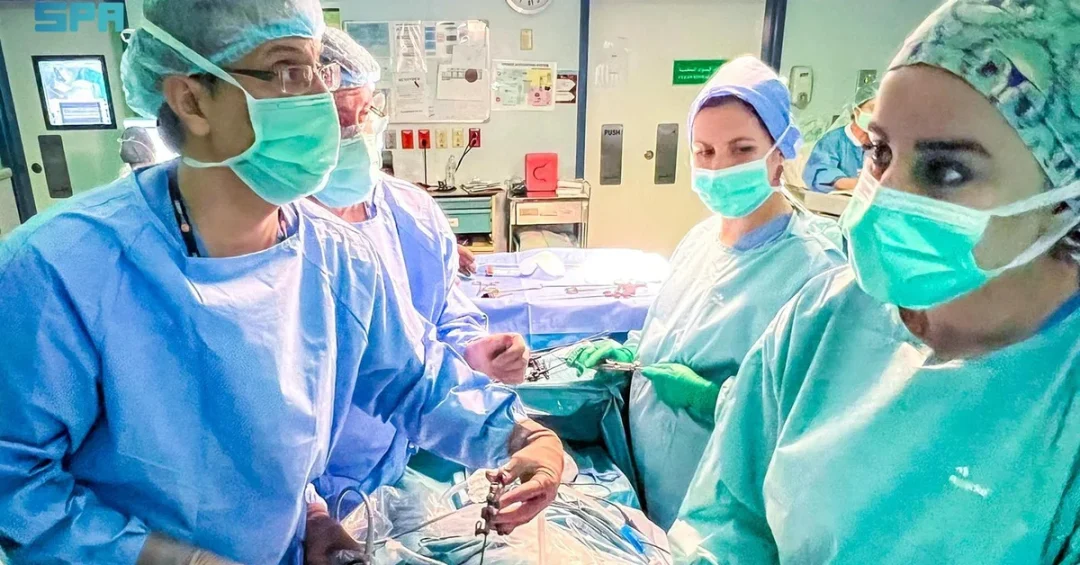
In a groundbreaking medical achievement, King Faisal Specialist Hospital & Research Centre (KFSHRC) in Riyadh has successfully performed the first in-utero endoscopic surgery in the Middle East to correct a congenital spinal defect in a 26-week-old fetus. The pioneering procedure, announced by the Saudi Press Agency, offers new hope to families affected by spina bifida and underscores Saudi Arabia’s advancing capabilities in specialized healthcare.
Context and Background
Spina bifida is a congenital defect that occurs when the spine and spinal cord do not form properly, leading to exposure of the spinal cord to amniotic fluid. This exposure can cause neurological complications, including movement disorders, bladder and bowel dysfunction, and hydrocephalus. Traditionally, surgery is performed after birth, but this approach may not fully prevent neurological damage that occurs during pregnancy. In-utero surgery aims to repair the defect before birth, potentially improving outcomes.
KFSHRC, ranked first in the Middle East and Africa and 20th globally among the world’s top 250 academic medical centers, has long been at the forefront of medical innovation. The hospital’s Fetal Diagnosis and Therapy Program has now achieved a historic milestone by performing the first fetal endoscopic surgery in the region.
Key Details
The procedure was performed by a team led by Dr. Saud Alshanafey, the lead surgeon and Director of the Fetal Diagnosis and Therapy Program. Using a fetal endoscope, the team made three incisions no larger than 2 millimeters in the uterus to access the fetus’s back. Throughout the surgery, the fetus was monitored via ultrasound, and the congenital defect was successfully repaired, ensuring the spinal cord is now fully protected.
Dr. Alshanafey explained, “This achievement reflects significant medical advancements in fetal surgery and highlights KFSHRC’s commitment to providing the highest standards of healthcare to improve the quality of life for fetuses and their families in the Kingdom and beyond.” He noted that the minimally invasive approach avoids opening the uterus, which benefits both the mother and the pregnancy. The mother has been discharged in good health and will continue her pregnancy under careful medical supervision.
Implications and Impact
This successful surgery marks a significant leap forward for fetal medicine in the Middle East. By correcting the defect before birth, the procedure reduces the likelihood of complex post-birth surgeries and improves the baby’s chances of healthy development. It also positions Saudi Arabia as a leader in advanced medical care, attracting patients from around the world.
The achievement aligns with the Kingdom’s Vision 2030 goals to enhance healthcare quality and innovation. KFSHRC’s recognition as the most valuable healthcare brand in the Kingdom and the Middle East, according to the 2024 Brand Finance rankings, further underscores its role in driving medical excellence.
Vision 2030 Alignment
This pioneering surgery exemplifies Saudi Arabia’s commitment to transforming its healthcare sector under Vision 2030. By fostering cutting-edge medical research and providing world-class treatment, the Kingdom continues to improve the quality of life for its citizens and strengthen its position as a global hub for medical innovation.
20 Questions
Q1. What procedure was performed at KFSHRC?
A1. KFSHRC performed the first in-utero endoscopic surgery in the Middle East to correct a spinal cord defect in a 26-week-old fetus, marking a historic medical achievement in the region.
Q2. Who led the surgical team?
A2. The procedure was led by Dr. Saud Alshanafey, the lead surgeon and Director of the Fetal Diagnosis and Therapy Program at KFSHRC.
Q3. What is spina bifida?
A3. Spina bifida is a congenital defect where the spine and spinal cord do not form properly, leading to exposure of the spinal cord and potential neurological complications.
Q4. How common is spina bifida?
A4. Spina bifida affects approximately 1 in every 1,000 to 2,000 births worldwide, making it a relatively common congenital defect.
Q5. What was the size of the incisions made during the surgery?
A5. The surgeons made three incisions, each no larger than 2 millimeters, in the uterus to access the fetus’s back.
Q6. How was the fetus monitored during surgery?
A6. The fetus was continuously monitored using ultrasound throughout the procedure to ensure its safety and the success of the surgery.
Q7. What are the benefits of in-utero surgery for spina bifida?
A7. In-utero surgery can repair the defect before birth, reducing the risk of neurological damage and the need for complex post-birth surgeries, thus improving the baby’s health outcomes.
Q8. How does the traditional approach differ?
A8. Traditionally, surgery is performed after birth to prevent infections, but this may not fully prevent neurological complications that can occur during pregnancy.
Q9. What is the significance of this procedure for the Middle East?
A9. It is the first successful in-utero endoscopic surgery in the Middle East, showcasing the region’s advancing medical capabilities and offering new hope to families.
Q10. What did Dr. Alshanafey say about the achievement?
A10. He stated that it reflects significant medical advancements and KFSHRC’s commitment to providing the highest standards of healthcare to improve quality of life.
Q11. How is the mother doing after the surgery?
A11. The mother has been discharged in good health and will continue her pregnancy under careful medical supervision.
Q12. What is KFSHRC’s global ranking?
A12. KFSHRC is ranked first in the Middle East and Africa and 20th globally among the world’s top 250 academic medical centers.
Q13. What other recognitions has KFSHRC received?
A13. It has been recognized as the most valuable healthcare brand in the Kingdom and the Middle East by Brand Finance in 2024 and ranked among the world’s best 250 hospitals by Newsweek.
Q14. What is the fetal endoscope used for?
A14. The fetal endoscope is a minimally invasive tool used to visualize and repair the congenital defect through small incisions, avoiding the need to open the uterus.
Q15. What are the potential complications of spina bifida?
A15. Complications can include movement disorders, neurological dysfunctions, urinary issues, and hydrocephalus, depending on the severity of the defect.
Q16. How does this surgery align with Vision 2030?
A16. It supports Vision 2030’s healthcare goals by advancing medical innovation, improving quality of life, and positioning Saudi Arabia as a leader in specialized healthcare.
Q17. What is the Fetal Diagnosis and Therapy Program?
A17. It is a specialized program at KFSHRC dedicated to diagnosing and treating fetal conditions before birth, employing advanced techniques like in-utero surgery.
Q18. What does the future hold for fetal surgery in Saudi Arabia?
A18. This success paves the way for more advanced fetal interventions, enhancing Saudi Arabia’s reputation as a hub for cutting-edge medical care and attracting international patients.
Q19. How does this procedure impact the family?
A19. It provides newfound hope and relief, as the early intervention aims to enhance the baby’s future health and development, reducing the need for complex surgeries after birth.
Q20. What makes this procedure minimally invasive?
A20. The use of an endoscope and incisions no larger than 2 millimeters means the uterus does not need to be opened, which benefits the mother’s health and the pregnancy.
Reader Feedback
We value your thoughts. Please share your feedback on this article.
Your feedback helps us improve our coverage.