


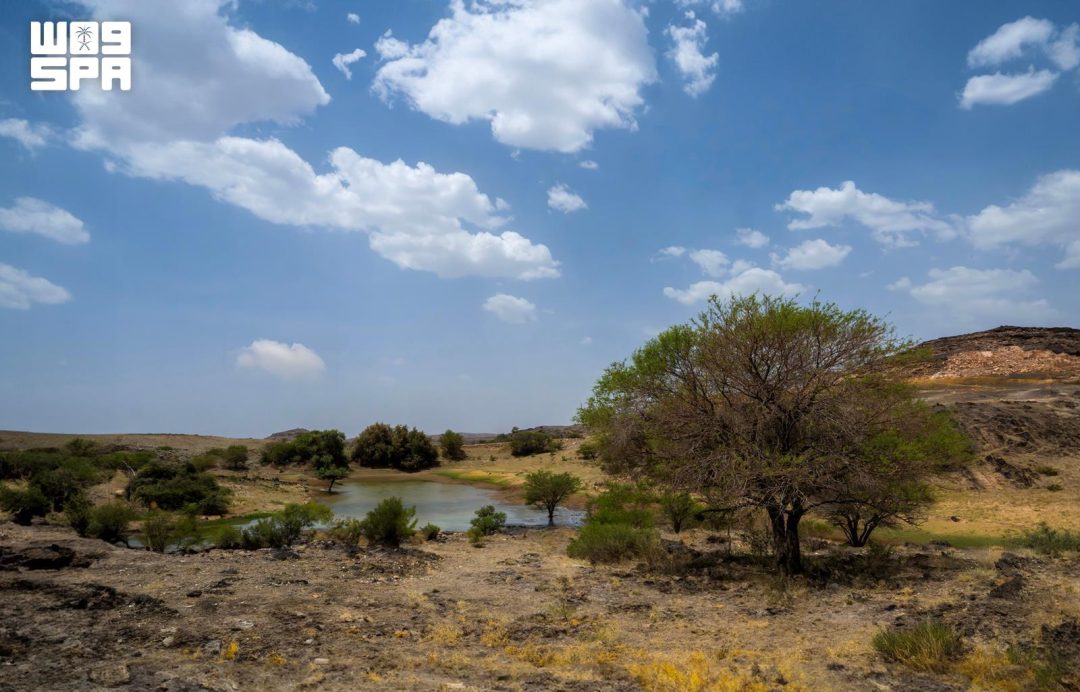
Badr Al-Janoub governorate in the Najran region features a diverse plant cover that supports its role as a destination for rural and ecological tourism, particularly during the summer due to its temperate climate and landscapes.
According to SPA, the area is characterized by vast mountainous reliefs, valleys, and ravins that turn green following summer rains. This ecological diversity supports local wildlife and attracts hikers and nature enthusiasts.
The natural heritage of Badr Al-Janoub includes ancient wild trees such as acacias and jujubiers. These seasonal blooms are utilized by beekeepers to produce natural honey.
The Badr Al-Janoub municipality has planted over 2,000 trees and plants in Prince Mishaal bin Saud Park, using natural rocks from nearby mountains to create pedestrian paths and planted areas. Additionally, more than 7,000 trees and plants have been planted across various parts of the governorate to protect the environment and develop sustainable tourism.
What natural features make Badr Al-Janoub a tourist destination? Badr Al-Janoub is an attractive destination for rural and ecological tourism due to its temperate summer climate and picturesque landscapes. The governorate is distinguished by its vast mountainous reliefs, ravins, and valleys that become covered in local vegetation and greenery after the summer rains occur.
How does the local flora support the economy and environment in Badr Al-Janoub? The area’s natural heritage includes ancient wild acacia and jujubier trees, which provide a habitat for local wildlife. Furthermore, these seasonal blooms attract beekeepers who utilize the diverse plant life to produce natural honey in the region.
What planting initiatives has the Badr Al-Janoub municipality implemented? The municipality has planted over 2,000 trees and plants within Prince Mishaal bin Saud Park, incorporating natural rocks from neighboring mountains for paths. Across the wider governorate, more than 7,000 trees and plants have been planted to improve quality of life and support sustainable tourism.