


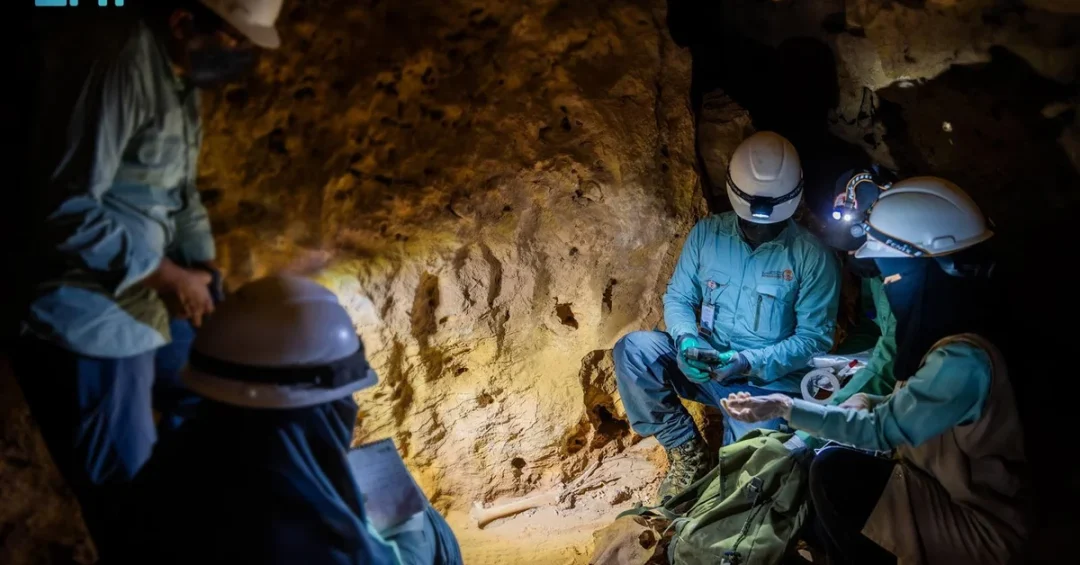
The National Center for Wildlife (NCW) has launched a comprehensive cave exploration program in the Northern Borders region of Saudi Arabia, aiming to document, preserve, and potentially restore the Kingdom’s unique natural heritage. Announced on May 19, 2024, via the Saudi Press Agency, the initiative underscores NCW’s commitment to monitoring ecosystems and biodiversity across Saudi Arabia’s terrestrial and marine landscapes.
Context and Background
The program, initiated in 2022, is part of a broader endeavor to understand and protect the Kingdom’s diverse environments. With 1,826 documented caves, Saudi Arabia holds significant geological and biological treasures that are now being systematically studied. The exploration advances the Kingdom’s environmental ambitions under Vision 2030, which emphasizes sustainable development and biodiversity conservation.
Key Details
NCW CEO Dr. Mohammed Qurban highlighted the program’s three primary goals: gaining international recognition for the caves as sites of global biodiversity importance, preserving them as natural museums offering insights into past environments, and conserving wildlife within these unique ecosystems. The program builds on NCW’s earlier discovery of 4,000-year-old mummified cheetahs in a northern Saudi Arabian cave, the first documented evidence of the species in the Kingdom. Researchers have also uncovered rare bat species and remains of extinct animals, with ongoing classification and age determination efforts.
Implications and Impact
The cave exploration program has significant scientific and ecological implications. By documenting cave ecosystems, NCW aims to support reintroduction efforts for species that have disappeared from the region, such as the hunting cheetah, to restore ecological balance. This initiative positions Saudi Arabia as a leader in regional conservation, contributing to global understanding of biodiversity and climate change.
Vision 2030 Alignment
This program directly aligns with Saudi Arabia’s Vision 2030, which prioritizes environmental sustainability and the protection of natural heritage. By investing in scientific research and conservation, the Kingdom is not only safeguarding its natural treasures but also fostering a knowledge-based economy and enhancing its global standing as a steward of biodiversity. As exploration continues, NCW’s efforts promise to unveil more of the Kingdom’s hidden wonders, reinforcing its commitment to a sustainable future.
20 Questions
Q1. What is the National Center for Wildlife (NCW)?
A1. The NCW is a Saudi government agency dedicated to the protection and development of wildlife and natural habitats. It oversees biodiversity conservation, research, and the implementation of environmental policies across the Kingdom.
Q2. When was the cave exploration program launched?
A2. The program was launched in 2022 as part of NCW’s broader efforts to monitor all ecosystems and biodiversity across Saudi Arabia’s terrestrial and marine environments.
Q3. Where is the exploration program focused?
A3. The program is focused on the Northern Borders region of Saudi Arabia, which contains numerous caves with significant ecological and historical value.
Q4. How many caves are documented in Saudi Arabia?
A4. Saudi Arabia has 1,826 documented caves, each offering potential insights into the country’s natural heritage and biodiversity.
Q5. What are the main goals of the cave exploration program?
A5. The program aims to achieve international recognition, historical preservation, and wildlife conservation for the caves, ensuring their protection and scientific study.
Q6. Who is Dr. Mohammed Qurban?
A6. Dr. Mohammed Qurban is the CEO of the National Center for Wildlife, leading the Kingdom’s efforts in wildlife conservation and biodiversity research.
Q7. What ancient discovery was made in a Saudi cave?
A7. NCW discovered mummified cheetahs estimated to be over 4,000 years old, marking the first documented evidence of this species in the Kingdom.
Q8. What does the discovery of mummified cheetahs indicate?
A8. It indicates that cheetahs once inhabited the Arabian Peninsula, and the discovery provides crucial insights into the region’s historical biodiversity.
Q9. What is NCW’s plan for hunting cheetahs?
A9. NCW is creating a program to reintroduce hunting cheetahs to the wild, allowing them to play a vital role in maintaining ecological balance.
Q10. What other species have been found in Saudi caves?
A10. Researchers have uncovered some of the world’s rarest bat species and the remains of extinct animals, which are being studied for classification and age determination.
Q11. What is the ultimate goal regarding extinct species?
A11. The ultimate goal is to reintroduce extinct species or their closest genetic relatives to restore their ecological roles in the environment.
Q12. How does the program contribute to international recognition?
A12. By documenting the caves’ biodiversity and significance, the program aims to place them on the global map for natural heritage, attracting international scientific interest.
Q13. What does the program do for historical preservation?
A13. It recognizes the caves as natural museums, offering insights into past environments and climate changes on the Arabian Peninsula over thousands of years.
Q14. How does the program support wildlife conservation?
A14. The program protects cave ecosystems, which are home to unique species, and supports reintroduction efforts to preserve biodiversity.
Q15. Who announced the launch of the program?
A15. The Saudi Press Agency (SPA) announced the program’s launch in an official statement on May 19, 2024.
Q16. What is the significance of the Northern Borders region?
A16. The Northern Borders region is rich in caves and biodiversity, making it a key focus for NCW’s exploration and conservation efforts.
Q17. How does this program align with Saudi Vision 2030?
A17. Vision 2030 emphasizes environmental sustainability and the preservation of natural heritage. This program directly supports these goals by investing in conservation and research.
Q18. What scientific work is being done on the remains found?
A18. Researchers are classifying the remains and determining their ages through scientific methods, which will inform potential reintroduction strategies.
Q19. What was the previous discovery in northern Saudi Arabia?
A19. The previous discovery was the mummified cheetahs, found in a cave, which provided evidence of cheetah presence in the region around 4,000 years ago.
Q20. What are the broader implications of the program for Saudi Arabia?
A20. The program highlights Saudi Arabia’s commitment to environmental stewardship, enhances its scientific reputation, and contributes to global conservation efforts.
Reader Feedback
We value your thoughts. Please share your feedback on this article.
Your feedback helps us improve our coverage.