


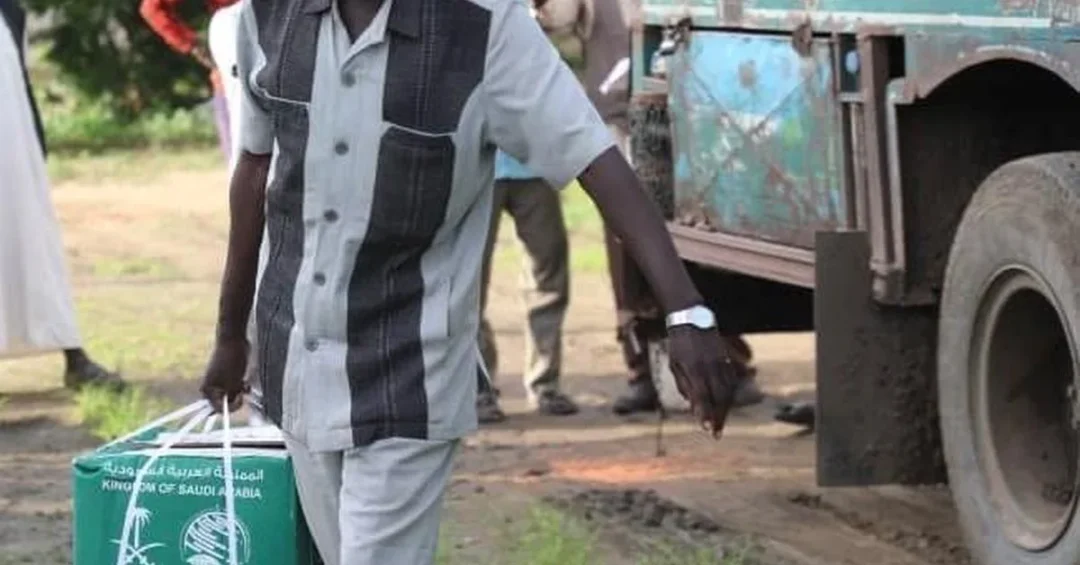
The King Salman Humanitarian Aid and Relief Center (KSrelief) distributed 959 food baskets to displaced and vulnerable families in Ad-Damazin, Blue Nile State, Sudan, on July 17, 2024, benefiting 5,422 individuals as part of the second phase of a project to support food security in the country. The initiative reflects Saudi Arabia’s ongoing commitment to providing humanitarian assistance to those in need, under the leadership of the Custodian of the Two Holy Mosques, King Salman bin Abdulaziz Al Saud, and His Royal Highness Crown Prince Mohammed bin Salman bin Abdulaziz Al Saud.
Context and Background
Sudan has faced significant challenges in recent years, including economic instability and internal displacement, which have exacerbated food insecurity for many families. In response, Saudi Arabia, through KSrelief, has been actively engaged in humanitarian efforts to alleviate suffering and support vulnerable populations. The distribution in Blue Nile State is part of a broader project aimed at enhancing food security, which is a critical component of Saudi Arabia’s humanitarian strategy.
KSrelief, established in 2015, is the humanitarian arm of Saudi Arabia and has since implemented numerous relief projects worldwide, focusing on food security, health, education, and shelter. The center operates in collaboration with international partners and local authorities to ensure aid reaches those most in need, embodying the Kingdom’s values of generosity and solidarity.
Key Details
The distribution of 959 food baskets in Ad-Damazin targeted displaced and vulnerable families, providing essential food items to 5,422 individuals. This operation is part of the second phase of a project that aims to support food security in Sudan, addressing immediate nutritional needs while contributing to longer-term stability. Each food basket typically contains staple items such as rice, flour, oil, and sugar, designed to sustain a family for a month.
This initiative is one of many relief and humanitarian projects undertaken by Saudi Arabia through KSrelief, which has a strong track record of delivering aid to needy and affected populations in numerous countries. The center’s efforts are guided by the principles of neutrality, impartiality, and independence, ensuring that assistance is provided solely based on need.
Implications and Impact
The distribution of food baskets in Blue Nile State has immediate and tangible benefits for the affected communities, helping to mitigate hunger and malnutrition among displaced families. By addressing food insecurity, the project contributes to the overall well-being and resilience of the population, particularly women and children who are often the most vulnerable. Furthermore, such humanitarian gestures strengthen the bonds of friendship between Saudi Arabia and Sudan, reflecting the Kingdom’s role as a responsible global actor.
On a broader scale, this initiative aligns with Saudi Arabia’s Vision 2030, which emphasizes the importance of humanitarian and charitable work as part of the Kingdom’s international commitments. By supporting food security in Sudan, Saudi Arabia is also contributing to regional stability and development, which are essential for prosperity and peace.
Vision 2030 Alignment
Saudi Arabia’s Vision 2030 encompasses a strong commitment to humanitarian aid and global engagement, positioning the Kingdom as a leader in addressing global challenges. Through KSrelief, Saudi Arabia continues to extend a helping hand to those in need, demonstrating its dedication to the principles of compassion and cooperation. This distribution in Sudan is a testament to the Kingdom’s unwavering efforts to support food security and improve lives, in line with the visionary leadership of King Salman and Crown Prince Mohammed bin Salman. As Saudi Arabia progresses towards a brighter future, it remains steadfast in its mission to contribute to a more stable and prosperous world.
20 Questions
Q1. What organization distributed the food baskets in Sudan?
A1. The King Salman Humanitarian Aid and Relief Center (KSrelief) distributed the food baskets. KSrelief is the humanitarian arm of Saudi Arabia, established in 2015 to provide relief and aid to needy populations worldwide.
Q2. How many food baskets were distributed?
A2. 959 food baskets were distributed to displaced and vulnerable families in Ad-Damazin, Blue Nile State, Sudan. This distribution is part of the second phase of a project aimed at supporting food security in the region.
Q3. How many individuals benefited from the distribution?
A3. 5,422 individuals benefited from the distribution of the food baskets. This included displaced and vulnerable families, providing them with essential food items to meet their nutritional needs.
Q4. Where did the distribution take place?
A4. The distribution took place in Ad-Damazin, the capital of Blue Nile State in Sudan. Blue Nile State has faced challenges such as displacement and food insecurity, making it a priority area for humanitarian assistance.
Q5. When was the distribution carried out?
A5. The distribution was carried out on July 17, 2024, as reported by the Saudi Press Agency. This timely intervention addresses the urgent food needs of the affected population.
Q6. What is the purpose of the project?
A6. The project aims to support food security in Sudan by providing food baskets to needy families. It is part of a broader effort to alleviate hunger and improve the well-being of vulnerable communities.
Q7. What does each food basket contain?
A7. Each food basket typically contains staple items such as rice, flour, oil, and sugar, designed to sustain a family for a month. These items are essential for meeting basic nutritional needs.
Q8. Which phase of the project is this distribution part of?
A8. This distribution is part of the second phase of the project aimed at supporting food security in Sudan. The second phase continues the efforts of the first phase to reach more beneficiaries.
Q9. Who is leading the humanitarian efforts in Saudi Arabia?
A9. The humanitarian efforts are under the leadership of the Custodian of the Two Holy Mosques, King Salman bin Abdulaziz Al Saud, and His Royal Highness Crown Prince Mohammed bin Salman bin Abdulaziz Al Saud.
Q10. What is KSrelief’s role in Saudi Arabia?
A10. KSrelief is the humanitarian arm of Saudi Arabia, responsible for providing relief and aid to needy populations worldwide. It implements projects in areas such as food security, health, education, and shelter.
Q11. How does this initiative align with Saudi Vision 2030?
A11. This initiative aligns with Saudi Vision 2030 by demonstrating the Kingdom’s commitment to humanitarian aid and global engagement. Vision 2030 emphasizes the importance of charitable work and international cooperation.
Q12. What is the significance of this distribution for Sudan?
A12. The distribution provides immediate relief to displaced and vulnerable families, helping to mitigate hunger and malnutrition. It also strengthens the bonds between Saudi Arabia and Sudan and contributes to regional stability.
Q13. How many countries does KSrelief operate in?
A13. KSrelief operates in numerous countries around the world, providing aid to needy and affected populations. Its efforts are guided by principles of neutrality, impartiality, and independence.
Q14. What are the key principles guiding KSrelief’s work?
A14. KSrelief’s work is guided by the principles of neutrality, impartiality, and independence, ensuring that assistance is provided solely based on need, without discrimination.
Q15. Who are the primary beneficiaries of this distribution?
A15. The primary beneficiaries are displaced and vulnerable families in Ad-Damazin, Blue Nile State. These families often include women and children who are most at risk of food insecurity.
Q16. What challenges does Blue Nile State face?
A16. Blue Nile State faces challenges such as internal displacement and food insecurity, which have been exacerbated by economic instability. Humanitarian assistance is crucial to address these issues.
Q17. How does Saudi Arabia’s aid reflect its foreign policy?
A17. Saudi Arabia’s aid reflects its foreign policy of promoting peace, stability, and prosperity through humanitarian assistance. It showcases the Kingdom’s role as a responsible global actor.
Q18. What is the expected impact of the food baskets?
A18. The food baskets are expected to provide essential nutrition to 5,422 individuals, helping to alleviate hunger and improve food security. This support contributes to the overall well-being of the community.
Q19. How can other organizations support similar efforts?
A19. Other organizations can support similar efforts by partnering with KSrelief or contributing resources to food security projects. Collaboration is key to addressing global humanitarian challenges effectively.
Q20. What is the broader significance of this humanitarian gesture?
A20. The gesture demonstrates Saudi Arabia’s unwavering commitment to humanitarian causes and its leadership in global relief efforts. It reinforces the Kingdom’s dedication to helping those in need and promoting international solidarity.
Reader Feedback
We value your thoughts. Please share your feedback on this article.
Your feedback helps us improve our coverage.