


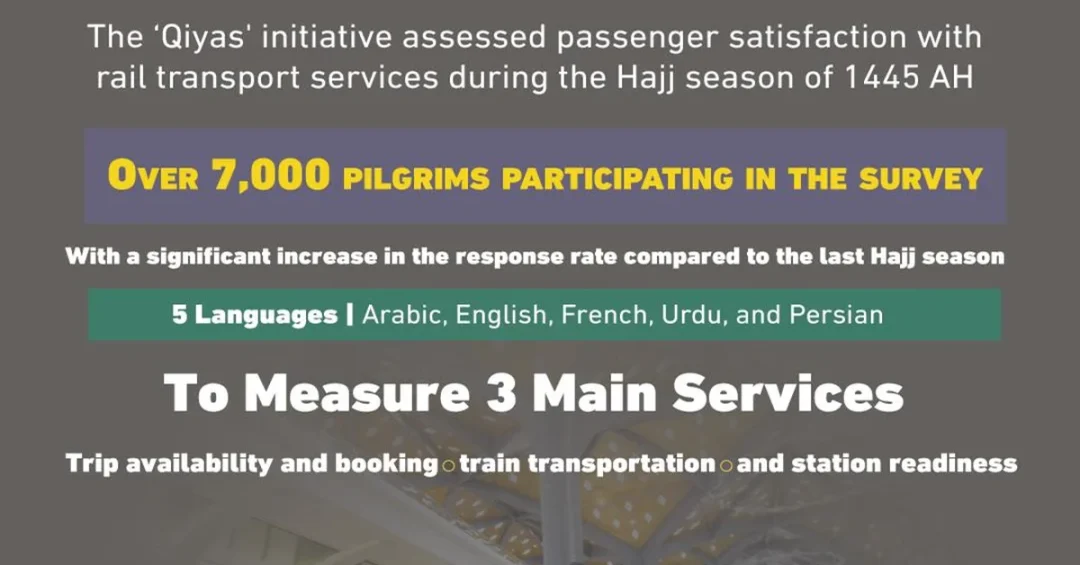
The Transport General Authority (TGA) has launched a comprehensive initiative to measure pilgrim satisfaction with rail transport during the Hajj season 1445 AH, sending over 107,000 messages to assess the experience on the Haramain High-Speed Railway. The initiative, part of the authority’s ongoing efforts to enhance services for pilgrims, utilized QR codes, voice announcements, and direct interviews to gather feedback from beneficiaries. Participation in the survey, which was translated into five major languages—Arabic, English, French, Urdu, and Persian—involved more than 7,000 pilgrims across all stations and trains of the Haramain High-Speed Railway and holy sites. The data collected is linked to the TGA’s “Customer Voice” platform, enabling real-time monitoring and continuous improvement of transport services.
Context and Background
The Hajj season presents a massive logistical challenge, with millions of pilgrims converging on the holy sites in Makkah and Madinah. The Haramain High-Speed Railway, a key component of Saudi Arabia’s transportation infrastructure, plays a vital role in transporting pilgrims between the two cities and to the holy sites. The Transport General Authority, responsible for regulating and improving transport services in the Kingdom, has prioritized enhancing the pilgrim experience through innovative feedback mechanisms. This year’s initiative builds on previous efforts to ensure that rail transport meets the highest standards of efficiency, safety, and comfort.
Key Details
The TGA’s initiative employed multiple channels to reach pilgrims. QR codes were placed at stations and on trains, allowing pilgrims to quickly access the survey via their smartphones. Voice announcements in multiple languages informed passengers about the survey and encouraged participation. Direct interviews were also conducted to gather more detailed opinions. The survey focused on key aspects such as trip availability and booking, train travel experience, and station readiness. The feedback was collected and analyzed through the “Customer Voice” platform, which provides real-time insights into pilgrim satisfaction. This data will inform future improvements to transport services. The TGA emphasized that pilgrims can also provide feedback through its website, social media platforms (@tga_care), or the unified call center at 19929.
Implications and Impact
This initiative reflects Saudi Arabia’s commitment to transparency and continuous improvement in serving pilgrims. By actively seeking feedback, the TGA demonstrates its dedication to understanding and addressing the needs of those who travel for Hajj. The use of multiple languages ensures that pilgrims from diverse backgrounds can participate, making the feedback more representative. The real-time monitoring capability of the “Customer Voice” platform allows for immediate responses to any issues, potentially enhancing the overall Hajj experience. This approach not only improves rail transport but also sets a benchmark for other service sectors in the Kingdom. The initiative aligns with the goals of Vision 2030, which emphasizes enhancing the quality of life for citizens and visitors, and improving public services through digital transformation.
Vision 2030 Alignment
The TGA’s initiative is a clear example of how Saudi Arabia is leveraging technology and innovation to enhance the pilgrim experience, a key objective under Vision 2030. By investing in smart solutions and prioritizing customer feedback, the Kingdom is not only improving Hajj logistics but also reinforcing its role as a global leader in service excellence. As Saudi Arabia continues to welcome millions of pilgrims annually, such initiatives will be crucial in ensuring that the Hajj remains a spiritually fulfilling and logistically smooth journey. The TGA’s efforts contribute to the broader Vision 2030 goal of transforming Saudi Arabia into a hub of modernity, efficiency, and hospitality.
20 Questions
Q1. What is the ‘Qiyas’ initiative?
A1. The ‘Qiyas’ initiative is a comprehensive program launched by the Transport General Authority (TGA) to measure pilgrim satisfaction with rail transport services during the Hajj season 1445 AH.
Q2. How many messages were sent to assess pilgrim satisfaction?
A2. Over 107,000 messages were sent to assess satisfaction from the Haramain High-Speed Railway during the Hajj season.
Q3. What methods were used to gather feedback?
A3. The initiative used QR codes, voice announcements at stations and trains, and direct interviews to collect opinions from pilgrims.
Q4. How many pilgrims participated in the survey?
A4. More than 7,000 pilgrims participated in the survey.
Q5. In which languages was the survey available?
A5. The survey was translated into five major languages: Arabic, English, French, Urdu, and Persian.
Q6. What key services were evaluated in the survey?
A6. The survey evaluated trip availability and booking, train travel experience, and station readiness.
Q7. What is the ‘Customer Voice’ platform?
A7. The ‘Customer Voice’ platform is a TGA system that links survey data, enabling real-time and continuous monitoring of pilgrim satisfaction.
Q8. How does the initiative enhance transparency?
A8. By openly collecting and responding to feedback, the initiative demonstrates the TGA’s commitment to transparency and service quality improvement.
Q9. What is the Haramain High-Speed Railway?
A9. The Haramain High-Speed Railway is a key rail link connecting Makkah and Madinah, used extensively by pilgrims during Hajj.
Q10. Where can pilgrims provide feedback outside the survey?
A10. Pilgrims can provide feedback via the TGA website (tga.gov.sa), social media (@tga_care), or the unified call center at 19929.
Q11. Why is the TGA focusing on rail transport during Hajj?
A11. Rail transport is crucial for efficiently moving millions of pilgrims; improving it enhances the overall Hajj experience.
Q12. How does the initiative align with Vision 2030?
A12. It aligns with Vision 2030 by using technology to improve public services and enhance the quality of life for visitors.
Q13. What are the benefits of real-time monitoring?
A13. Real-time monitoring allows immediate responses to issues, ensuring continuous improvement and higher satisfaction.
Q14. How does multilingual support help?
A14. Multilingual support ensures pilgrims from diverse backgrounds can participate, making feedback more representative.
Q15. What is the role of the Transport General Authority?
A15. The TGA regulates and improves transport services in Saudi Arabia, ensuring they meet high standards of efficiency and safety.
Q16. How will the collected data be used?
A16. The data will inform future improvements to rail transport services, enhancing the pilgrim experience.
Q17. What other sectors can benefit from this approach?
A17. The approach can be a model for other service sectors in the Kingdom, promoting customer-centric improvements.
Q18. How does this initiative reflect Saudi hospitality?
A18. By prioritizing pilgrim satisfaction, the initiative reflects Saudi Arabia’s commitment to warmly welcoming and serving guests.
Q19. What is the significance of the unified call center?
A19. The unified call center provides a direct channel for inquiries and feedback, ensuring pilgrims’ voices are heard.
Q20. What future improvements can be expected?
A20. Future improvements may include enhanced booking systems, better station facilities, and more efficient train services based on feedback.
Reader Feedback
We value your thoughts. Please share your feedback on this article.
Your feedback helps us improve our coverage.