


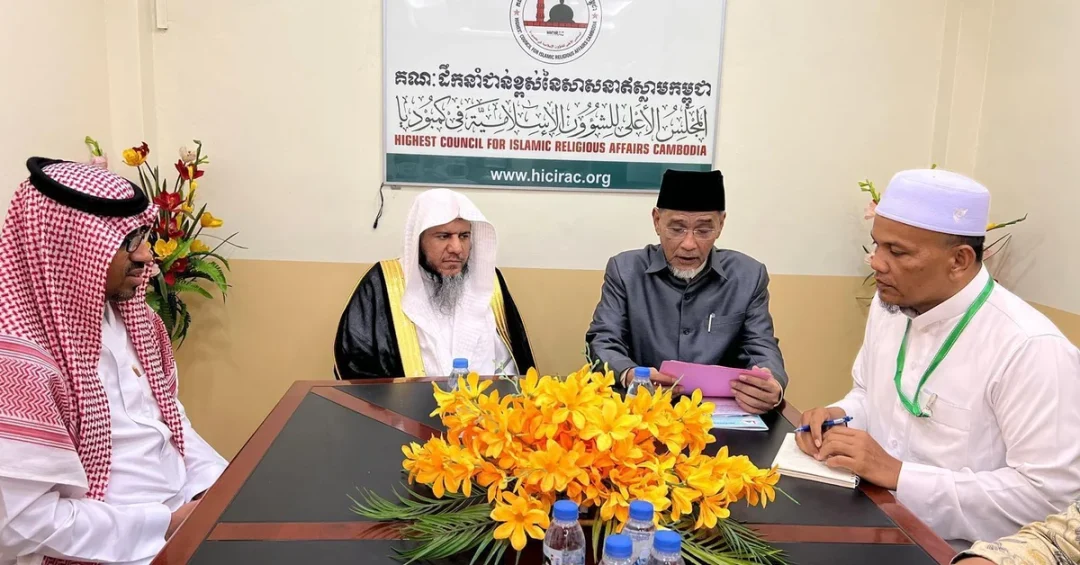
Cambodia’s Grand Mufti, Shaikh Kamarudin Yusof, has affirmed that the Kingdom of Saudi Arabia is a leader in the Islamic world, with its efforts in serving Muslims widely recognized and appreciated. The statement was made during his reception of a delegation from the Saudi Ministry of Islamic Affairs, Dawah, and Guidance, which was participating in the second scientific session for the training of imams and preachers in Cambodia. The meeting, attended by Majid Al-Dhayan, the religious attaché assigned to the Saudi Embassy, underscored the deepening ties between the two nations in promoting moderate Islam and religious education.
Context and Background
The Saudi Ministry of Islamic Affairs, Dawah, and Guidance has long been engaged in global outreach, organizing training programs for imams and preachers to disseminate the values of tolerance and moderation. This initiative aligns with the Kingdom’s broader mission to serve Muslims worldwide and to counter extremism. Cambodia, home to a significant Muslim minority, has been a beneficiary of such programs, which aim to enhance the skills of religious leaders and promote a balanced understanding of Islam based on the Holy Quran and the noble Sunnah.
The second scientific session in Cambodia is part of a series of efforts by the Ministry to deepen cooperation with Islamic institutions globally. It reflects Saudi Arabia’s commitment to fostering interfaith harmony and supporting Muslim communities in fulfilling their religious duties. The presence of Majid Al-Dhayan, the religious attaché, highlights the official nature of this collaboration and the Kingdom’s dedication to building bridges with Southeast Asian nations.
Key Details
During the reception, Grand Mufti Shaikh Kamarudin Yusof praised the significant advancements witnessed in Saudi Arabia across various fields, particularly in serving the Two Holy Mosques and their pilgrims, Umrah performers, and visitors. He commended the use of modern technology to facilitate the performance of rituals with ease and tranquility, a testament to the Kingdom’s unwavering commitment to the comfort of millions of Muslims who visit annually.
Furthermore, the Mufti highlighted the efforts of the Ministry of Islamic Affairs, Dawah, and Guidance in deepening cooperation with various Islamic institutions and organizations to promote the principles of moderation and reject extremism and ideological deviation. He emphasized the importance of the current training courses and scientific programs implemented by the Ministry in Cambodia, which aim to develop and enhance the skills of preachers and religious guides in fulfilling their religious duties.
The training session is designed to equip imams and preachers with the necessary tools to address contemporary challenges and to spread the message of Islam in a manner that reflects its true, peaceful nature. Participants engage in workshops and lectures that cover a range of topics, including Islamic jurisprudence, interfaith dialogue, and community leadership. This initiative is part of Saudi Arabia’s broader strategy to support Muslim communities worldwide and to promote the values of moderate Islam.
Implications and Impact
The recognition by Cambodia’s Grand Mufti underscores Saudi Arabia’s pivotal role in the Islamic world and its efforts to serve Muslims globally. It also highlights the success of the Kingdom’s soft power diplomacy, which focuses on religious education and cultural exchange. Such initiatives not only strengthen bilateral relations but also contribute to regional stability by promoting moderate Islam and countering radical ideologies.
The impact of these training programs extends beyond Cambodia, as they create a network of religious leaders who are better equipped to guide their communities. This, in turn, fosters a more tolerant and harmonious society, aligning with Saudi Arabia’s Vision 2030 goal of promoting moderation and rejecting extremism. Moreover, the use of advanced technology in the Two Holy Mosques serves as a model for other nations, demonstrating how innovation can enhance religious experiences and accommodate the needs of pilgrims.
Internationally, Saudi Arabia’s efforts in serving Muslims are widely acknowledged, reinforcing its leadership position in the Islamic world. The Kingdom’s commitment to the Two Holy Mosques and its global outreach programs are key pillars of its foreign policy, which seeks to foster peace and understanding among nations. As the world becomes increasingly interconnected, such initiatives play a crucial role in building bridges between cultures and religions.
Vision 2030 Alignment
Saudi Arabia’s Vision 2030 is a comprehensive plan to diversify the economy and enhance the Kingdom’s global standing. A key component of this vision is the promotion of moderate Islam and the rejection of extremism, which is achieved through programs like the training sessions for imams and preachers. By investing in religious education and supporting Muslim communities abroad, Saudi Arabia is not only fulfilling its religious obligations but also positioning itself as a leader in the global fight against extremism.
Moreover, the use of modern technology to serve pilgrims is a direct reflection of Vision 2030’s emphasis on innovation and efficiency. The Kingdom’s efforts to enhance the pilgrimage experience through digital solutions demonstrate its commitment to leveraging technology for the betterment of society. As Saudi Arabia continues to advance its Vision 2030 objectives, its role as a beacon of moderate Islam and a servant of Muslims worldwide will only grow stronger.
20 Questions
Q1. Who is the Grand Mufti of Cambodia?
A1. Shaikh Kamarudin Yusof serves as the Grand Mufti and Chairman of the Highest Council for Islamic Religious Affairs in the Kingdom of Cambodia, representing the Muslim community and fostering interfaith harmony.
Q2. What did the Grand Mufti say about Saudi Arabia?
A2. He affirmed that Saudi Arabia is a leader in the Islamic world, with well-recognized efforts in serving Muslims, promoting tolerance, and facilitating pilgrimage through modern technology.
Q3. Which Saudi ministry participated in the training session?
A3. The Ministry of Islamic Affairs, Dawah, and Guidance participated in the second scientific session for training imams and preachers in Cambodia.
Q4. Who attended the reception from the Saudi side?
A4. Majid Al-Dhayan, the religious attaché assigned to the Saudi Embassy, attended the reception along with the delegation from the Ministry of Islamic Affairs, Dawah, and Guidance.
Q5. What is the purpose of the training session?
A5. The training aims to develop the skills of imams and preachers, promote moderation, and reject extremism, based on the Holy Quran and the noble Sunnah.
Q6. How does Saudi Arabia serve the Two Holy Mosques?
A6. Saudi Arabia uses modern technology to facilitate rituals for pilgrims, Umrah performers, and visitors, ensuring ease and tranquility during their spiritual journeys.
Q7. What advancements did the Grand Mufti praise?
A7. He praised Saudi Arabia’s significant advancements in various fields, particularly in serving the Two Holy Mosques and enhancing the pilgrimage experience through technology.
Q8. Why is the training important for Cambodia?
A8. It enhances the skills of local preachers and religious guides, helping them fulfill their duties effectively and promote moderate Islam within their communities.
Q9. What values does the training promote?
A9. The training promotes the principles of moderation, tolerance, and the rejection of extremism and ideological deviation, fostering a balanced understanding of Islam.
Q10. How does this align with Saudi Vision 2030?
A10. Vision 2030 emphasizes promoting moderate Islam and rejecting extremism, and this training program is a direct manifestation of those goals on an international scale.
Q11. What is the role of the religious attaché?
A11. The religious attaché facilitates cooperation between Saudi Arabia and the host country, overseeing religious programs and ensuring their alignment with the Kingdom’s objectives.
Q12. How does Saudi Arabia support Muslim communities globally?
A12. Through educational programs, training sessions, and cooperation with Islamic institutions, Saudi Arabia supports Muslim communities in practicing their faith and promoting moderation.
Q13. What technology is used in the Two Holy Mosques?
A13. Advanced technology includes digital guides, crowd management systems, and mobile applications to assist pilgrims in performing rituals smoothly and efficiently.
Q14. What is the significance of the second scientific session?
A14. It represents a continued effort to strengthen ties with Cambodia and to build the capacity of religious leaders, reinforcing Saudi Arabia’s commitment to global Islamic outreach.
Q15. How does the Mufti view Saudi efforts in serving Muslims?
A15. He views them as widely recognized and appreciated, particularly in promoting tolerance, clarifying Islam’s virtues, and fostering moderate values.
Q16. What are the key topics covered in the training?
A16. Topics include Islamic jurisprudence, interfaith dialogue, community leadership, and strategies to counter extremism, all grounded in Islamic teachings.
Q17. How does this initiative affect regional stability?
A17. By promoting moderate Islam and rejecting extremism, it contributes to stability by reducing radical influences and fostering peaceful coexistence among communities.
Q18. What is the expected outcome of the training?
A18. The expected outcome is a network of well-trained imams and preachers who can guide their communities effectively and uphold the principles of moderate Islam.
Q19. How does Saudi Arabia’s leadership benefit the Islamic world?
A19. Saudi leadership provides spiritual guidance, supports religious education, and facilitates pilgrimage, serving as a unifying force for Muslims worldwide.
Q20. What future cooperation is envisioned?
A20. Future cooperation includes more training sessions, exchange programs, and joint efforts to promote moderation and counter extremism globally.
Reader Feedback
We value your thoughts. Please share your feedback on this article.
Your feedback helps us improve our coverage.