


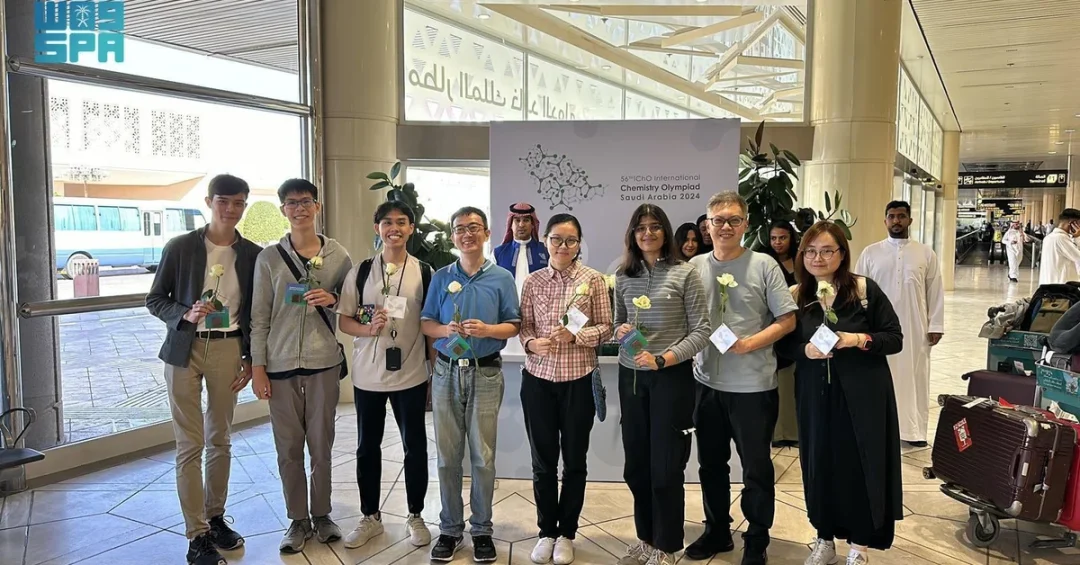
Riyadh, July 21, 2024 — Saudi Arabia is hosting the 56th International Chemistry Olympiad (IChO 2024) from July 21 to 30, welcoming 333 students from 90 countries to the capital, in an event organized by the King Abdulaziz and his Companions Foundation for Giftedness and Creativity (Mawhiba) in strategic partnership with the Ministry of Education and King Saud University (KSU). The competition, exclusively sponsored by Saudi Basic Industries Corporation (SABIC), will be overseen by 260 chemistry experts who will evaluate and judge the participants. Students will compete for 10 honorary certificates, 110 bronze medals, 70 silver medals, and 35 gold medals, with final results to be announced on July 28 at 11 PM.
Context and Background
The International Chemistry Olympiad is the largest annual scientific competition for general education students, held every year over ten days in a different host country since its establishment in Prague, Czechoslovakia, in 1968. Saudi Arabia’s journey with the Olympiad began in 2004 and 2005 as an observer, followed by participation with students in 2006 and 2007. After returning as an observer in 2008, 2009, and 2010, the Kingdom has consistently participated with students from 2011 to the present. Hosting the 2024 edition underscores Saudi Arabia’s growing role in global scientific education and its commitment to nurturing talent.
Key Details
The event is a collaborative effort led by Mawhiba, a foundation dedicated to identifying and supporting gifted Saudi youth, in partnership with the Ministry of Education, which oversees the national education strategy, and King Saud University, which provides the venue and logistical support. SABIC’s exclusive sponsorship highlights the private sector’s engagement in advancing science and education. The 333 participating students represent 90 nations, reflecting the truly international character of the competition. The 260 experts involved ensure a rigorous and fair evaluation process, with medals and certificates awarded based on individual performance in theoretical and practical chemistry examinations.
Implications and Impact
Hosting the IChO 2024 positions Saudi Arabia as a leading global destination for scientific events, enhancing its reputation in international education circles. The event fosters cross-cultural exchange among young scientists and promotes chemistry as a vital field for addressing global challenges. For Saudi students, competing alongside peers from around the world provides invaluable experience and motivation. The Olympiad also supports the Kingdom’s broader efforts to develop human capital and transition to a knowledge-based economy, aligning with the goals of Saudi Vision 2030.
Vision 2030 Alignment
This hosting directly supports Saudi Vision 2030’s human capability development program, which aims to empower youth and cultivate a skilled workforce. By investing in gifted education and international scientific collaboration, the Kingdom is building a sustainable pipeline of innovators who will drive future economic diversification and technological advancement. The IChO 2024 serves as a testament to Saudi Arabia’s commitment to excellence in education and its proactive role in shaping the global scientific community.
20 Questions
Q1. What is the International Chemistry Olympiad?
A1. The International Chemistry Olympiad is an annual global competition for high school students, held since 1968. It brings together young talents to test their chemistry knowledge and problem-solving skills through theoretical and practical exams.
Q2. When and where is the 56th IChO taking place?
A2. The 56th IChO is being held in Riyadh, Saudi Arabia, from July 21 to 30, 2024. King Saud University is hosting the competition, with events spanning ten days of rigorous academic activities.
Q3. How many students are participating in IChO 2024?
A3. A total of 333 students from 90 countries are participating. This diverse group represents the brightest young chemistry minds from around the world, competing for medals and honors.
Q4. Who are the main organizers of IChO 2024?
A4. The event is organized by the King Abdulaziz and his Companions Foundation for Giftedness and Creativity (Mawhiba) in strategic partnership with the Ministry of Education and King Saud University.
Q5. What is Mawhiba’s role in the Olympiad?
A5. Mawhiba, a Saudi foundation dedicated to nurturing gifted youth, leads the organization of the event. It coordinates logistics, partnerships, and ensures a world-class experience for participants.
Q6. How is SABIC involved in the event?
A6. Saudi Basic Industries Corporation (SABIC) is the exclusive sponsor of IChO 2024. Its support underscores the private sector’s commitment to advancing science education and fostering young talent.
Q7. How many experts are judging the competition?
A7. There are 260 chemistry experts involved in oversight, evaluation, and judging. Their expertise ensures a fair and rigorous assessment of all participants’ performances.
Q8. What medals and certificates are awarded?
A8. Students compete for 10 honorary certificates, 110 bronze medals, 70 silver medals, and 35 gold medals. These awards recognize outstanding achievement in the Olympiad’s examinations.
Q9. When will the final results be announced?
A9. The final results will be announced on July 28 at 11 PM. Participants and the global community will learn who earned the top honors in this prestigious competition.
Q10. What is the history of the IChO?
A10. The IChO was first held in Prague, Czechoslovakia, in 1968. It has since been conducted annually in different host countries, growing into the largest international chemistry competition for pre-university students.
Q11. When did Saudi Arabia first participate in the IChO?
A11. Saudi Arabia first participated as an observer in 2004 and 2005. It then sent students in 2006 and 2007, returned as an observer from 2008 to 2010, and has participated with students continuously since 2011.
Q12. Why is hosting the IChO significant for Saudi Arabia?
A12. Hosting reflects the excellence of Saudi students internationally and enhances the Kingdom’s status as a leading global destination for scientific events, showcasing its capabilities in education and innovation.
Q13. How does the IChO benefit participating students?
A13. Students gain international exposure, test their skills against global peers, and engage in cultural exchange. The experience inspires them to pursue careers in science and research.
Q14. What subjects are covered in the competition?
A14. The competition focuses on chemistry, including theoretical knowledge and practical laboratory skills. It covers various subfields such as organic, inorganic, physical, and analytical chemistry.
Q15. How does the event align with Vision 2030?
A15. It supports Vision 2030’s human capability development goals by investing in youth, promoting education, and fostering a knowledge-based economy. It also strengthens Saudi Arabia’s global scientific partnerships.
Q16. What role does King Saud University play?
A16. King Saud University hosts the competition, providing facilities and logistical support. Its involvement highlights the university’s commitment to academic excellence and international collaboration.
Q17. Which countries are represented at IChO 2024?
A17. Ninety countries from around the world are represented, including teams from Asia, Europe, the Americas, Africa, and Oceania. This global participation underscores the Olympiad’s inclusive nature.
Q18. How long does the IChO last?
A18. The IChO typically spans ten days, from July 21 to 30 in 2024. This period includes opening ceremonies, examinations, cultural activities, and the closing award ceremony.
Q19. What is the significance of SABIC’s sponsorship?
A19. SABIC’s exclusive sponsorship demonstrates corporate leadership in supporting STEM education. It aligns with Saudi Arabia’s efforts to foster innovation and prepare youth for future scientific challenges.
Q20. What impact does hosting have on Saudi Arabia’s global image?
A20. It reinforces Saudi Arabia’s reputation as a hub for international scientific events, showcasing its modernization, hospitality, and dedication to education, thereby attracting future collaborations and visitors.
Reader Feedback
We value your thoughts. Please share your feedback on this article.
Your feedback helps us improve our coverage.