


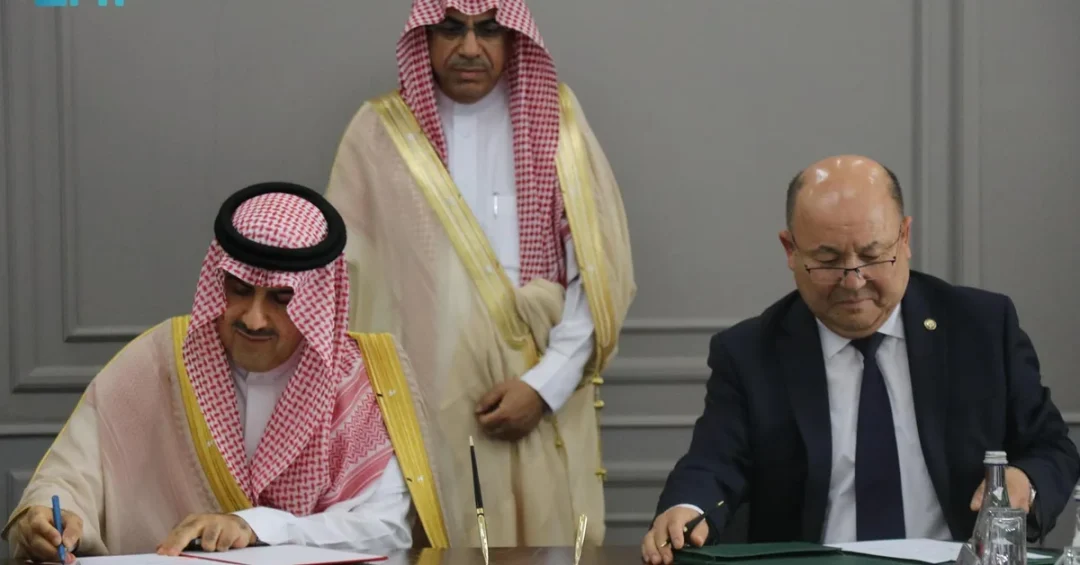
The Saudi General Court of Audit (GCA) has signed a memorandum of understanding (MoU) with the Kyrgyz Republic Chamber of Accounts to enhance cooperation in accounting, control, and professional work. The agreement was signed in Bishkek on May 17, 2024, by Dr. Hussam bin Abdulmohsen Al-Anqari, President of the GCA, and Almazbek Akmatov, Chairman of the Kyrgyz Republic Chamber of Accounts. The signing ceremony took place at the Chamber of Accounts headquarters in the Kyrgyz capital, Bishkek, and was attended by Ibrahim Radi Al-Radi, the Saudi Ambassador to the Kyrgyz Republic.
Context and Background
This MoU represents a continuation of the GCA’s efforts to strengthen international cooperation in financial auditing and oversight. It aligns with the frameworks of the International Organization of Supreme Audit Institutions (INTOSAI) and the Asian Organization of Supreme Audit Institutions (ASOSAI). The agreement underscores Saudi Arabia’s commitment to sharing expertise and fostering professional ties with friendly nations, reflecting the Kingdom’s active role in global audit standards and practices.
Key Details
The MoU focuses on several key areas: enhancing cooperation in financial auditing, compliance, and performance audit; exchanging experiences and consultations on research projects of mutual interest; organizing training programs; and designing work manuals and training materials. Dr. Al-Anqari noted that this agreement is part of a series of similar agreements the GCA has concluded with counterpart agencies globally, highlighting the GCA’s distinguished professional expertise and its ability to transfer knowledge to other institutions.
Implications and Impact
This partnership is expected to improve the quality and effectiveness of audit practices in both Saudi Arabia and Kyrgyzstan. By sharing best practices and training resources, the two bodies will enhance transparency, accountability, and governance. The collaboration also strengthens bilateral relations between the Kingdom and Kyrgyzstan, promoting mutual understanding and professional development in public financial management.
Vision 2030 Alignment
This MoU reflects Saudi Arabia’s Vision 2030 objectives of fostering international partnerships, enhancing government efficiency, and promoting knowledge exchange. By building capacity in auditing and oversight, the GCA contributes to the Kingdom’s broader goals of transparent governance and sustainable development, while also reinforcing its role as a leader in international cooperation.
20 Questions
Q1. What is the purpose of the MoU signed between Saudi Arabia and Kyrgyzstan?
A1. The MoU aims to enhance cooperation in accounting, control, and professional work, including financial auditing, compliance, and performance audit, within the frameworks of INTOSAI and ASOSAI. It also facilitates the exchange of experiences and training programs.
Q2. Who signed the MoU on behalf of Saudi Arabia?
A2. Dr. Hussam bin Abdulmohsen Al-Anqari, President of the Saudi General Court of Audit, signed the MoU on behalf of Saudi Arabia. He has been a key figure in promoting international audit cooperation.
Q3. Who signed the MoU on behalf of Kyrgyzstan?
A3. Almazbek Akmatov, Chairman of the Kyrgyz Republic Chamber of Accounts, signed the MoU on behalf of Kyrgyzstan. His leadership has been instrumental in advancing audit practices in the country.
Q4. Where was the MoU signed?
A4. The MoU was signed at the headquarters of the Chamber of Accounts in Bishkek, the capital of the Kyrgyz Republic. The event was attended by the Saudi Ambassador to Kyrgyzstan, Ibrahim Radi Al-Radi.
Q5. When was the MoU signed?
A5. The MoU was signed on May 17, 2024, as reported by the Saudi Press Agency. This date marks a significant step in Saudi-Kyrgyz cooperation in public financial oversight.
Q6. What are the main areas of cooperation outlined in the MoU?
A6. The MoU covers financial auditing, compliance, and performance audit, as well as the exchange of experiences, research projects, and the organization of training programs and work manuals between the two institutions.
Q7. What international organizations’ frameworks does the MoU fall under?
A7. The MoU operates within the frameworks of the International Organization of Supreme Audit Institutions (INTOSAI) and the Asian Organization of Supreme Audit Institutions (ASOSAI), promoting global audit standards.
Q8. How does this MoU benefit Saudi Arabia?
A8. It enhances Saudi Arabia’s international cooperation, showcases the GCA’s professional expertise, and contributes to Vision 2030 goals of transparent governance and knowledge exchange. It also strengthens bilateral ties with Kyrgyzstan.
Q9. How does this MoU benefit Kyrgyzstan?
A9. Kyrgyzstan gains access to Saudi expertise in auditing, training programs, and best practices, which can improve its public financial management and accountability systems.
Q10. What did Dr. Al-Anqari say about the agreement?
A10. Dr. Al-Anqari stated that the agreement extends the GCA’s series of similar international agreements, reflecting its high professional status and ability to transfer distinguished expertise to counterpart agencies in friendly countries.
Q11. Who attended the signing ceremony?
A11. The signing ceremony was attended by Ibrahim Radi Al-Radi, the Saudi Ambassador to the Kyrgyz Republic, along with representatives from both institutions. Their presence underscores the importance of the partnership.
Q12. What is the significance of the GCA’s international agreements?
A12. These agreements demonstrate the GCA’s commitment to global cooperation and its role as a leader in audit practices. They also promote Saudi Arabia’s image as a proactive and reliable international partner.
Q13. How does this MoU align with Vision 2030?
A13. It aligns with Vision 2030 by fostering international partnerships, enhancing government efficiency, and promoting knowledge exchange, all of which are key pillars of the Kingdom’s development strategy.
Q14. What types of training programs will be organized?
A14. Training programs will focus on financial auditing, compliance, and performance control. They may include workshops, seminars, and certification courses designed to build capacity in both institutions.
Q15. Will there be joint research projects?
A15. Yes, the MoU includes provisions for joint research projects on topics of shared interest, allowing both parties to collaborate on studies that advance audit methodologies and practices.
Q16. How does this MoU reflect Saudi Arabia’s global role?
A16. It highlights Saudi Arabia’s active engagement in international organizations and its willingness to share expertise, reinforcing its position as a responsible global actor committed to transparency and good governance.
Q17. What is INTOSAI?
A17. INTOSAI is the International Organization of Supreme Audit Institutions, a global body that promotes best practices in public sector auditing. It provides a framework for cooperation among audit institutions worldwide.
Q18. What is ASOSAI?
A18. ASOSAI is the Asian Organization of Supreme Audit Institutions, a regional group that facilitates cooperation and knowledge sharing among audit institutions in Asia. It operates under the broader INTOSAI framework.
Q19. How will the MoU be implemented?
A19. Implementation will involve joint activities such as training sessions, research collaborations, and the exchange of experts. Both institutions will likely establish a working group to oversee the MoU’s execution.
Q20. What future cooperation can be expected between Saudi Arabia and Kyrgyzstan?
A20. Future cooperation may expand to other areas of mutual interest, building on the MoU’s foundation. This could include additional agreements in public finance, governance, and capacity building, further strengthening bilateral relations.
Reader Feedback
We value your thoughts. Please share your feedback on this article.
Your feedback helps us improve our coverage.