


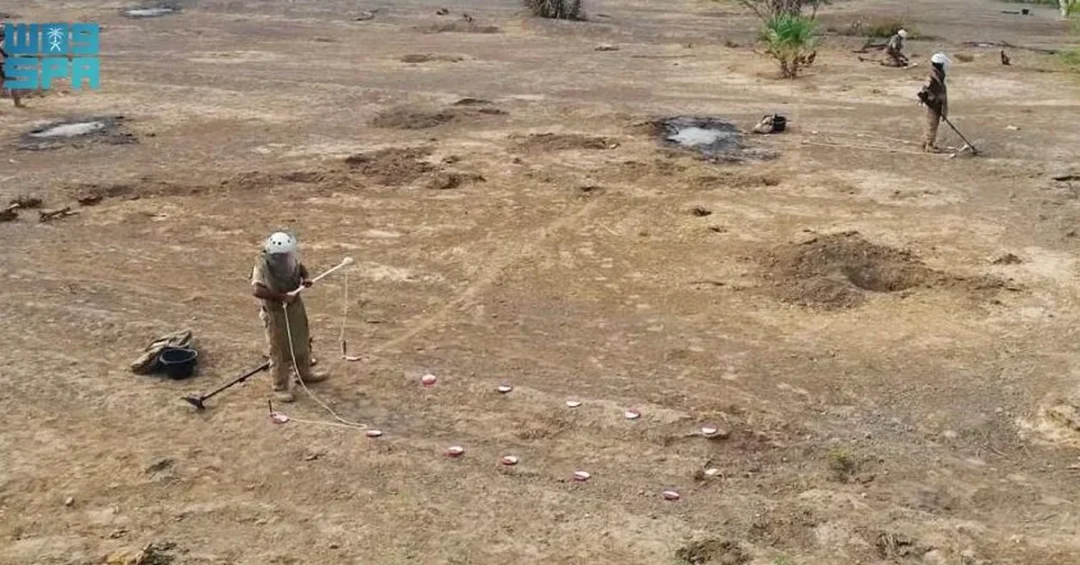
The King Salman Humanitarian Aid and Relief Center’s (KSrelief) Masam Project successfully cleared 989 mines across various regions of Yemen during the third week of July 2024, according to a statement released by the Saudi Press Agency. The clearance included 5 anti-personnel mines, 46 anti-tank mines, 935 unexploded ordnances, and 3 explosive devices, marking a significant step in Saudi Arabia’s ongoing humanitarian efforts to protect civilians and restore safety in Yemen.
Context and Background
The Masam Project, an initiative of KSrelief, was launched in June 2018 to clear landmines and unexploded ordnance from Yemeni territories. These explosives were indiscriminately planted across various regions, posing grave threats to innocent civilians, including children, women, and the elderly. Since its inception, the project has been instrumental in removing these hidden dangers, which have claimed numerous lives and hindered access to essential services and humanitarian aid.
The project operates under the guidance of King Salman and Crown Prince Mohammed bin Salman, reflecting Saudi Arabia’s commitment to humanitarian causes and regional stability. The Masam Project not only clears mines but also provides risk education to local communities, helping them recognize and avoid explosive hazards. This comprehensive approach underscores Saudi Arabia’s dedication to alleviating human suffering and promoting peace in Yemen.
Key Details
During the third week of July 2024, the Masam Project cleared a total of 989 mines. This figure includes 5 anti-personnel mines, 46 anti-tank mines, 935 unexploded ordnances, and 3 explosive devices. These clearances bring the total number of landmines removed in July 2024 to 2,840. Since the project’s beginning, a staggering 451,908 mines have been cleared, highlighting the scale of the challenge and the project’s sustained efforts.
The mines were planted indiscriminately, often in residential areas, agricultural lands, and near water sources, endangering the lives of civilians and disrupting their livelihoods. The Masam Project’s teams work diligently to locate and neutralize these threats, often at great personal risk. Their efforts have been praised by local communities and international organizations alike.
Implications and Impact
The clearance of these mines has far-reaching implications for Yemen. By removing these deadly devices, the Masam Project is helping to create a safer environment for civilians, enabling them to return to their homes, cultivate their land, and access basic services without fear. This contributes to the overall stability and recovery of Yemen, which has been ravaged by conflict for years.
Moreover, the project aligns with international humanitarian principles and supports global efforts to mitigate the impact of landmines. Saudi Arabia’s leadership in this area demonstrates its role as a responsible global actor and a key partner in addressing humanitarian crises. The success of the Masam Project also reinforces the importance of continued international cooperation to rid Yemen of these indiscriminate weapons.
Vision 2030 Alignment
Saudi Arabia’s Vision 2030 aims to diversify the economy, improve quality of life, and strengthen the Kingdom’s global humanitarian role. The Masam Project exemplifies these objectives by promoting peace and security in Yemen, which is essential for regional stability and economic development. Through initiatives like Masam, Saudi Arabia is not only saving lives but also laying the foundation for a more prosperous and secure future for Yemen and the wider region.
As the project continues to clear mines and provide risk education, it embodies the humanitarian spirit of Vision 2030 and Saudi Arabia’s commitment to being a force for good in the world. The Kingdom remains steadfast in its support for Yemen, working tirelessly to ensure that its people can live free from the threat of landmines and build a brighter tomorrow.
20 Questions
Q1. What is the Masam Project?
A1. The Masam Project is a humanitarian initiative by KSrelief to clear landmines and unexploded ordnance in Yemen to protect civilians and restore safety.
Q2. When did the Masam Project begin?
A2. The Masam Project began in June 2018 as part of Saudi Arabia’s efforts to address the landmine crisis in Yemen.
Q3. What is KSrelief?
A3. KSrelief is the King Salman Humanitarian Aid and Relief Center, a Saudi organization dedicated to providing humanitarian assistance worldwide.
Q4. How many mines were cleared in the third week of July 2024?
A4. The project cleared 989 mines, including 5 anti-personnel mines, 46 anti-tank mines, 935 unexploded ordnances, and 3 explosive devices.
Q5. What types of explosives were cleared?
A5. The cleared items included anti-personnel mines, anti-tank mines, unexploded ordnances, and other explosive devices.
Q6. How many mines have been cleared in total since the project’s inception?
A6. Since its beginning, the Masam Project has cleared 451,908 mines across Yemen.
Q7. How many mines were cleared in July 2024?
A7. In July 2024, a total of 2,840 mines were cleared by the Masam Project.
Q8. Who is affected by these landmines?
A8. The landmines pose a threat to innocent civilians, including children, women, and the elderly, often in residential and agricultural areas.
Q9. Why are landmines a problem in Yemen?
A9. Landmines are indiscriminately planted, causing civilian casualties, hindering access to essential services, and impeding reconstruction and development.
Q10. How does the Masam Project help Yemen?
A10. It clears mines, provides risk education, and enables safe access to homes, farmland, and infrastructure, contributing to stability and recovery.
Q11. Who leads the Masam Project?
A11. The project is led by KSrelief under the guidance of Saudi leadership, including King Salman and Crown Prince Mohammed bin Salman.
Q12. What is the significance of clearing these mines?
A12. Clearing mines saves lives, prevents injuries, and allows communities to rebuild, promoting peace and normalcy in Yemen.
Q13. How does the Masam Project align with Saudi Vision 2030?
A13. It reflects Vision 2030’s goals of humanitarian leadership, regional stability, and global responsibility, showcasing Saudi Arabia’s role in fostering peace.
Q14. What challenges does the Masam Project face?
A14. Challenges include the sheer volume of mines, difficult terrain, and the risk to clearance teams, but the project remains committed to its mission.
Q15. How does the international community view the Masam Project?
A15. The project is widely praised for its humanitarian impact and Saudi Arabia’s contribution to global demining efforts.
Q16. What happens to the cleared land?
A16. Cleared land can be safely used for housing, agriculture, and infrastructure, aiding Yemen’s recovery and development.
Q17. Are there other Saudi humanitarian efforts in Yemen?
A17. Yes, KSrelief implements various aid projects in Yemen, including food, health, and education, as part of Saudi Arabia’s comprehensive support.
Q18. How can other nations support Yemen’s demining efforts?
A18. Nations can contribute funding, expertise, and technology, and collaborate with organizations like KSrelief to enhance demining capacity.
Q19. What is the ultimate goal of the Masam Project?
A19. The goal is to completely rid Yemen of landmines, ensuring a safe and prosperous future for its people.
Q20. How does the Masam Project reflect Saudi Arabia’s values?
A20. It demonstrates Saudi Arabia’s compassion, generosity, and commitment to humanitarian principles, in line with its cultural and religious values.
Reader Feedback
We value your thoughts. Please share your feedback on this article.
Your feedback helps us improve our coverage.