


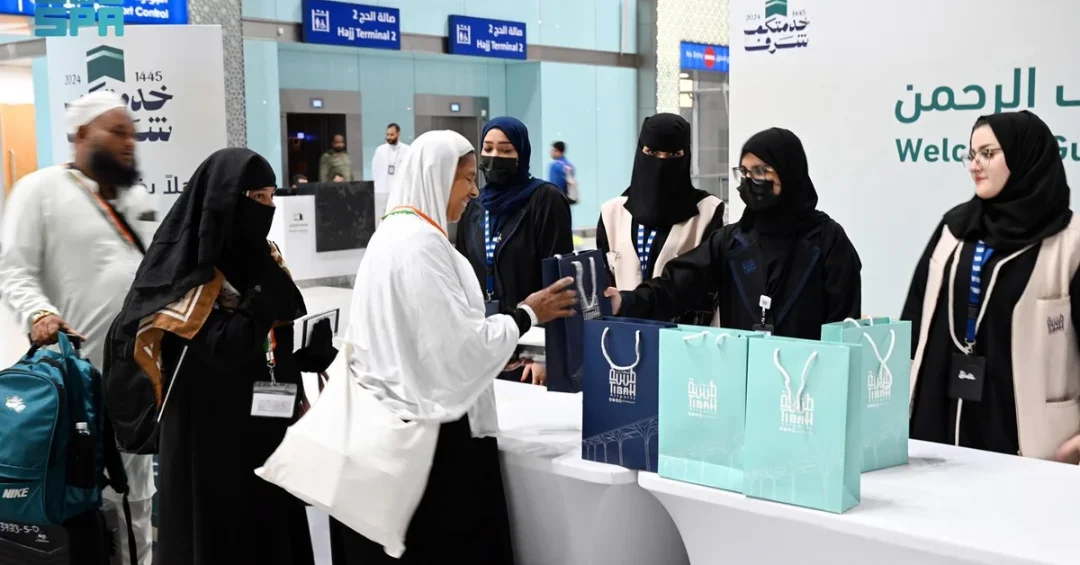
Madinah is welcoming a continuous influx of Hajj pilgrims through its entrances as they prepare to perform the holy pilgrimage for the year 1445 AH. The pilgrims are greeted by a comprehensive system of services provided by the relevant government authorities, ensuring their rituals are carried out with ease and convenience. The Saudi Press Agency (SPA) captured various services offered to pilgrims upon their arrival at Prince Mohammad bin Abdulaziz International Airport, where they were warmly welcomed.
Context and Background
The annual Hajj pilgrimage is one of the five pillars of Islam, drawing millions of Muslims from around the world to the holy cities of Makkah and Madinah. Saudi Arabia, under the leadership of the Custodian of the Two Holy Mosques, King Salman bin Abdulaziz Al Saud, and Crown Prince Mohammed bin Salman, has consistently prioritized the comfort and safety of pilgrims. The Kingdom’s Vision 2030 plan underscores the importance of enhancing the experience of visitors to the holy sites, reflecting the country’s commitment to serving Islam and its followers.
Key Details
At Prince Mohammad bin Abdulaziz International Airport in Madinah, SPA reporters observed a range of services in operation. These include streamlined immigration and customs procedures, luggage handling assistance, and the availability of transportation to pilgrims’ accommodations. Additionally, volunteers and officials distribute gifts and refreshments to pilgrims, creating a celebratory atmosphere. The authorities have also deployed medical teams and provided health awareness materials to ensure the well-being of all visitors.
Implications and Impact
The efficient handling of pilgrim arrivals is a testament to Saudi Arabia’s logistical expertise and its unwavering dedication to providing a hospitable environment for pilgrims. This year, the Kingdom expects a significant number of international and domestic pilgrims, and the smooth operations at Madinah’s airport will positively impact the overall pilgrimage experience. The Kingdom’s investment in infrastructure, including the expansion of airports and the Haramain High-Speed Railway, continues to facilitate the movement of pilgrims between the holy cities, reinforcing Saudi Arabia’s role as a global leader in Islamic services.
Vision 2030 Alignment
These efforts align seamlessly with the Saudi Vision 2030, which aims to welcome 30 million Umrah and Hajj pilgrims by 2030. The enhancement of services and facilities for pilgrims is a key pillar of the plan, as it seeks to provide a spiritually fulfilling journey for all visitors. By leveraging advanced technology, modern infrastructure, and a dedicated workforce, Saudi Arabia is not only improving the pilgrimage experience but also showcasing its commitment to Islamic heritage and global coexistence. The successful reception of pilgrims in Madinah underscores the Kingdom’s ongoing journey toward realizing its ambitious Vision 2030 goals.
20 Questions
Q1. What is the significance of Madinah in the context of Hajj?
A1. Madinah is the second holiest city in Islam, home to the Prophet’s Mosque. It serves as a major gateway for pilgrims heading to Makkah for Hajj, offering spiritual and logistical support.
Q2. How are pilgrims being received at Prince Mohammad bin Abdulaziz International Airport?
A2. Pilgrims are warmly welcomed with gifts, refreshments, and a celebratory atmosphere. The airport offers streamlined services including efficient immigration, luggage assistance, and transportation to accommodations.
Q3. What year of the Islamic calendar does this Hajj correspond to?
A3. The current Hajj is for the year 1445 AH (Anno Hegirae), which corresponds to 2024 in the Gregorian calendar.
Q4. Which authority captured the services provided to pilgrims?
A4. The Saudi Press Agency (SPA) reported on the services, highlighting the comprehensive support provided by various government entities to ensure pilgrims’ convenience.
Q5. What are the key services offered to pilgrims upon arrival?
A5. Key services include efficient immigration and customs, luggage handling, transport arrangements, medical assistance, and the provision of refreshments and gifts.
Q6. How does the reception of pilgrims align with Saudi Arabia’s broader goals?
A6. The reception aligns with Vision 2030 to improve services for pilgrims and increase their numbers, reflecting the Kingdom’s commitment to its Islamic role and modernizing its infrastructure.
Q7. What is the role of the Custodian of the Two Holy Mosques in Hajj preparations?
A7. The Custodian of the Two Holy Mosques, King Salman, oversees the Kingdom’s efforts to ensure pilgrims’ safety and comfort, demonstrating leadership in Islamic hospitality.
Q8. Which airport is mentioned as the arrival point in Madinah?
A8. Prince Mohammad bin Abdulaziz International Airport is the main airport in Madinah, handling the influx of pilgrims.
Q9. What kind of atmosphere is described at the arrival terminal?
A9. The atmosphere is described as celebratory, with pilgrims being welcomed warmly and presented with gifts as they begin their spiritual journey.
Q10. Why is it important for Saudi Arabia to provide comprehensive services for pilgrims?
A10. It is crucial to ensure the spiritual and physical comfort of pilgrims, maintain the safety of the holy sites, and uphold the Kingdom’s reputation as a hospitable host.
Q11. How does the Haramain High-Speed Railway contribute to the pilgrimage experience?
A11. It provides rapid, efficient transport between Makkah and Madinah, reducing travel time and enhancing convenience for pilgrims.
Q12. What future ambitions does Saudi Arabia have regarding pilgrimage numbers?
A12. Vision 2030 aims to welcome 30 million Umrah and Hajj pilgrims annually by 2030, increasing capacity and improving services.
Q13. Are there any health services provided to pilgrims at the airport?
A13. Yes, medical teams are present, and health awareness materials are distributed to ensure the well-being of pilgrims.
Q14. What is the role of volunteers in welcoming pilgrims?
A14. Volunteers assist in distributing gifts and refreshments, creating a friendly and supportive environment for pilgrims.
Q15. How does the welcome at Madinah’s airport reflect Saudi culture?
A15. It reflects the Saudi tradition of hospitality and generosity, known as “ikram al-dayf,” that is deeply rooted in Islamic values.
Q16. What are the primary challenges faced during the arrival of mass numbers of pilgrims?
A16. Managing large crowds, ensuring smooth logistics, and maintaining security are challenges that Saudi authorities handle with careful planning and modern technology.
Q17. How does the government coordinate services across different ministries for pilgrims?
A17. Multiple entities, including the Ministries of Interior, Hajj and Umrah, Health, and Transportation, collaborate to deliver integrated services.
Q18. What is the spiritual significance of arriving in Madinah before Hajj?
A18. Madinah offers pilgrims the opportunity to visit the Prophet’s Mosque and engage in prayers before proceeding to Makkah, enriching their spiritual journey.
Q19. How does the reception at the airport set the tone for the rest of the pilgrimage?
A19. A positive reception ensures pilgrims begin their journey with ease and comfort, allowing them to focus on the devotional aspects of Hajj.
Q20. What can we expect in the coming weeks regarding pilgrim arrivals?
A20. The influx of pilgrims is expected to continue, with authorities maintaining vigilance to ensure all visitors enjoy a safe and fulfilling Hajj experience under the Kingdom’s care.
Reader Feedback
We value your thoughts. Please share your feedback on this article.
Your feedback helps us improve our coverage.