


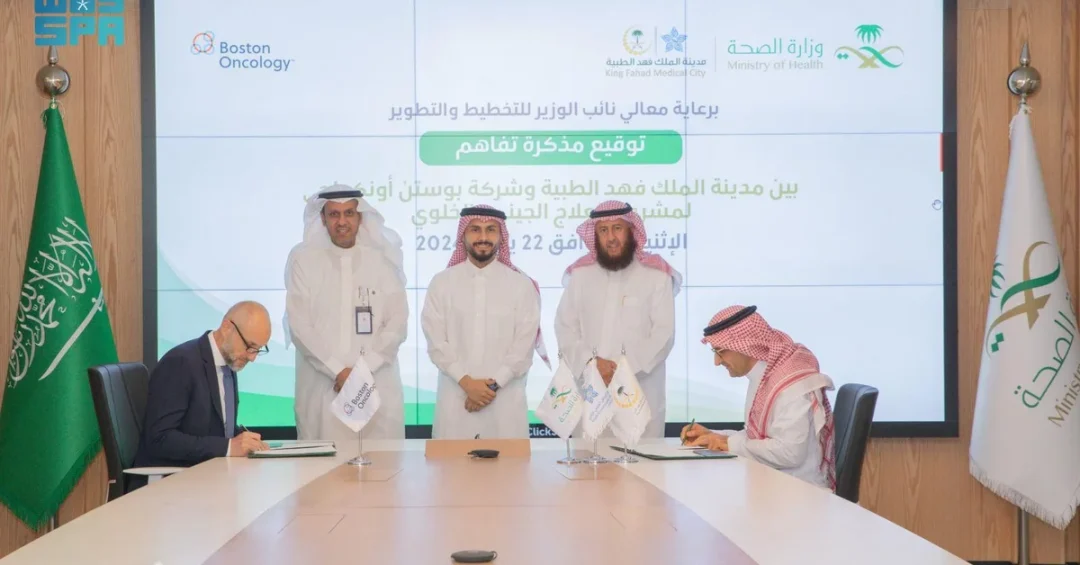
King Fahd Medical City and Boston Oncology have signed a Memorandum of Understanding (MoU) to localize gene and targeted cell therapy in Saudi Arabia, marking a significant step forward in the Kingdom’s healthcare transformation. The agreement, announced by the Saudi Press Agency (SPA), will see the project implemented at King Fahd Medical City, a key component of the Riyadh Second Health Cluster. The MoU was signed by Dr. Fahad AlGhofaili, Chief Executive Officer of King Fahd Medical City, and Dr. Abdullah Bajaaj, Chief Executive Director of Boston Oncology, in the presence of Eng. Abdulaziz Al-Rumaih, Vice Minister for Planning and Development at the Saudi Ministry of Health.
Context and Background
Saudi Arabia has been actively advancing its healthcare sector as part of the Health Transformation Program, a key initiative under Saudi Vision 2030. The program aims to enhance the quality and efficiency of healthcare services, promote local capabilities, and reduce reliance on external treatments. The localization of advanced medical technologies, such as gene and targeted cell therapy, is a critical component of this strategy, aligning with the Kingdom’s broader goals of economic diversification and knowledge transfer. King Fahd Medical City, one of the largest medical complexes in the region, has been at the forefront of adopting cutting-edge treatments and fostering partnerships with international institutions.
Key Details of the Agreement
The MoU outlines a collaborative effort to localize gene and targeted cell therapy, which are advanced treatment methods that modify genes or cells to combat diseases such as cancer and genetic disorders. Dr. AlGhofaili emphasized that this initiative aligns with the Medical City’s plans to support the Saudi Transformation Program in Healthcare Sector. He stated, “The localization of therapeutic technology in the Kingdom is one of our main goals, which aligns with the Saudi Vision 2030 regarding health transformation programs. Therefore, we seek to develop local capabilities in the field of advanced medical treatment and technologies by enhancing cooperation with national and international institutions.” Dr. Bajaaj added that the MoU will enrich scientific efforts and reflect the practical revitalization achieved by the Kingdom. The signing ceremony took place at the Saudi Ministry of Health, underscoring the government’s support for such initiatives.
Implications and Impact
This partnership is expected to have far-reaching implications for Saudi Arabia’s healthcare landscape. By localizing gene and targeted cell therapy, the Kingdom will be able to offer cutting-edge treatments to patients within its borders, reducing the need for travel abroad and improving patient outcomes. Moreover, it will foster local expertise, create high-skilled jobs, and stimulate research and development in the biomedical field. The collaboration with Boston Oncology, a renowned international entity, will facilitate knowledge transfer and capacity building, positioning Saudi Arabia as a regional hub for advanced medical therapies. This move also supports the Kingdom’s goal of achieving self-sufficiency in healthcare and enhancing its competitiveness on the global stage.
Vision 2030 Alignment
This MoU is a testament to Saudi Arabia’s commitment to achieving the objectives of Vision 2030, particularly in transforming the healthcare sector into a world-class system. By localizing advanced therapies, the Kingdom is not only improving healthcare delivery but also contributing to economic diversification through the development of a knowledge-based economy. The partnership exemplifies the synergy between local institutions and international experts, driving innovation and excellence in line with the visionary leadership of the Kingdom. As Saudi Arabia continues to invest in healthcare infrastructure and technology, such initiatives will play a pivotal role in shaping a healthier and more prosperous future for all.
20 Questions
Q1. What is the purpose of the MoU signed between King Fahd Medical City and Boston Oncology?
A1. The MoU aims to localize gene and targeted cell therapy in Saudi Arabia, enhancing advanced healthcare services and aligning with the Health Transformation Program under Vision 2030.
Q2. Who signed the MoU on behalf of King Fahd Medical City?
A2. Dr. Fahad AlGhofaili, Chief Executive Officer of King Fahd Medical City, signed the MoU.
Q3. Who represented Boston Oncology in the signing ceremony?
A3. Dr. Abdullah Bajaaj, Chief Executive Director of Boston Oncology, signed the MoU.
Q4. Which entity oversees King Fahd Medical City?
A4. King Fahd Medical City is a component of the Riyadh Second Health Cluster, which is part of the Saudi Ministry of Health’s network.
Q5. What is the significance of localizing gene and targeted cell therapy?
A5. Localization allows Saudi Arabia to offer advanced treatments domestically, reduce travel for patients, build local expertise, and enhance self-sufficiency in healthcare.
Q6. How does this MoU align with Saudi Vision 2030?
A6. It supports the Health Transformation Program, aiming to improve healthcare quality, promote innovation, and contribute to economic diversification.
Q7. What are gene and targeted cell therapies?
A7. These are advanced treatments that modify genes or cells to treat diseases like cancer and genetic disorders, offering personalized and precise medical interventions.
Q8. Where was the MoU signed?
A8. The signing ceremony took place at the Saudi Ministry of Health in Riyadh.
Q9. Who attended the signing ceremony as a representative of the Ministry of Health?
A9. Eng. Abdulaziz Al-Rumaih, Vice Minister for Planning and Development, attended the ceremony.
Q10. What benefits will the partnership bring to Saudi Arabia’s healthcare sector?
A10. It will enhance local capabilities, create high-skilled jobs, stimulate research, and position the Kingdom as a regional hub for advanced therapies.
Q11. How will patients in Saudi Arabia benefit from this initiative?
A11. Patients will have access to cutting-edge treatments locally, reducing the need to travel abroad and improving outcomes.
Q12. What role does Boston Oncology play in this collaboration?
A12. Boston Oncology will share expertise and facilitate knowledge transfer to help localize advanced therapies in Saudi Arabia.
Q13. Is this the first such initiative in Saudi Arabia?
A13. While other healthcare collaborations exist, this MoU represents a significant step in localizing gene and targeted cell therapy specifically.
Q14. How does this project contribute to the Saudi Transformation Program?
A14. It directly supports the program’s goals of enhancing healthcare services through localization of modern techniques and capacity building.
Q15. What economic impact might this initiative have?
A15. It can stimulate the biomedical sector, create jobs, attract investment, and reduce healthcare spending abroad.
Q16. Will this partnership involve training for Saudi professionals?
A16. Yes, it is expected to include training and development to build local expertise in advanced therapies.
Q17. What is the Riyadh Second Health Cluster?
A17. It is a healthcare network under the Ministry of Health, encompassing multiple facilities including King Fahd Medical City.
Q18. How does this MoU reflect Saudi Arabia’s global engagement?
A18. It demonstrates the Kingdom’s openness to international partnerships and its commitment to adopting global best practices in healthcare.
Q19. What are the next steps after signing the MoU?
A19. The parties will develop an implementation plan, including infrastructure, training, and research components, to operationalize the localization project.
Q20. How does this initiative support Saudi Arabia’s long-term vision?
A20. It aligns with Vision 2030’s goal of a diversified economy and world-class healthcare, ensuring a healthier future for citizens and residents.
Reader Feedback
We value your thoughts. Please share your feedback on this article.
Your feedback helps us improve our coverage.