


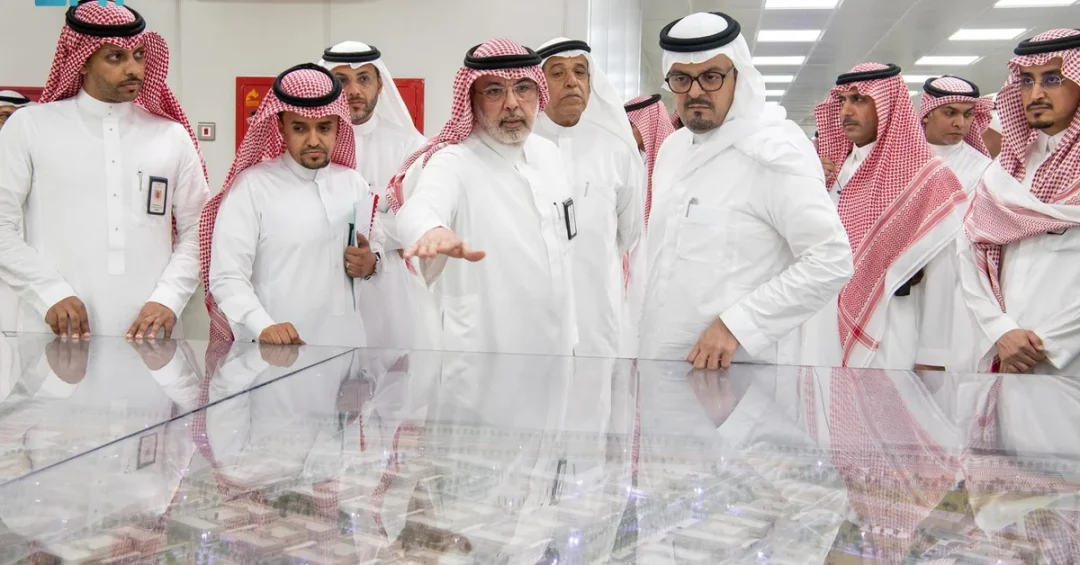
Deputy Governor of the Makkah Region Prince Saud bin Mishaal bin Abdulaziz conducted a preliminary inspection tour of the Holy Sites on May 16, 2024, to assess preparations for the upcoming Hajj season of 1445 AH. The tour, carried out under the directives of the Kingdom’s leadership and the guidance of Advisor to the Custodian of the Two Holy Mosques, Governor of the Makkah Region, and Chairman of the Central Hajj Committee Prince Khalid bin Faisal bin Abdulaziz, included visits to Arafat, Muzdalifah, and Mina.
Context and Background
The inspection is part of Saudi Arabia’s annual preparations to ensure the safety, comfort, and well-being of pilgrims undertaking the Hajj pilgrimage, one of the largest religious gatherings in the world. The Kingdom consistently upgrades infrastructure and services at the Holy Sites, aligning with its commitment to provide the best possible experience for visitors from around the globe.
Key Details
Prince Saud bin Mishaal visited Arafat, where he was briefed on four accommodation centers across the Holy Sites. Two centers in Arafat can accommodate 9,300 pilgrims, while a center in Al-Muaisim has a capacity of 6,000 pilgrims and includes three service buildings. A fourth center in Muzdalifah can host up to 28,000 pilgrims and comprises five residential, administrative, and healthcare buildings. The deputy governor also inspected models of pilgrims’ camps and reviewed renovation works around Mount Arafat, encompassing over 200,000 square meters. This project includes public bus stops, lighting, water sprinkling poles, and drinking areas.
Implications and Impact
The improvements aim to enhance the pilgrimage experience for the increasing number of Hajj pilgrims, ensuring their safety and convenience. The development of descent stations in Muzdalifah, covering 27,000 square meters, will accommodate up to 18,000 additional pilgrims. Eco-friendly initiatives, such as the Holy Sites path project, focus on reducing temperatures and facilitating movement for elderly and disabled pedestrians, demonstrating Saudi Arabia’s commitment to sustainable and inclusive infrastructure. The development project in Mina Valley, spanning 33,000 square meters, can accommodate up to 37,000 pilgrims, reflecting the Kingdom’s dedication to modernizing facilities while preserving the architectural identity of the Holy Sites.
Vision 2030 Alignment
The ongoing enhancements at the Holy Sites are integral to Saudi Arabia’s Vision 2030, which emphasizes providing exceptional services to pilgrims and visitors. By investing in state-of-the-art infrastructure and sustainable solutions, the Kingdom aims to elevate the spiritual experience of Hajj while showcasing its leadership in hospitality and innovation. These efforts underscore Saudi Arabia’s commitment to serving Islam’s holiest sites and welcoming millions of pilgrims with open arms.
20 Questions
Q1. Who conducted the inspection tour of the Holy Sites?
A1. Prince Saud bin Mishaal bin Abdulaziz, the Deputy Governor of the Makkah Region, conducted the preliminary tour to assess preparations for the Hajj season of 1445 AH.
Q2. What is the date of the inspection?
A2. The inspection took place on May 16, 2024, as part of the annual readiness assessments for the upcoming Hajj season.
Q3. How many accommodation centers are there in the Holy Sites?
A3. There are four accommodation centers in the Holy Sites: two in Arafat, one in Al-Muaisim, and one in Muzdalifah.
Q4. What is the capacity of the center in Muzdalifah?
A4. The center in Muzdalifah can accommodate up to 28,000 pilgrims and consists of five residential, administrative, and healthcare buildings.
Q5. What is the total area of the renovation project around Mount Arafat?
A5. The renovation project covers an area of over 200,000 square meters, including public bus stops, lighting, water sprinkling poles, and drinking areas.
Q6. What is the capacity of the two centers in Arafat?
A6. The two centers in Arafat can accommodate 9,300 pilgrims combined, as part of the accommodation infrastructure in the Holy Sites.
Q7. How many additional pilgrims will the Muzdalifah descent stations accommodate?
A7. The descent stations project in Muzdalifah will accommodate up to 18,000 additional pilgrims, covering an area of 27,000 square meters.
Q8. What is the purpose of the Holy Sites path project?
A8. The eco-friendly project aims to reduce temperatures and facilitate the movement of elderly and disabled pedestrians, improving services and convenience for pilgrims.
Q9. What is the capacity of the Mina Valley development project?
A9. The development project in Mina Valley covers 33,000 square meters and can accommodate up to 37,000 pilgrims, designed according to latest technical specifications.
Q10. What is the size of the Government Departments Complex in Al Mashair?
A10. The complex covers an area of 1.1 million square meters and accommodates over 10,000 employees, contributing to saving about 23% of Mina’s area.
Q11. Who is the Chairman of the Central Hajj Committee?
A11. Prince Khalid bin Faisal bin Abdulaziz, Advisor to the Custodian of the Two Holy Mosques and Governor of the Makkah Region, serves as Chairman.
Q12. What is the significance of the inspection tour?
A12. The tour ensures that all facilities and services are prepared to provide a safe and comfortable experience for the millions of pilgrims expected for Hajj.
Q13. What eco-friendly initiatives are being implemented?
A13. The Holy Sites path project and the provision of green areas by Kidana Development Company are key eco-friendly initiatives aimed at reducing heat and enhancing the environment.
Q14. How does the Government Departments Complex benefit pilgrims?
A14. By centralizing government services, the complex frees up space in Mina, allowing for a 23% increase in the area available to accommodate more pilgrims.
Q15. What is the capacity of the Al-Muaisim center?
A15. The center in Al-Muaisim has a capacity of 6,000 pilgrims and includes three service buildings.
Q16. What is the focus of the renovation around Mount Arafat?
A16. The renovation focuses on improving infrastructure such as bus stops, lighting, water systems, and drinking areas to enhance the pilgrims’ experience.
Q17. How does the inspection tour align with Vision 2030?
A17. The enhancements support Vision 2030’s goal of providing exceptional services to pilgrims and positioning Saudi Arabia as a global hub for Islamic tourism.
Q18. What is the purpose of the water sprinkling poles?
A18. The water sprinkling poles are part of the Mount Arafat renovation, helping to cool the area and provide relief to pilgrims during the hot season.
Q19. How many service buildings are included in the Al-Muaisim center?
A19. The Al-Muaisim center includes three service buildings, which host various facilities for the convenience of pilgrims.
Q20. What is the overall impact of these developments on the Hajj experience?
A20. These developments improve capacity, comfort, and accessibility, ensuring a smoother and more spiritually fulfilling Hajj for pilgrims from around the world.
Reader Feedback
We value your thoughts. Please share your feedback on this article.
Your feedback helps us improve our coverage.