


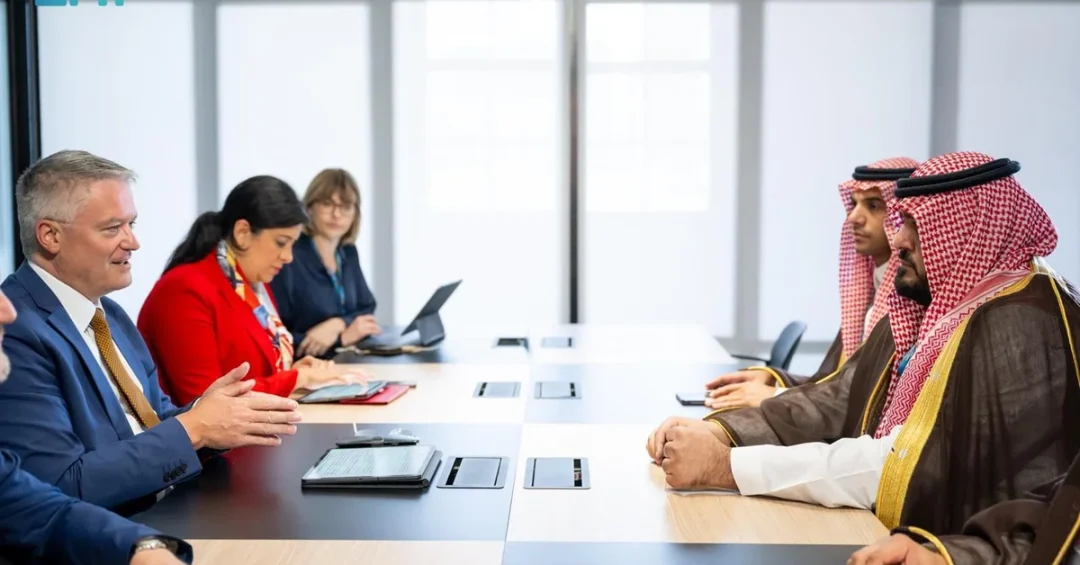
Saudi Minister of Economy and Planning Faisal bin Fadel Alibrahim met with Organization for Economic Cooperation and Development (OECD) Secretary-General Mathias Cormann on the sidelines of the Group of Twenty (G20) development ministerial meeting in Brasilia, Brazil, on July 23, 2024, to discuss the latest regional and global economic developments and ways to enhance cooperation between the Kingdom and the OECD. The meeting underscored Saudi Arabia’s active engagement in multilateral economic diplomacy and its commitment to fostering international collaboration to address shared challenges and promote sustainable growth.
Context and Background
The G20 development ministerial meeting, held under Brazil’s presidency, brings together economic leaders from the world’s major economies to coordinate policies on development, trade, and investment. Saudi Arabia’s participation reflects its pivotal role in global economic governance and its ongoing efforts to align its national transformation with international best practices. The OECD, a premier forum for economic and social policy, has been a key partner for Saudi Arabia in advancing structural reforms and knowledge exchange. This meeting builds on previous engagements between Saudi officials and OECD leadership, including Minister Alibrahim’s dialogue with Secretary-General Cormann at the World Economic Forum in Davos earlier in 2024, where they explored avenues for deeper collaboration.
Key Details
During the discussion, Minister Alibrahim and Secretary-General Cormann reviewed the current global economic landscape, including inflationary pressures, supply chain disruptions, and the shifting dynamics of international trade. They explored opportunities to expand Saudi Arabia’s partnership with the OECD, particularly in areas such as economic diversification, fiscal sustainability, and human capital development. The OECD has recognized Saudi Arabia’s progress in implementing Vision 2030 reforms, which aim to reduce dependence on oil and boost non-oil sectors. The meeting also addressed the importance of multilateralism in tackling global challenges, with both officials emphasizing the need for coordinated action to achieve the Sustainable Development Goals.
Implications and Impact
This high-level engagement signals Saudi Arabia’s deepening integration into the global economic policy network and its proactive stance in shaping international economic dialogues. Strengthened cooperation with the OECD can provide the Kingdom with valuable insights and technical support as it continues its ambitious reform agenda. For the international community, Saudi Arabia’s active participation in forums like the G20 and its collaboration with the OECD demonstrate its role as a responsible global stakeholder and a bridge between developed and developing economies. The outcomes of such discussions are expected to contribute to more resilient and inclusive economic policies worldwide.
Vision 2030 Alignment
Saudi Arabia’s engagement with the OECD directly supports Vision 2030, the Kingdom’s comprehensive plan to diversify its economy, empower its citizens, and enhance its global competitiveness. By leveraging OECD expertise, Saudi Arabia aims to accelerate reforms in areas such as education, innovation, and regulatory frameworks, all of which are critical to achieving the Vision’s objectives. This partnership exemplifies the Kingdom’s commitment to international cooperation and its determination to build a prosperous and sustainable future, both domestically and globally.
20 Questions
Q1. Who represented Saudi Arabia at the G20 development ministerial meeting?
A1. Saudi Minister of Economy and Planning Faisal bin Fadel Alibrahim represented the Kingdom at the G20 development ministerial meeting in Brasilia, Brazil, on July 23, 2024, where he engaged with global economic leaders to discuss key development issues.
Q2. Who is the OECD Secretary-General that met with Minister Alibrahim?
A2. OECD Secretary-General Mathias Cormann met with Minister Alibrahim. Cormann leads the OECD, a major international organization focused on economic and social policy, and has been a partner in Saudi Arabia’s reform efforts.
Q3. What was the main purpose of the meeting between Minister Alibrahim and Secretary-General Cormann?
A3. The meeting aimed to discuss the latest regional and global economic developments and to enhance existing cooperation between Saudi Arabia and the OECD, focusing on mutual interests in economic growth and sustainable development.
Q4. Where did the meeting take place?
A4. The meeting took place on the sidelines of the G20 development ministerial meeting in Brasilia, Brazil, under Brazil’s G20 presidency, highlighting Saudi Arabia’s active role in international economic forums.
Q5. What is the G20 development ministerial meeting?
A5. The G20 development ministerial meeting is a gathering of economic ministers from the world’s major economies to coordinate policies on development, trade, and investment, and to address global challenges collaboratively.
Q6. Why is Saudi Arabia’s participation in the G20 significant?
A6. Saudi Arabia’s participation underscores its pivotal role in global economic governance and its commitment to contributing to international efforts aimed at promoting sustainable development and economic stability worldwide.
Q7. What does the OECD stand for and what is its role?
A7. The OECD stands for the Organization for Economic Cooperation and Development. It is a premier forum for economic and social policy where member countries share expertise and coordinate policies to foster prosperity and well-being.
Q8. How has Saudi Arabia previously engaged with the OECD?
A8. Saudi Arabia has engaged with the OECD through various initiatives, including Minister Alibrahim’s dialogue with Secretary-General Cormann at the World Economic Forum in Davos in 2024, where they explored deeper collaboration on economic reforms.
Q9. What global economic issues were discussed at the meeting?
A9. The discussion covered inflationary pressures, supply chain disruptions, and shifting international trade dynamics, as well as strategies for economic diversification and fiscal sustainability to address these challenges.
Q10. How does cooperation with the OECD benefit Saudi Arabia’s economy?
A10. Cooperation with the OECD provides Saudi Arabia with access to best practices, technical expertise, and policy insights that support its economic diversification efforts and structural reforms under Vision 2030.
Q11. What areas of cooperation were explored during the meeting?
A11. The meeting explored expanding cooperation in economic diversification, fiscal sustainability, and human capital development, all of which are essential for sustainable growth and aligned with Saudi Arabia’s reform agenda.
Q12. How does the OECD view Saudi Arabia’s Vision 2030 reforms?
A12. The OECD has recognized Saudi Arabia’s progress in implementing Vision 2030 reforms, particularly in reducing oil dependence and boosting non-oil sectors, viewing them as positive steps toward sustainable economic transformation.
Q13. What is the significance of multilateralism in the context of this meeting?
A13. Both officials emphasized the importance of multilateralism in tackling global challenges, stressing that coordinated international action is crucial for achieving the Sustainable Development Goals and ensuring inclusive growth.
Q14. How does this meeting reflect Saudi Arabia’s global economic role?
A14. The meeting demonstrates Saudi Arabia’s deepening integration into the global economic policy network and its proactive stance in shaping international economic dialogues, reinforcing its role as a responsible global stakeholder.
Q15. What can the international community learn from Saudi Arabia’s engagement?
A15. Saudi Arabia’s engagement shows how a major economy can actively participate in multilateral forums, collaborate with international organizations, and align national reforms with global best practices to foster shared prosperity.
Q16. How does Saudi Arabia’s partnership with the OECD support Vision 2030?
A16. The partnership supports Vision 2030 by providing expertise and support for reforms in education, innovation, and regulatory frameworks, which are critical to diversifying the economy and empowering citizens.
Q17. What are the expected outcomes of enhanced Saudi-OECD cooperation?
A17. Expected outcomes include more resilient and inclusive economic policies, accelerated reforms in Saudi Arabia, and strengthened global economic cooperation, benefiting both the Kingdom and the international community.
Q18. How does Saudi Arabia’s participation in the G20 align with its foreign policy objectives?
A18. Saudi Arabia’s participation aligns with its foreign policy objectives of promoting international cooperation, economic stability, and sustainable development, while enhancing its global influence and partnerships.
Q19. What role does the Ministry of Economy and Planning play in Saudi Arabia’s international engagements?
A19. The Ministry of Economy and Planning leads Saudi Arabia’s economic planning and international economic engagements, coordinating with global partners to advance the Kingdom’s development goals and Vision 2030.
Q20. What message does this meeting send about Saudi Arabia’s commitment to global cooperation?
A20. The meeting signals Saudi Arabia’s strong commitment to global cooperation and multilateralism, showcasing its proactive efforts to collaborate with international organizations for mutual economic benefit and sustainable development.
Reader Feedback
We value your thoughts. Please share your feedback on this article.
Your feedback helps us improve our coverage.