


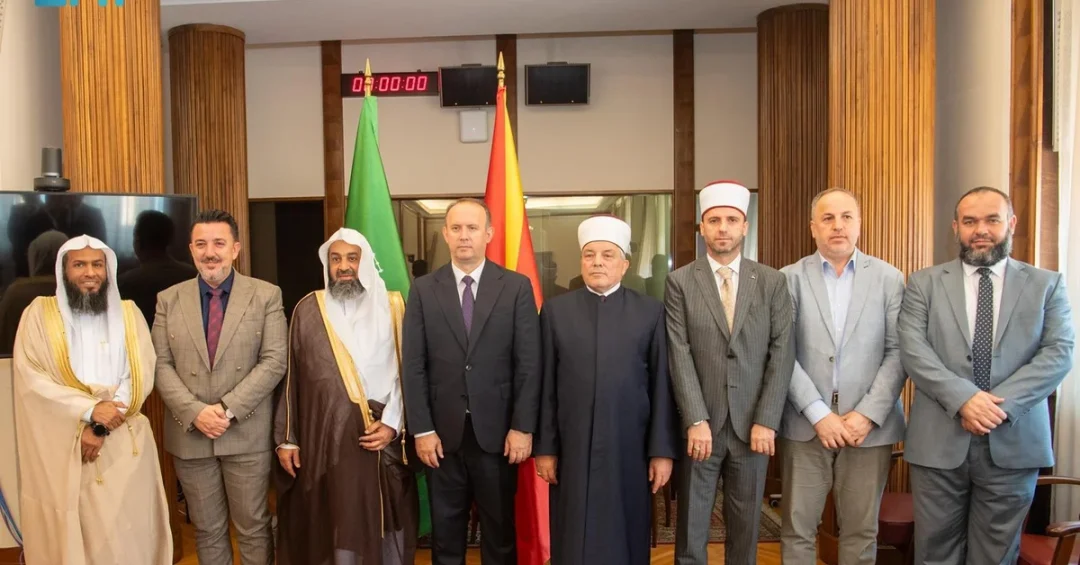
Saudi Arabia’s Acting Undersecretary at the Ministry of Islamic Affairs, Dawah and Guidance, Sheikh Dr. Awad Al-Anazi, met with the Speaker of the Parliament of North Macedonia, Afrim Gashi, in Skopje on July 22, 2024, to discuss strengthening bilateral relations and enhancing cooperation in Islamic affairs. The meeting underscored the Kingdom’s commitment to promoting moderate Islam and supporting Muslim communities worldwide, aligning with the leadership’s vision for global peace and understanding.
Context and Background
The meeting took place as part of Saudi Arabia’s ongoing efforts to foster international dialogue and cooperation, particularly in the Balkans region where Muslim communities have historical and cultural ties. North Macedonia, a nation with a significant Muslim population, has maintained friendly relations with the Kingdom, and this encounter builds upon previous engagements aimed at religious and cultural exchange.
Sheikh Dr. Al-Anazi’s visit highlights the Ministry of Islamic Affairs’ dedication to serving Muslims globally through programs that emphasize moderation, tolerance, and the true values of Islam. The discussions with Speaker Gashi reflect a mutual interest in deepening ties and exploring new avenues for collaboration in areas such as mosque management, religious education, and the distribution of Islamic literature.
Key Details
During the meeting, Speaker Afrim Gashi expressed his appreciation for the strong bilateral relations between North Macedonia and Saudi Arabia, noting his anticipation for enhanced cooperation across various sectors. He acknowledged the Kingdom’s role in promoting interfaith harmony and supporting Muslim communities in the region.
Sheikh Dr. Al-Anazi outlined the ministry’s initiatives, including the signing of several memoranda of understanding with different countries to advance moderation, improve mosque services, and facilitate the printing and distribution of the Holy Quran. These efforts are part of Saudi Arabia’s broader strategy to spread the message of moderate Islam and counter extremism.
The Acting Undersecretary emphasized that the Kingdom, under the leadership of the Custodian of the Two Holy Mosques, King Salman bin Abdulaziz Al Saud, and Crown Prince Mohammed bin Salman, remains committed to serving Muslims worldwide and promoting peace and stability. The meeting also touched on potential collaborations in educational and cultural programs that benefit both nations.
Implications and Impact
This meeting signifies Saudi Arabia’s active diplomatic engagement in Europe and the Balkans, reinforcing its position as a global leader in promoting moderate Islam and interfaith dialogue. It opens doors for further cooperation between the Ministry of Islamic Affairs and North Macedonian institutions, potentially leading to joint projects in mosque restoration, religious training, and cultural exchanges.
For North Macedonia, the partnership with Saudi Arabia can bring valuable support for its Muslim community, enhancing religious infrastructure and educational opportunities. It also strengthens the country’s ties with the Kingdom, fostering economic and cultural links that align with regional stability and development goals.
On a broader scale, such engagements contribute to Saudi Arabia’s soft power and its Vision 2030 objectives, which include fostering a positive global image and building strategic partnerships. By supporting moderate Islam abroad, the Kingdom helps counter radical ideologies and promotes harmony among diverse societies.
Vision 2030 Alignment
This meeting exemplifies Saudi Arabia’s Vision 2030, which seeks to diversify the economy, enhance international relations, and promote the Kingdom’s values of moderation and tolerance. Through the Ministry of Islamic Affairs, Saudi Arabia continues to play a pivotal role in global religious diplomacy, strengthening ties with nations like North Macedonia and contributing to a more peaceful and interconnected world. As the Kingdom advances its modernization journey, such collaborations underscore its commitment to serving humanity and fostering mutual respect across cultures.
20 Questions
Q1. Who met with the Speaker of the Parliament of North Macedonia?
A1. Sheikh Dr. Awad Al-Anazi, Acting Undersecretary at the Ministry of Islamic Affairs, Dawah and Guidance, met with Speaker Afrim Gashi.
Q2. When did the meeting take place?
A2. The meeting took place on July 22, 2024, in Skopje, North Macedonia.
Q3. What was the main purpose of the meeting?
A3. The meeting aimed to strengthen bilateral relations and enhance cooperation in Islamic affairs, focusing on moderation and serving Muslim communities.
Q4. What did Speaker Afrim Gashi emphasize during the meeting?
A4. He emphasized the depth of relations between North Macedonia and Saudi Arabia and expressed eagerness for cooperation at the highest levels.
Q5. What did Sheikh Dr. Al-Anazi highlight about the ministry’s efforts?
A5. He highlighted the ministry’s programs to serve Muslims in North Macedonia and spread the values of moderate Islam.
Q6. What are some initiatives of the Ministry of Islamic Affairs?
A6. Initiatives include signing memoranda of understanding to promote moderation, serving mosques, and printing copies of the Holy Quran.
Q7. How does this meeting align with Saudi Arabia’s Vision 2030?
A7. It aligns by promoting international relations, religious diplomacy, and the Kingdom’s values of moderation and tolerance globally.
Q8. What is the significance of this meeting for North Macedonia?
A8. It strengthens ties with Saudi Arabia and supports the local Muslim community through potential collaborations in religious education and infrastructure.
Q9. How does Saudi Arabia promote moderate Islam abroad?
A9. Through programs, memoranda of understanding, and support for mosques and Quran distribution, as part of the Ministry’s efforts.
Q10. What role does the Ministry of Islamic Affairs play in Saudi diplomacy?
A10. It fosters global religious diplomacy, building partnerships to promote moderation and serve Muslims worldwide.
Q11. What are the expected outcomes of this meeting?
A11. Enhanced cooperation in mosque management, religious education, and cultural exchange between Saudi Arabia and North Macedonia.
Q12. How does this meeting reflect Saudi Arabia’s foreign policy?
A12. It reflects the Kingdom’s commitment to global engagement, peace, and support for Muslim communities, consistent with its leadership’s vision.
Q13. What is the historical context of Saudi-North Macedonia relations?
A13. The nations have maintained friendly relations, with Saudi Arabia supporting North Macedonia’s Muslim community through various religious and cultural initiatives.
Q14. Who is Sheikh Dr. Awad Al-Anazi?
A14. He is the Acting Undersecretary at the Ministry of Islamic Affairs, Dawah and Guidance, representing Saudi Arabia in international religious affairs.
Q15. What did the Speaker say about future cooperation?
A15. He looked forward to cooperation at the highest level in various fields, indicating a desire for deeper bilateral ties.
Q16. How does this meeting benefit the Muslim community in North Macedonia?
A16. It may lead to improved mosque services, educational programs, and access to Islamic literature, enhancing religious life.
Q17. What are the key values Saudi Arabia promotes globally?
A17. Moderation, tolerance, peace, and interfaith dialogue are central to Saudi Arabia’s global outreach.
Q18. How does Saudi Arabia counter extremism through such meetings?
A18. By promoting moderate Islam and supporting educational and religious programs that discourage radical ideologies.
Q19. What other countries have signed similar agreements with Saudi Arabia?
A19. Several countries have signed memoranda of understanding with the Ministry to promote moderation and serve mosques.
Q20. What is the broader impact of Saudi Arabia’s religious diplomacy?
A20. It enhances global stability, fosters mutual respect, and positions the Kingdom as a leader in promoting peace and moderation.
Reader Feedback
We value your thoughts. Please share your feedback on this article.
Your feedback helps us improve our coverage.