


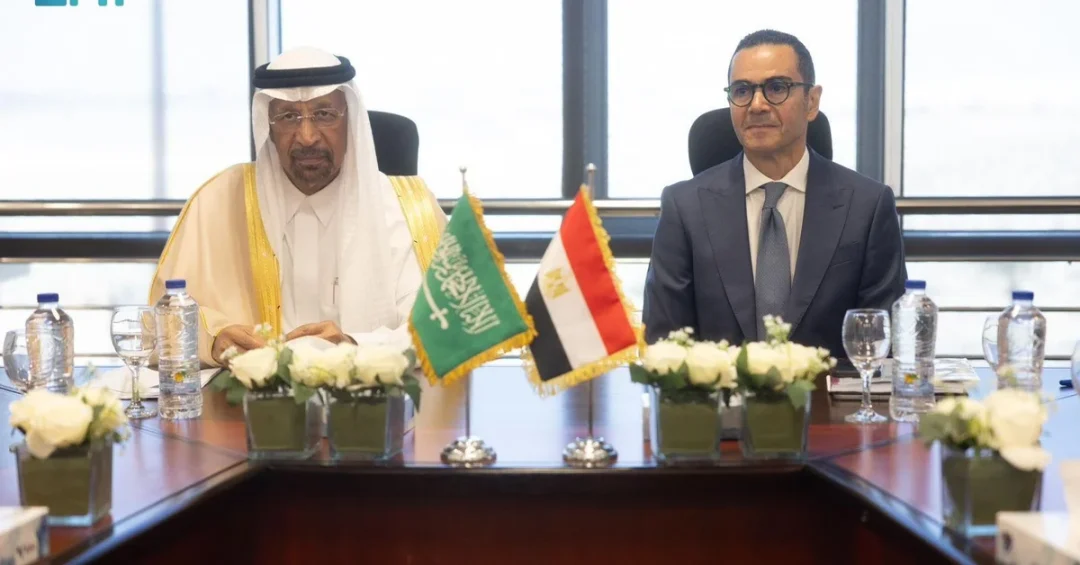
Minister of Investment Eng. Khalid bin Abdulaziz Al-Falih met with Egyptian Minister of Investment and Foreign Trade Eng. Hassan El-Khatib in El Alamein, Egypt, on August 2, 2024, to discuss investment opportunities and cooperation across several sectors of mutual interest. The meeting, held in the presence of Saudi Ambassador to Egypt Saleh bin Eid Al-Hussaini, underscores the growing economic partnership between the Kingdom of Saudi Arabia and the Arab Republic of Egypt, two pivotal players in the Middle East and North Africa (MENA) region.
Context and Background
Saudi-Egyptian relations have long been characterized by close political, economic, and cultural ties. In recent years, both nations have intensified efforts to diversify their economies and attract foreign investment, aligning with Saudi Arabia’s Vision 2030 and Egypt’s Vision 2030. The meeting in El Alamein reflects the shared commitment to deepening bilateral cooperation and exploring new avenues for mutual growth.
El Alamein, a city on Egypt’s Mediterranean coast, has emerged as a symbol of Egypt’s modern development, hosting numerous investment projects and diplomatic engagements. The choice of this location for the meeting highlights the importance both countries place on regional development and strategic partnerships.
Key Details
During the meeting, Minister Al-Falih and Minister El-Khatib discussed investment opportunities in several sectors, including renewable energy, infrastructure, tourism, and technology. They explored ways to enhance joint ventures and facilitate the flow of investments between the two countries. The presence of Ambassador Al-Hussaini underscored the diplomatic significance of the discussions.
The talks also touched on the broader economic landscape, with both ministers emphasizing the need for sustainable development and innovation. They acknowledged the role of the private sector in driving growth and creating jobs, and discussed measures to improve the business environment and remove barriers to investment.
Implications and Impact
The meeting carries significant implications for regional economic integration. Strengthened Saudi-Egyptian cooperation can lead to increased trade, joint infrastructure projects, and technology transfer, benefiting not only the two nations but also the wider Arab world. It also signals to international investors that the MENA region offers promising opportunities for stable and profitable ventures.
Furthermore, the alignment of Saudi Vision 2030 and Egypt Vision 2030 creates a synergy that can accelerate economic diversification and reduce reliance on oil. By pooling resources and expertise, Saudi Arabia and Egypt can become a driving force for innovation and sustainable development in the region.
Vision 2030 Alignment
Saudi Arabia’s Vision 2030 aims to transform the Kingdom into a global investment powerhouse and a hub connecting three continents. Partnerships like the one discussed with Egypt are integral to achieving this vision. The meeting in El Alamein exemplifies the Kingdom’s proactive approach to fostering international collaboration, enhancing economic ties, and promoting stability and prosperity in the region.
20 Questions
Q1. Who met in El Alamein on August 2, 2024?
A1. Saudi Minister of Investment Eng. Khalid bin Abdulaziz Al-Falih met with Egyptian Minister of Investment and Foreign Trade Eng. Hassan El-Khatib in El Alamein, Egypt, on August 2, 2024, to discuss bilateral investment opportunities.
Q2. Who was present at the meeting?
A2. The meeting was held in the presence of the Saudi ambassador to Egypt, Saleh bin Eid Al-Hussaini, highlighting the diplomatic importance of the discussions between the two brotherly nations.
Q3. What was the main purpose of the meeting?
A3. The main purpose was to discuss investment opportunities and cooperation in several sectors of mutual interest between Saudi Arabia and Egypt, aiming to strengthen economic ties and explore new avenues for collaboration.
Q4. Which sectors were discussed for potential cooperation?
A4. The ministers discussed cooperation in renewable energy, infrastructure, tourism, technology, and other sectors, focusing on joint ventures and investment facilitation to drive sustainable development.
Q5. Why is the Saudi-Egyptian relationship important?
A5. The relationship is important because both countries are key players in the MENA region, and their cooperation can lead to increased trade, stability, and economic growth, benefiting the entire Arab world.
Q6. How does this meeting align with Saudi Vision 2030?
A6. The meeting aligns with Saudi Vision 2030 by promoting international partnerships, economic diversification, and investment opportunities, helping the Kingdom become a global investment hub.
Q7. What is the significance of El Alamein as the meeting location?
A7. El Alamein is a symbol of Egypt’s modern development and a hub for investment projects, making it a fitting location to discuss forward-looking economic partnerships between the two nations.
Q8. What role does the Saudi ambassador play in such meetings?
A8. The Saudi ambassador facilitates diplomatic relations and supports economic initiatives, underscoring the Kingdom’s commitment to strengthening bilateral ties and ensuring successful outcomes from high-level discussions.
Q9. What are the expected outcomes of this meeting?
A9. The meeting is expected to lead to increased joint investments, enhanced cooperation in key sectors, and a stronger economic partnership that supports the development goals of both Saudi Arabia and Egypt.
Q10. How does Egypt’s Vision 2030 complement Saudi Vision 2030?
A10. Egypt’s Vision 2030 focuses on sustainable development and economic diversification, which complements Saudi Vision 2030’s goals, creating synergies that can accelerate regional growth and innovation.
Q11. What is the Saudi investment landscape like for Egyptian businesses?
A11. Saudi Arabia offers a dynamic investment landscape with numerous incentives, including the Vision 2030 initiatives, making it an attractive destination for Egyptian businesses seeking growth and expansion.
Q12. How can Saudi investors benefit from opportunities in Egypt?
A12. Saudi investors can benefit from Egypt’s strategic location, large market, and ongoing economic reforms, which provide diverse opportunities in sectors like real estate, energy, and tourism.
Q13. What are the key challenges in Saudi-Egyptian investment cooperation?
A13. Challenges may include regulatory differences and logistical hurdles, but both nations are committed to addressing these through dialogue and collaborative frameworks to facilitate smoother investment flows.
Q14. How does this meeting reflect Saudi Arabia’s foreign policy?
A14. It reflects Saudi Arabia’s foreign policy of fostering strong regional alliances, promoting economic diplomacy, and supporting stability and prosperity through mutually beneficial partnerships.
Q15. What is the role of the private sector in these discussions?
A15. The private sector is crucial for driving innovation and job creation; the ministers emphasized its role and discussed measures to enhance private sector participation in joint projects.
Q16. How will this meeting impact regional economic integration?
A16. It will boost regional economic integration by encouraging trade, investment, and collaborative projects, setting an example for other Arab nations to follow in pursuing collective growth.
Q17. What specific agreements were reached during the meeting?
A17. While no specific agreements were announced, the ministers agreed to continue discussions and explore concrete cooperation opportunities in the identified sectors, paving the way for future deals.
Q18. How does Saudi Arabia support Egyptian economic development?
A18. Saudi Arabia supports Egypt through investments, grants, and technical assistance, contributing to Egypt’s infrastructure, energy, and social development programs, and strengthening bilateral ties.
Q19. What message does this meeting send to international investors?
A19. It signals that Saudi Arabia and Egypt are open for business and committed to creating a favorable investment climate, offering promising opportunities for international investors seeking stable returns.
Q20. What are the next steps following this meeting?
A20. The next steps include follow-up meetings, feasibility studies, and potential agreements to implement joint projects, as both countries work towards realizing the full potential of their partnership.
Reader Feedback
We value your thoughts. Please share your feedback on this article.
Your feedback helps us improve our coverage.