


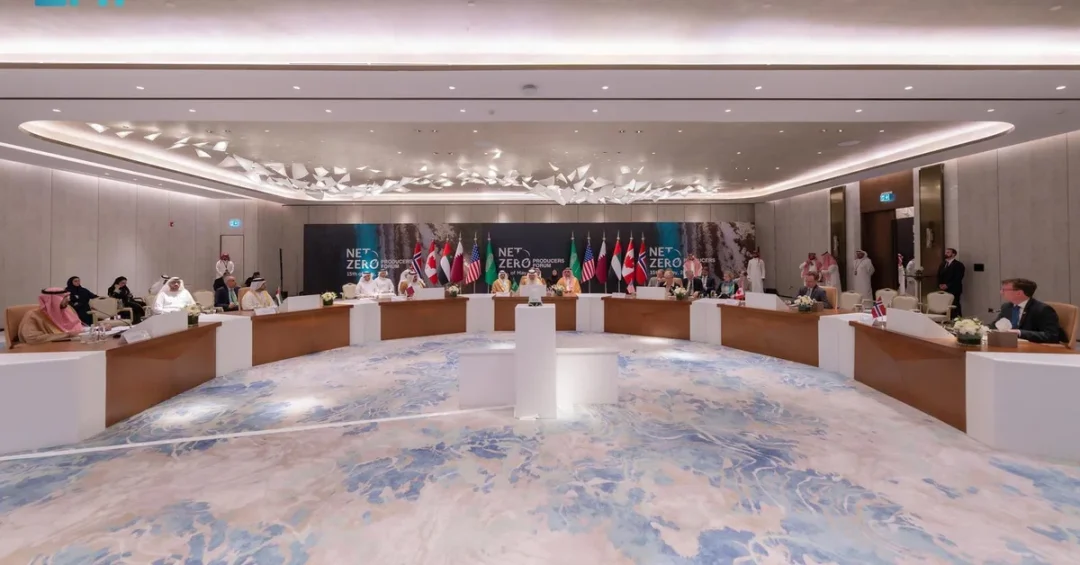
The Net-Zero Producers Forum concluded its second Ministerial Meeting in Riyadh on May 16, 2024, bringing together ministers from six participating countries: Saudi Arabia, Qatar, the UAE, the US, Norway, and Canada. The meeting, hosted by the Kingdom of Saudi Arabia, focused on accelerating just energy transitions and achieving net-zero emissions while supporting sustainable development and energy security.
Context and Background
The Net-Zero Producers Forum, launched in 2021, is a platform for major hydrocarbon producers to collaborate on decarbonization strategies. This second ministerial meeting in Riyadh marked a significant step in advancing global climate goals, building on the outcomes of COP28 in Dubai. The forum underscores Saudi Arabia’s commitment to climate action and its leadership in promoting sustainable energy solutions among both oil-producing and consuming nations.
Key Details
Ministers welcomed the outcomes of the 28th UN Climate Change Conference in Dubai and praised global efforts such as the Global Methane Pledge and the Zero Routine Flaring initiative (ZRF). They emphasized the core role of carbon management and methane emissions abatement in addressing climate change and reducing greenhouse gas emissions. The meeting also commended the Working Group on Deployable Methane Technologies, which culminated in the launch of the Upstream Methane Emissions Abatement Toolbox at COP28, and looked forward to its continued expansion.
In a display of innovation and collaboration, ministers launched a new Working Group on Carbon Utilization and Storage. This group focuses on advancing technologies for the utilization and storage of carbon dioxide, supporting emissions reduction and creating value-added products. It also recognizes the role of non-combustion uses of hydrocarbons in energy transitions and reaching net zero. To enhance transparency and stakeholder engagement, the Net-Zero Producers Forum launched its official website, serving as a digital platform for information, updates, and resources related to the forum’s activities and progress.
Implications and Impact
The meeting’s outcomes have significant regional and international implications. By fostering cooperation among six countries across three continents, the forum sets a precedent for joint climate action among energy producers. The new focus on carbon utilization and storage could catalyze investments in emerging technologies, potentially transforming how hydrocarbons are used and reducing their environmental footprint. The launch of the forum’s website increases transparency and allows stakeholders worldwide to track progress, reinforcing the credibility and accountability of these initiatives.
Vision 2030 Alignment
Saudi Arabia’s hosting of this meeting aligns seamlessly with its Vision 2030 goals, which emphasize environmental sustainability, economic diversification, and global partnership. By leading international efforts to address climate change while safeguarding energy security, the Kingdom demonstrates its commitment to a sustainable future. The forum’s initiatives, including carbon management and methane abatement, support Vision 2030’s ambitions to reduce emissions and foster innovation, positioning Saudi Arabia as a pivotal player in the global energy transition.
20 Questions
Q1. What is the Net-Zero Producers Forum?
A1. The Net-Zero Producers Forum is a collaborative platform of major hydrocarbon-producing countries that aims to advance net-zero emissions strategies, promote just energy transitions, and support sustainable development and energy security.
Q2. Which countries participated in the second ministerial meeting?
A2. The six participating countries are Saudi Arabia, Qatar, the UAE, the United States, Norway, and Canada, representing three continents and diverse energy perspectives.
Q3. Where and when was the meeting held?
A3. The meeting was held in Riyadh, Saudi Arabia, on May 16, 2024, as the second ministerial meeting of the forum.
Q4. What was the main focus of the meeting?
A4. The main focus was on accelerating just energy transitions, achieving net-zero emissions, and supporting sustainable development and energy security through collaborative climate action.
Q5. How does this meeting relate to COP28?
A5. Ministers welcomed the outcomes of COP28 in Dubai, building on global momentum and emphasizing commitments such as the Global Methane Pledge and the Zero Routine Flaring initiative.
Q6. What is the Global Methane Pledge?
A6. The Global Methane Pledge is an international effort to reduce methane emissions by 30% by 2030, and the forum’s members support this initiative as part of their climate strategies.
Q7. What is the Zero Routine Flaring initiative?
A7. The Zero Routine Flaring (ZRF) initiative is a global effort to end routine flaring of gas during oil extraction, reducing emissions and promoting resource efficiency.
Q8. What is the Upstream Methane Emissions Abatement Toolbox?
A8. This toolbox, launched at COP28, provides practical tools and guidelines for reducing methane emissions in upstream oil and gas operations, developed by the forum’s working group.
Q9. What new working group was launched?
A9. A new Working Group on Carbon Utilization and Storage was launched to advance technologies for capturing, utilizing, and storing carbon dioxide, supporting emissions reduction and creating value-added products.
Q10. Why is carbon utilization and storage important?
A10. It is important because it allows CO2 to be converted into useful products or stored safely, reducing atmospheric emissions and supporting a circular carbon economy.
Q11. How does Saudi Arabia benefit from hosting this meeting?
A11. Hosting the meeting reinforces Saudi Arabia’s leadership in climate action, supports its Vision 2030 goals, and positions the Kingdom as a key player in the global energy transition.
Q12. What role does the forum play in energy security?
A12. The forum helps balance climate objectives with energy security by promoting sustainable and efficient production practices among major producers, ensuring reliable supply.
Q13. How does the forum promote innovation?
A13. The forum promotes innovation through collaboration on technologies such as carbon capture, utilization, and storage, as well as methane abatement tools, encouraging shared expertise and development.
Q14. What is the significance of the forum’s website launch?
A14. The website enhances transparency and stakeholder engagement by providing a digital platform for information on the forum’s activities, initiatives, and progress.
Q15. How does the forum support Vision 2030?
A15. The forum’s initiatives align with Vision 2030’s sustainability and diversification goals, enabling Saudi Arabia to diversify its economy while reducing emissions and fostering global partnerships.
Q16. What are non-combustion uses of hydrocarbons?
A16. These uses include producing plastics, chemicals, and other materials from hydrocarbons without burning them, which can help reduce emissions while retaining economic value.
Q17. How will the new working group help reduce emissions?
A17. The group will advance technologies that capture CO2 emissions from industrial processes and either store them underground or convert them into valuable products, reducing atmospheric greenhouse gases.
Q18. What is a circular carbon economy?
A18. A circular carbon economy aims to reuse, recycle, and reduce carbon emissions by turning CO2 into resources, minimizing waste, and closing the carbon loop.
Q19. How does international cooperation benefit climate goals?
A19. International cooperation, such as this forum, allows countries to share technologies, expertise, and best practices, accelerating global progress toward net-zero emissions while respecting diverse national circumstances.
Q20. What is the future outlook for the Net-Zero Producers Forum?
A20. The forum remains committed to advancing just energy transitions through collaboration, technology, and innovation, with ongoing expansion of tools and initiatives like carbon utilization, contributing to a sustainable global energy future.
Reader Feedback
We value your thoughts. Please share your feedback on this article.
Your feedback helps us improve our coverage.