


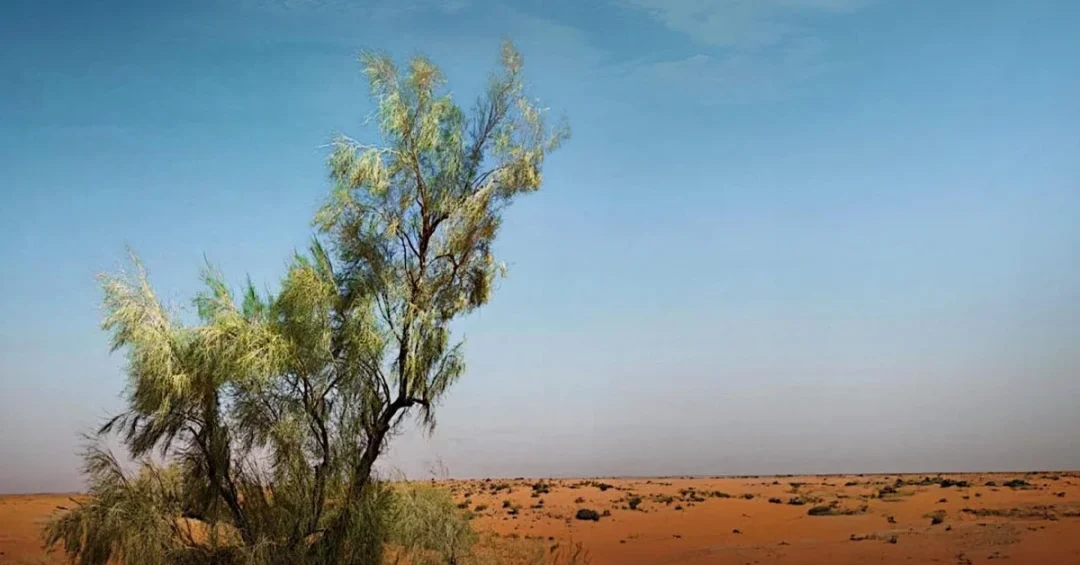
The Imam Turki bin Abdullah Royal Reserve has reported a significant resurgence of Al Ghada (Haloxylon persicum), a resilient perennial tree, following comprehensive protection efforts and favorable rainy seasons. The reserve, spanning 91,500 square kilometers in northern Saudi Arabia, has witnessed a remarkable improvement in vegetation cover, leading to the widespread reappearance of this iconic desert species, according to the Saudi Press Agency (SPA).
Context and Background
The Imam Turki bin Abdullah Royal Reserve, established to conserve the Kingdom’s natural heritage, has implemented rigorous measures to combat overgrazing and illegal tree felling. These efforts, combined with recent abundant rainfall, have created an environment where perennial trees and annual plants are thriving once again. Al Ghada, known scientifically as Haloxylon persicum or white saxual, has been a celebrated flora in the deserts of the Arabian Peninsula for centuries, extending its presence to the Levant and Iraq.
This tree is emblematic of the region’s ecological and cultural history, and its revival underscores the success of Saudi Arabia’s environmental stewardship. The reserve’s initiatives align with the Kingdom’s broader commitment to sustainability and biodiversity conservation.
Key Details
Al Ghada is a remarkable species, capable of reaching heights of over three meters and living up to 70 years in arid conditions. Its deep root system, which can extend tens of meters to access water, enables it to survive in harsh desert environments. Beyond its resilience, the tree plays a critical role in stabilizing sand dunes and preventing soil erosion. It is also used in various countries for rehabilitating pastures, restoring forests along desert roadsides, and manufacturing furniture, paper, and dyes.
The Imam Turki bin Abdullah Royal Reserve has conducted successive afforestation campaigns and launched programs to improve vegetation cover and combat desertification. These efforts include cultivating local trees and wild plants, such as the white saxual, which contribute to enhancing the quality of life and mitigating climate change. The reserve’s work is integral to achieving the objectives of the Saudi Green Initiative, a national effort to plant 10 billion trees and restore 40 million hectares of degraded land.
Implications and Impact
The resurgence of Al Ghada in the reserve signals a positive trend in Saudi Arabia’s environmental restoration. It demonstrates how targeted conservation can reverse desertification and support biodiversity. The tree’s ability to thrive in extreme conditions makes it a valuable asset for similar ecological projects across the region. Moreover, the success of the reserve serves as a model for other protected areas in the Kingdom and beyond, showcasing the effectiveness of combining traditional knowledge with modern conservation practices.
Internationally, this development highlights Saudi Arabia’s leadership in addressing global environmental challenges. By sharing its expertise and results, the Kingdom contributes to worldwide efforts to combat climate change and land degradation.
Vision 2030 Alignment
The revival of Al Ghada in the Imam Turki bin Abdullah Royal Reserve directly supports Saudi Vision 2030, which prioritizes environmental sustainability and quality of life. Through initiatives like the Saudi Green Initiative and the Middle East Green Initiative, the Kingdom is committed to creating a greener future, reducing carbon emissions, and enhancing natural ecosystems. This achievement not only preserves Saudi Arabia’s natural heritage but also reinforces its role as a responsible global citizen dedicated to sustainable development for generations to come.
20 Questions
Q1. What is Al Ghada and where does it thrive?
A1. Al Ghada, or Haloxylon persicum, is a perennial tree that thrives in the deserts of Saudi Arabia, the Arabian Gulf, the Levant, and Iraq. It has recently flourished in the Imam Turki bin Abdullah Royal Reserve due to improved vegetation cover.
Q2. What efforts led to the resurgence of Al Ghada in the reserve?
A2. Comprehensive protection efforts by reserve officials to combat overgrazing and tree felling, along with recent rainy seasons, have significantly improved vegetation cover, allowing Al Ghada and other plants to reappear and spread.
Q3. How tall can Al Ghada grow and how long can it live?
A3. Al Ghada can reach over three meters in height and live up to 70 years in dry desert conditions, thanks to its deep root system that extends tens of meters to access water.
Q4. What ecological role does Al Ghada play?
A4. Al Ghada stabilizes sand dunes and prevents soil erosion. It is also used in rehabilitating pastures, restoring forests along desert roadsides, and manufacturing furniture, paper, and dyes.
Q5. What is the size of the Imam Turki bin Abdullah Royal Reserve?
A5. The reserve covers an area of 91,500 square kilometers in northern Saudi Arabia, making it one of the Kingdom’s largest protected areas dedicated to conservation and biodiversity.
Q6. What initiatives has the reserve undertaken to improve vegetation?
A6. The reserve has carried out successive afforestation campaigns and programs to combat desertification. These include cultivating local trees and wild plants like Al Ghada to enhance vegetation cover and quality of life.
Q7. How does Al Ghada contribute to combating climate change?
A7. By stabilizing soil, preventing erosion, and supporting vegetation growth, Al Ghada helps sequester carbon and improve ecosystem resilience, aligning with Saudi Arabia’s climate action goals under the Saudi Green Initiative.
Q8. What is the Saudi Green Initiative?
A8. The Saudi Green Initiative is a national effort to plant 10 billion trees, restore 40 million hectares of degraded land, and reduce carbon emissions, aiming to create a sustainable future for the Kingdom.
Q9. Why is the resurgence of Al Ghada significant?
A9. It demonstrates the success of conservation efforts in reversing desertification and restoring biodiversity. It also highlights Saudi Arabia’s commitment to environmental sustainability and its leadership in regional Green Initiatives.
Q10. Which agency reported on the resurgence of Al Ghada?
A10. The Saudi Press Agency (SPA) reported on the significant improvement in vegetation cover and the reappearance of Al Ghada in the Imam Turki bin Abdullah Royal Reserve.
Q11. What other plants are thriving in the reserve?
A11. Alongside Al Ghada, many perennial trees and annual plants have begun to reappear and spread intensively in the reserve, contributing to a richer and more diverse ecosystem.
Q12. How does the reserve combat overgrazing and tree felling?
A12. The reserve officials have implemented comprehensive protection measures, including regulations and patrols, to prevent overgrazing and illegal tree felling, ensuring the recovery of natural vegetation.
Q13. What economic benefits does Al Ghada provide?
A13. Al Ghada is used in manufacturing furniture, paper, and dyes, and its ecological role in rehabilitating pastures and restoring forests supports local livelihoods and sustainable development.
Q14. How does the reserve’s work align with Saudi Vision 2030?
A14. The reserve’s conservation efforts support Vision 2030’s goals of environmental sustainability, quality of life improvement, and climate action, contributing to a greener and more sustainable Saudi Arabia.
Q15. What is the scientific name of Al Ghada?
A15. The scientific name of Al Ghada is Haloxylon persicum. It is also commonly known as white saxual and is well-adapted to arid desert environments.
Q16. How does Al Ghada survive in desert conditions?
A16. Al Ghada survives by extending its roots tens of meters deep to reach water sources. This adaptation allows it to thrive in dry deserts and live for up to 70 years.
Q17. What role does the reserve play in Saudi Arabia’s environmental strategy?
A17. The Imam Turki bin Abdullah Royal Reserve serves as a model for protected areas, demonstrating effective conservation practices that support national biodiversity goals and the Saudi Green Initiative.
Q18. How can other countries benefit from Saudi Arabia’s experience?
A18. Other countries can learn from Saudi Arabia’s successful conservation and afforestation techniques, applying similar strategies to combat desertification and restore degraded lands in their own regions.
Q19. What is the significance of the recent rainy season?
A19. The recent rainy season has positively impacted the nature and diversity of vegetation cover, providing essential moisture that enables Al Ghada and other plants to flourish and spread.
Q20. What future steps is the reserve taking?
A20. The reserve will continue its afforestation campaigns and protection programs, aiming to further improve vegetation cover, combat desertification, and contribute to the goals of the Saudi Green Initiative and Vision 2030.
Reader Feedback
We value your thoughts. Please share your feedback on this article.
Your feedback helps us improve our coverage.