


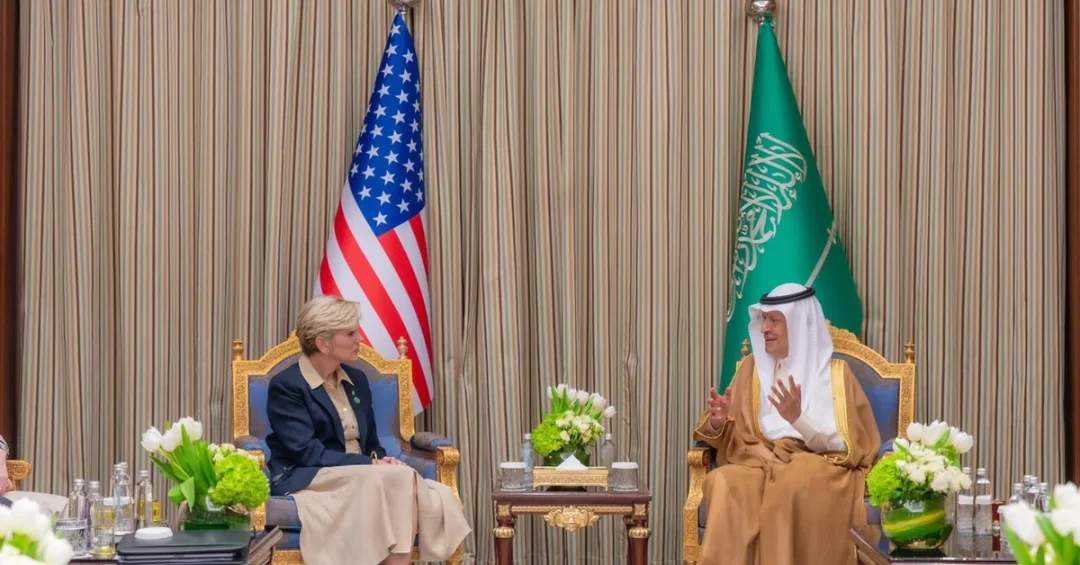
In a significant step for international energy collaboration, His Royal Highness Prince Abdulaziz bin Salman bin Abdulaziz, Saudi Arabia’s Minister of Energy, met with Jennifer M. Granholm, the United States Secretary of Energy, in Riyadh on May 15, 2024, where they signed a roadmap for energy cooperation between the two nations. The meeting, announced by the Saudi Press Agency (SPA), builds on the existing Partnership for Advancing Clean Energy (PACE) agreement signed in Jeddah on July 15, 2022, and sets a concrete timeline for joint projects in areas including carbon management, clean hydrogen, nuclear energy, electricity and renewables, innovation, energy supply chain resilience, and energy efficiency.
Context and Background
The roadmap signed in Riyadh serves as the operational plan for the PACE framework, which has been a cornerstone of Saudi-U.S. energy diplomacy. Under this partnership, both countries have committed to advancing clean energy technologies and addressing climate change through cooperative efforts. The meeting between the two ministers is part of ongoing high-level engagements that underscore the strategic depth of the bilateral relationship, which spans not only energy but also broader economic and security interests. The PACE agreement, initiated in 2022, was designed to facilitate joint research, policy alignment, and technology deployment, and the new roadmap is a tangible manifestation of those objectives.
Key Details
During their discussions, the ministers highlighted specific areas of collaboration, including carbon capture, utilization, and storage (CCUS), clean hydrogen production, and the advancement of circular carbon economy principles. They also addressed Saudi Arabia’s domestic and regional climate initiatives, such as the Saudi Green Initiative and the Middle East Green Initiative, which are aligned with the Kingdom’s Vision 2030 goals. The roadmap outlines several workstreams to ensure effective implementation: exchanging knowledge on policies, standards, and regulatory frameworks; enhancing joint research and development in emerging technologies; and building human capital through training and expertise exchange. Both sides reiterated their commitment to aligning these efforts with their respective national policies, laws, and international climate commitments.
Implications and Impact
The signing of this roadmap carries significant implications for global energy markets and climate action. For the United States, it reinforces a partnership with a key OPEC member, facilitating dialogue on stable energy supplies and technology cooperation. For Saudi Arabia, it bolsters the Kingdom’s position as a leader in clean energy innovation and a reliable partner in the global energy transition. The agreement is expected to accelerate the deployment of low-carbon solutions, including green hydrogen and advanced nuclear energy, which are critical for reducing emissions in hard-to-abate sectors. By fostering joint research and supply chain resilience, the partnership also aims to reduce dependencies and enhance energy security for both nations, while setting a positive example for international cooperation on climate and energy issues.
Vision 2030 Alignment
This cooperation directly supports Saudi Arabia’s Vision 2030 framework, which seeks to diversify the economy, enhance environmental sustainability, and position the Kingdom as a global hub for clean energy. The roadmap aligns with the National Energy Strategy, which emphasizes solar and wind power expansion, the development of a green hydrogen sector, and the adoption of circular carbon economy practices. By partnering with the United States, Saudi Arabia gains access to advanced technologies and expertise that can accelerate the achievement of these goals. Moreover, the agreement underscores the Kingdom’s commitment to international collaboration as a means of driving the global energy transition, contributing to a stable and prosperous future for all.
20 Questions
Q1. Who signed the energy cooperation roadmap?
A1. Saudi Arabia’s Minister of Energy, Prince Abdulaziz bin Salman, and U.S. Secretary of Energy, Jennifer Granholm, signed the roadmap during a meeting in Riyadh on May 15, 2024.
Q2. What is the basis of the new roadmap?
A2. The roadmap builds on the Partnership for Advancing Clean Energy (PACE) agreement signed in Jeddah on July 15, 2022, serving as its joint implementation plan.
Q3. What are the key areas of cooperation mentioned?
A3. Cooperation areas include carbon management, clean hydrogen, nuclear energy, electricity and renewables, innovation, energy sector supply chain resilience, and energy efficiency.
Q4. Which Saudi climate initiatives were highlighted?
A4. The Saudi Green Initiative and the Middle East Green Initiative were highlighted as local and regional efforts to tackle climate change.
Q5. What is the Circular Carbon Economy?
A5. The Circular Carbon Economy is an approach that promotes reducing, reusing, recycling, and removing carbon to manage emissions, aligning with the roadmap’s goals.
Q6. How will the roadmap be implemented?
A6. Implementation will occur through workstreams focusing on policy knowledge exchange, joint research and development, and human capital building via training.
Q7. What is the significance of the roadmap for the U.S.?
A7. For the U.S., it strengthens energy security cooperation with Saudi Arabia, fostering dialogue on stable supplies and joint technology development.
Q8. What is the significance for Saudi Arabia?
A8. For Saudi Arabia, it advances Vision 2030 goals by enhancing clean energy capabilities through international partnership and technology transfer.
Q9. When was the initial PACE agreement signed?
A9. The Partnership for Advancing Clean Energy was signed on July 15, 2022, in Jeddah.
Q10. What are the benefits of clean hydrogen cooperation?
A10. Cooperation on clean hydrogen aims to develop a low-carbon energy carrier that can replace fossil fuels in industries like transport and manufacturing.
Q11. How does the roadmap support carbon capture technologies?
A11. The roadmap promotes research and deployment of carbon capture, utilization, and storage (CCUS) technologies to reduce emissions from industrial sources.
Q12. What is the role of nuclear energy in the partnership?
A12. Nuclear energy is a focus area for sharing expertise and potentially developing civil nuclear programs that contribute to clean electricity generation.
Q13. How will standards and regulatory frameworks be aligned?
A13. The partners will exchange knowledge on policies and regulations to harmonize energy standards, facilitating mutual trade and investment.
Q14. What is the expected impact on global energy markets?
A14. The roadmap could stabilize energy markets by promoting technology cooperation and supply chain resilience between major producers and consumers.
Q15. How does this align with Saudi Vision 2030?
A15. Vision 2030 emphasizes economic diversification and sustainability; this roadmap directly supports those pillars through clean energy innovation and partnerships.
Q16. What is the Saudi Green Initiative?
A16. The Saudi Green Initiative is a national plan to plant billions of trees and reduce emissions, contributing to global climate goals.
Q17. Which technologies are covered under joint R&D?
A17. Joint R&D includes new technologies for clean energy, such as advanced solar cells, grid-scale storage, and hydrogen production methods.
Q18. How will human capital be developed?
A18. Human capital development will involve training programs and expert exchanges to build a skilled workforce in clean energy sectors.
Q19. What was the outcome of the 2022 PACE agreement so far?
A19. Since 2022, the agreement has facilitated initial dialogues and now the roadmap serves as a concrete action plan to accelerate progress.
Q20. What is the next step for both countries?
A20. The next step is to implement the workstreams, set project timelines, and begin joint initiatives to deliver on the roadmap’s objectives.
Reader Feedback
We value your thoughts. Please share your feedback on this article.
Your feedback helps us improve our coverage.