


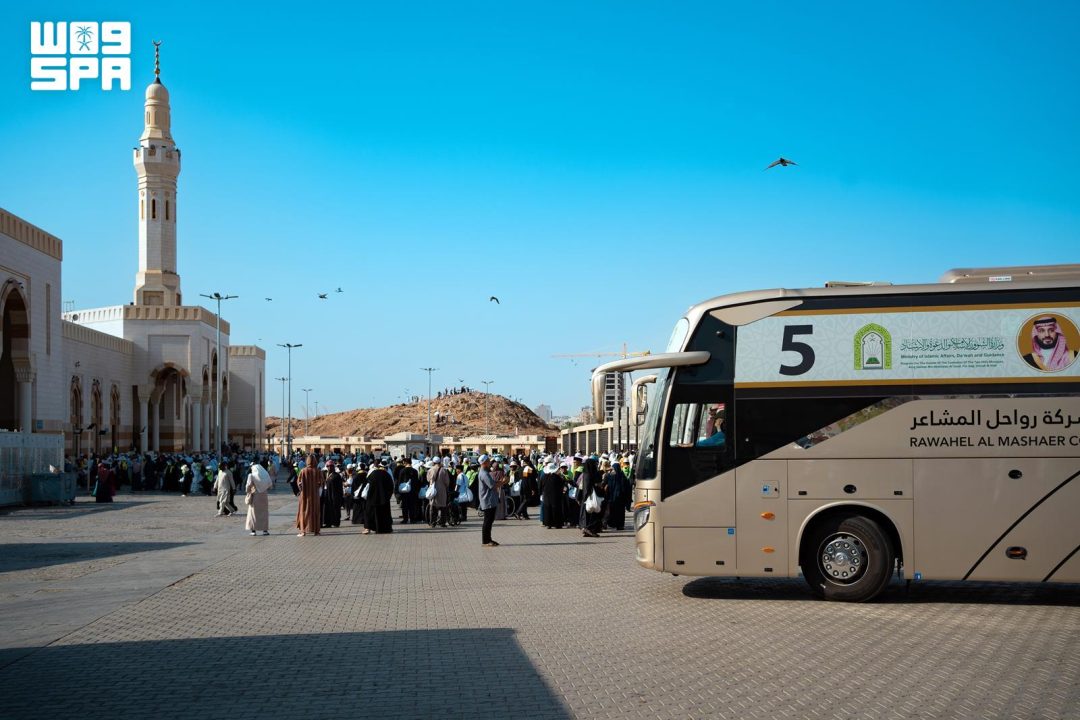
Mount Uhud, the Martyrs’ Cemetery, and Quba Mosque were visited by the second group of guests in the Custodian of the Two Holy Mosques Program for Umrah and Visiting.
According to SPA, the visits were organized by the Ministry of Islamic Affairs, Call and Guidance as part of a religious and cultural program during the guests’ stay in Medina before their departure to Makkah for Umrah.
At Mount Uhud and the Martyrs’ Cemetery, guests received explanations regarding the Battle of Uhud, which occurred in the third year of the Hijra, and learned about the related sites and the religious etiquette of visiting graves.
The itinerary included a visit to Quba Mosque, where guests performed two rakahs of prayer. They toured various sections of the mosque and were briefed on the development projects and services provided for visitors, as well as the historical status of the mosque in Islam.
The guests expressed their gratitude to the Ministry of Islamic Affairs, Call and Guidance for the organization and the integrated services that allowed them to visit the prominent Islamic and historical sites of Medina.
Which sites did the program guests visit in Medina? The guests visited Mount Uhud, the Martyrs’ Cemetery, and Quba Mosque. These visits were part of a religious and cultural program organized by the Ministry of Islamic Affairs, Call and Guidance during the guests’ stay in Medina before they traveled to Makkah.
What did the guests learn during their visit to Mount Uhud? Guests received information about the Battle of Uhud, which took place in the third year of the Hijra. They were introduced to the most important events and locations associated with the battle and were taught the religious etiquette for visiting graves.
What activities did the guests perform at Quba Mosque? Following the example of the Prophet, the guests performed two rakahs of prayer at Quba Mosque. They also toured the mosque’s different sections to learn about its historical significance in Islam and the development projects and services available for visitors.