


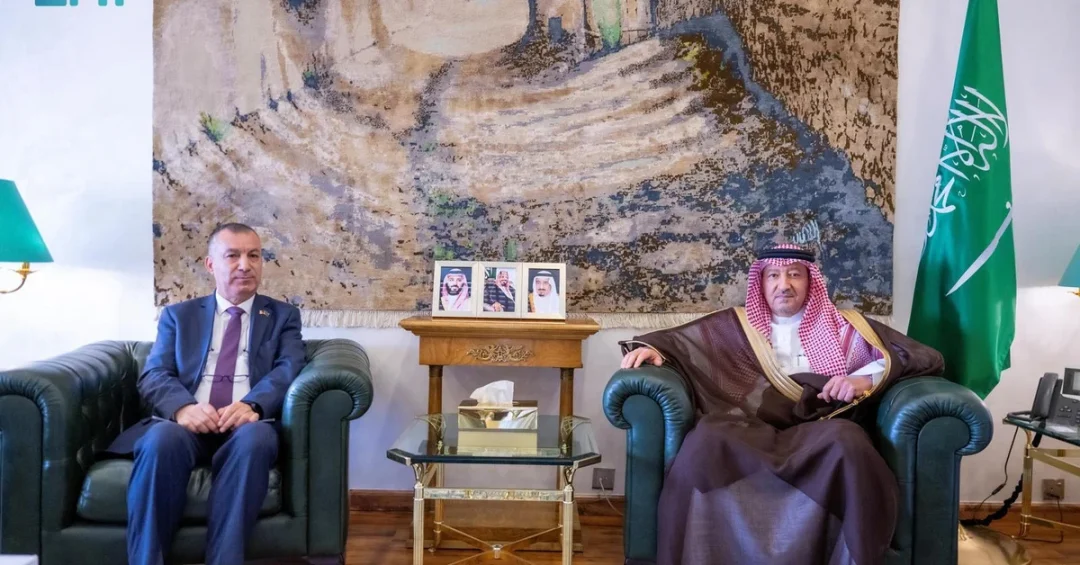
Saudi Vice Minister of Foreign Affairs Waleed El-Khereiji met with Algeria’s Ambassador to the Kingdom, Sherif Walid, at the Ministry of Foreign Affairs headquarters in Riyadh on August 5, 2024, to discuss bilateral relations and ways to enhance cooperation across various fields. The meeting, reported by the Saudi Press Agency (SPA), underscored the Kingdom’s ongoing commitment to strengthening diplomatic ties with Algeria, a key partner in North Africa and the Arab world. The discussions also covered issues of mutual concern, reflecting the two nations’ shared interest in regional stability and development.
Context and Background
Saudi-Algerian relations have historically been rooted in mutual respect, shared Arab identity, and a commitment to regional peace and security. Algeria, a nation with significant influence in the Maghreb and across Africa, has long been a partner of the Kingdom in various diplomatic and economic endeavors. The meeting between Vice Minister El-Khereiji and Ambassador Walid is part of Saudi Arabia’s broader diplomatic outreach under the leadership of Custodian of the Two Holy Mosques King Salman bin Abdulaziz Al Saud and Crown Prince Mohammed bin Salman bin Abdulaziz Al Saud, Prime Minister.
This engagement aligns with the Kingdom’s Vision 2030, which seeks to deepen international partnerships, promote economic diversification, and enhance Saudi Arabia’s role as a global hub for diplomacy and investment. Algeria, with its strategic location and growing economy, represents a valuable partner in achieving these objectives, particularly in sectors such as energy, trade, and infrastructure.
Key Details
During the meeting, Vice Minister El-Khereiji and Ambassador Walid reviewed the current state of bilateral relations and explored avenues for further collaboration. They discussed political, economic, and cultural dimensions of the partnership, with a focus on enhancing trade, investment, and people-to-people exchanges. Both sides reaffirmed their commitment to continued coordination on regional and international issues, including efforts to promote stability in the Middle East and North Africa.
The discussions also touched on the importance of joint action within multilateral forums, such as the Arab League and the Organization of Islamic Cooperation (OIC), where Saudi Arabia and Algeria often align on key issues. The meeting highlights the regular diplomatic consultations between the two countries, which serve to reinforce their shared positions and foster deeper understanding.
Implications and Impact
This diplomatic engagement carries significant implications for regional cooperation. A strengthened Saudi-Algerian partnership can contribute to economic integration in the Arab world, opening new opportunities for trade, investment, and joint ventures. For Saudi Arabia, deeper ties with Algeria support the Kingdom’s efforts to diversify its economy beyond oil, in line with Vision 2030, by tapping into North African markets and resources.
Moreover, the meeting signals Saudi Arabia’s continued diplomatic activity in Africa, a continent of growing strategic importance. By engaging with Algeria, the Kingdom reinforces its role as a bridge between the Gulf and the Maghreb, promoting stability and development. This aligns with Saudi Arabia’s foreign policy objectives of fostering peace, supporting moderate voices, and countering extremism.
Vision 2030 Alignment
The meeting between Vice Minister El-Khereiji and Ambassador Walid directly supports Saudi Arabia’s Vision 2030, which emphasizes international cooperation as a cornerstone of the Kingdom’s future prosperity. By strengthening ties with Algeria, Saudi Arabia advances its goals of economic diversification, enhanced global engagement, and regional leadership. As the Kingdom continues to implement Vision 2030, partnerships with countries like Algeria will be instrumental in creating new opportunities for growth, investment, and cultural exchange, further solidifying Saudi Arabia’s position as a dynamic and forward-looking nation on the world stage.
20 Questions
Q1. Who met with Algeria’s Ambassador to Saudi Arabia?
A1. Saudi Vice Minister of Foreign Affairs Waleed El-Khereiji met with Algeria’s Ambassador Sherif Walid. The meeting took place at the Ministry of Foreign Affairs headquarters in Riyadh on August 5, 2024, according to the Saudi Press Agency.
Q2. When and where did the meeting take place?
A2. The meeting occurred on August 5, 2024, at the Ministry of Foreign Affairs headquarters in Riyadh, Saudi Arabia. It was reported by the Saudi Press Agency, highlighting the ongoing diplomatic engagement between the two nations.
Q3. What was the main purpose of the meeting?
A3. The main purpose was to discuss bilateral relations between Saudi Arabia and Algeria and explore ways to enhance cooperation across various fields. They also addressed issues of mutual concern, reflecting their shared commitment to regional stability and development.
Q4. What topics were discussed during the meeting?
A4. The discussions covered political, economic, and cultural aspects of Saudi-Algerian relations, with a focus on enhancing trade, investment, and people-to-people exchanges. They also reviewed regional and international issues of common interest, including stability in the Middle East and North Africa.
Q5. How does this meeting align with Saudi Vision 2030?
A5. The meeting supports Vision 2030 by deepening international partnerships, promoting economic diversification, and enhancing Saudi Arabia’s global role. Strengthening ties with Algeria opens opportunities for trade, investment, and joint ventures, contributing to the Kingdom’s long-term prosperity.
Q6. What is the significance of Saudi-Algerian relations?
A6. Saudi-Algerian relations are significant due to shared Arab identity, mutual respect, and a commitment to regional peace. Algeria’s influence in North Africa and Africa makes it a key partner for Saudi Arabia in diplomatic, economic, and security matters.
Q7. Who is Waleed El-Khereiji?
A7. Waleed El-Khereiji is the Vice Minister of Foreign Affairs of Saudi Arabia. He plays a key role in implementing the Kingdom’s foreign policy, engaging with international partners to strengthen diplomatic and economic ties.
Q8. Who is Sherif Walid?
A8. Sherif Walid is Algeria’s Ambassador to Saudi Arabia. He represents Algerian interests in the Kingdom and works to foster bilateral cooperation between the two countries across various sectors.
Q9. What are the key areas of cooperation between Saudi Arabia and Algeria?
A9. Key areas include trade, investment, energy, infrastructure, and cultural exchange. Both nations also collaborate within multilateral organizations like the Arab League and the Organization of Islamic Cooperation to address regional and global challenges.
Q10. How does this meeting impact regional stability?
A10. The meeting reinforces diplomatic coordination between two influential Arab states, promoting stability in the Middle East and North Africa. Their shared positions on regional issues contribute to peace and security, aligning with Saudi Arabia’s foreign policy goals.
Q11. What role does the Saudi Press Agency play in reporting such meetings?
A11. The Saudi Press Agency (SPA) is the official news agency of Saudi Arabia, providing accurate and timely information on government activities. It ensures transparency and keeps the public informed about diplomatic engagements.
Q12. How often do Saudi and Algerian officials meet?
A12. Saudi and Algerian officials engage regularly through diplomatic channels, including bilateral meetings, summits, and multilateral forums. These consultations help maintain strong ties and address mutual interests.
Q13. What economic opportunities exist between Saudi Arabia and Algeria?
A13. Opportunities include trade in energy, petrochemicals, agriculture, and technology, as well as joint investments in infrastructure and renewable energy. These align with Saudi Vision 2030’s goal of economic diversification.
Q14. How does this meeting reflect Saudi Arabia’s foreign policy?
A14. It reflects Saudi Arabia’s proactive diplomacy, commitment to Arab solidarity, and efforts to build partnerships that promote peace, stability, and economic growth, in line with the leadership’s vision.
Q15. What is the significance of Algeria in Saudi Arabia’s Africa strategy?
A15. Algeria serves as a gateway to North and West Africa, making it a strategic partner for Saudi Arabia’s economic and diplomatic outreach on the continent. Enhanced ties support the Kingdom’s broader Africa strategy.
Q16. Were any agreements signed during the meeting?
A16. No agreements were reported from this meeting. It was a diplomatic discussion focused on reviewing bilateral relations and exploring ways to enhance cooperation in various fields.
Q17. How does this meeting benefit the Saudi people?
A17. It can lead to increased economic opportunities, cultural exchanges, and regional stability, which contribute to Saudi Arabia’s prosperity and security, aligning with Vision 2030’s quality-of-life goals.
Q18. What message does this meeting send to the international community?
A18. It signals Saudi Arabia’s active engagement in diplomacy and its commitment to building bridges with Arab and African nations. It reinforces the Kingdom’s role as a stabilizing force in the region.
Q19. How does the meeting address issues of mutual concern?
A19. The meeting provided a platform to discuss regional and international developments, enabling both sides to coordinate positions and collaborate on solutions that promote peace and security.
Q20. What are the next steps for Saudi-Algerian relations?
A20. Both nations are expected to continue high-level consultations, explore new areas of cooperation, and work towards implementing joint initiatives that advance their shared interests and Vision 2030 objectives.
Reader Feedback
We value your thoughts. Please share your feedback on this article.
Your feedback helps us improve our coverage.