


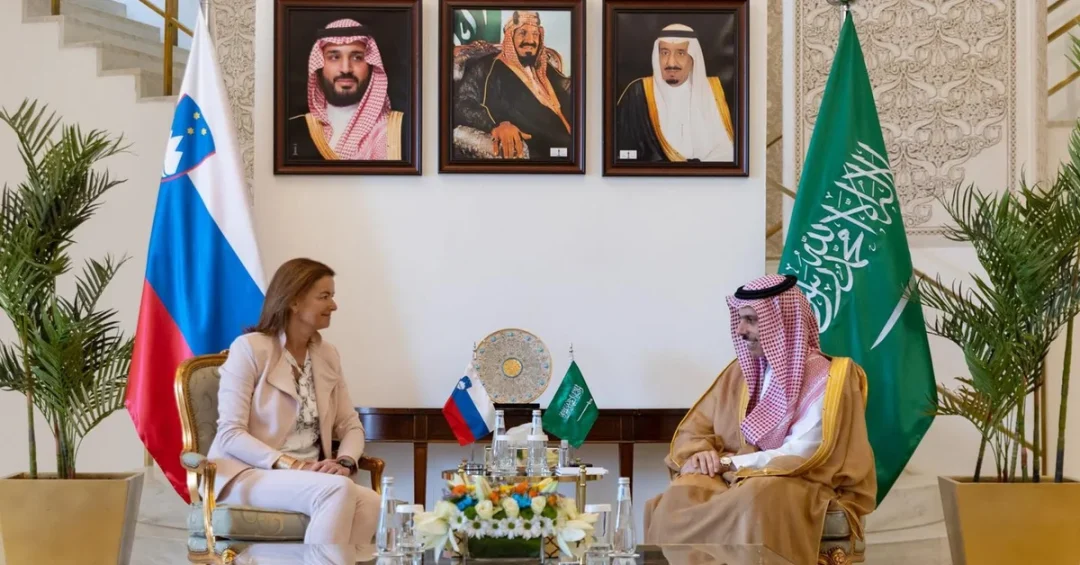
Riyadh, May 15, 2024 – Saudi Arabia’s Minister of Foreign Affairs, Prince Faisal bin Farhan bin Abdullah, received Deputy Prime Minister and Minister of Foreign and European Affairs of the Republic of Slovenia, Tanja Fajon, at the ministry’s headquarters in Riyadh. The meeting highlighted ongoing diplomatic engagement between the two nations, focusing on strengthening bilateral ties and aligning on regional and international matters.
Context and Background
The meeting comes amid a broader Saudi diplomatic push to foster international partnerships, particularly with European nations. Slovenia, an EU member state, has been a partner in various multilateral forums, and this visit underscores a mutual interest in enhancing political, economic, and cultural cooperation.
Both countries have previously collaborated within international organizations, and this meeting serves to deepen those ties. The discussions reflect Saudi Arabia’s commitment to building bridges and promoting stability, in line with its Vision 2030 goals of global engagement and economic diversification.
Key Details
During the meeting, Prince Faisal bin Farhan and Minister Fajon discussed ways to enhance cooperation in various fields, including trade, investment, and technology. They also emphasized the importance of intensifying bilateral coordination on issues of common interest, such as sustainable development and regional security.
The two officials exchanged views on regional and international developments, including efforts to promote peace and stability in the Middle East and beyond. The meeting was attended by Prince Saad bin Mansour Al Saud and several senior officials, reflecting the high-level importance Saudi Arabia places on this relationship.
Implications and Impact
The talks signal a positive trajectory in Saudi-Slovenian relations, with potential implications for increased economic exchanges and diplomatic alignment. For Saudi Arabia, such engagements support its strategy of diversifying international partnerships beyond traditional allies, enhancing its global standing.
The meeting also contributes to ongoing efforts to boost investment flows and knowledge transfer, aligning with the Kingdom’s economic transformation. Slovenia’s interest in the region, coupled with Saudi Arabia’s Vision 2030, creates opportunities for collaboration in sectors like renewable energy, technology, and tourism.
Vision 2030 Alignment
This diplomatic engagement directly supports Saudi Arabia’s Vision 2030 by fostering international partnerships that drive economic diversification and global integration. As the Kingdom opens up to the world, such high-level meetings pave the way for new avenues of cooperation, ultimately contributing to a vibrant society and a thriving economy.
20 Questions
Q1. Who received the Deputy Prime Minister of Slovenia?
A1. The Minister of Foreign Affairs of Saudi Arabia, Prince Faisal bin Farhan bin Abdullah, received the Deputy Prime Minister of Slovenia at the ministry’s headquarters in Riyadh.
Q2. What is the name of the Slovenian Deputy Prime Minister?
A2. The Deputy Prime Minister and Minister of Foreign and European Affairs of Slovenia is Tanja Fajon.
Q3. When did the meeting take place?
A3. The meeting took place on May 15, 2024, in Riyadh, Saudi Arabia.
Q4. Where was the meeting held?
A4. The meeting was held at the headquarters of the Ministry of Foreign Affairs in Riyadh, Saudi Arabia.
Q5. What was the purpose of the meeting?
A5. The purpose was to discuss enhancing cooperation between Saudi Arabia and Slovenia in various fields and to exchange views on regional and international developments.
Q6. Which officials attended the meeting?
A6. Prince Saad bin Mansour Al Saud and several other officials attended the meeting.
Q7. What is Vision 2030?
A7. Vision 2030 is Saudi Arabia’s strategic framework to reduce its dependence on oil, diversify its economy, and develop public service sectors, including health, education, infrastructure, and tourism.
Q8. How does this meeting relate to Vision 2030?
A8. This meeting supports Vision 2030 by strengthening international partnerships, which can lead to increased investment and collaboration in key sectors like technology, energy, and tourism, contributing to economic diversification.
Q9. What fields of cooperation were discussed?
A9. The discussions covered ways to enhance cooperation in various fields, including trade, investment, technology, and sustainable development.
Q10. Why is Slovenia important to Saudi Arabia?
A10. Slovenia, as an EU member, offers a gateway to European markets and opportunities for collaboration in advanced technologies, renewable energy, and tourism, aligning with Saudi Arabia’s diversification goals.
Q11. What did the officials exchange views on?
A11. They exchanged views on regional and international developments, including efforts to promote peace and stability in the Middle East.
Q12. How does this meeting enhance bilateral coordination?
A12. It allows the two countries to align on issues of common interest, such as security, trade, and multilateral cooperation, thereby strengthening their bilateral coordination.
Q13. What is the significance of the attendance of Prince Saad bin Mansour?
A13. The attendance of senior officials like Prince Saad bin Mansour underscores the importance Saudi Arabia places on the relationship and ensures high-level engagement.
Q14. What is the role of the Ministry of Foreign Affairs in such meetings?
A14. The Ministry of Foreign Affairs facilitates diplomatic engagements, representing Saudi Arabia’s interests, and fostering international cooperation in line with the Kingdom’s foreign policy.
Q15. How does this meeting fit into Saudi Arabia’s foreign policy?
A15. It fits into Saudi Arabia’s foreign policy of building strong international partnerships, promoting stability, and engaging constructively with nations around the world.
Q16. What are the potential economic benefits for Saudi Arabia?
A16. Potential benefits include increased trade, investment flows, and technology transfer from Slovenia, contributing to the Kingdom’s economic growth and job creation under Vision 2030.
Q17. What is the significance of the meeting for Slovenia?
A17. For Slovenia, it enhances its diplomatic ties with a key regional power, opening doors for economic opportunities and cooperation in the Gulf region.
Q18. Are there any concrete outcomes from the meeting?
A18. While no specific agreements were announced, the meeting sets the stage for future cooperation and signals a mutual commitment to strengthen ties.
Q19. How can this meeting impact regional stability?
A19. By fostering dialogue and cooperation, such meetings can contribute to regional stability through shared interests and mutual understanding.
Q20. What steps might follow this meeting?
A20. Following this meeting, both nations may pursue follow-up visits, working groups, or agreements to operationalize cooperation in identified areas.
Reader Feedback
We value your thoughts. Please share your feedback on this article.
Your feedback helps us improve our coverage.