


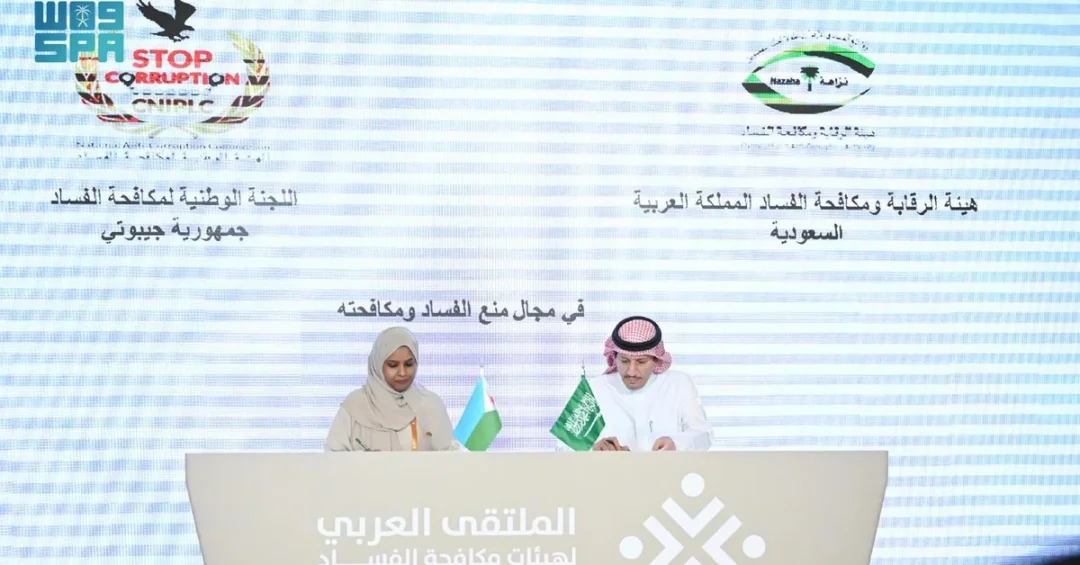
Saudi Arabia and Djibouti have signed a memorandum of understanding (MoU) to bolster cooperation in combating corruption, as announced by the Saudi Press Agency (SPA) on May 15, 2024. The agreement was signed in Riyadh on the sidelines of the Arab Forum for Anti-Corruption Agencies and Financial Investigation Units, an event held under the patronage of His Royal Highness the Crown Prince. The MoU aims to strengthen bilateral efforts to prevent and fight cross-border corruption, a key priority for the Kingdom’s governance reforms under Vision 2030.
Context and Background
The signing underscores the Kingdom’s growing role as a regional leader in anti-corruption initiatives. The forum, which gathers anti-corruption bodies from across the Arab world, provides a platform for sharing best practices and enhancing institutional collaboration. Saudi Arabia’s proactive approach, led by the Oversight and Anti-Corruption Authority (Nazaha), aligns with its international commitments and its national strategy to promote transparency and integrity in both public and private sectors. This MoU with Djibouti is part of a series of bilateral agreements that Saudi Arabia has concluded with various countries to combat corruption collectively, reflecting its commitment to the UN Convention against Corruption and its leadership in the Arab Anti-Corruption Network.
Key Details
The MoU was signed by Mazin bin Ibrahim Al-Kahmous, President of Nazaha, and Badria Zakaria Sheikh Ibrahim, Chairperson of the Djiboutian National Anti-Corruption Committee. The agreement focuses on enhancing cooperation in the investigation and prosecution of cross-border corruption crimes, facilitating the exchange of information, and conducting training and capacity-building programs. Both officials emphasized that the MoU represents a significant step in strengthening the institutional capabilities of both entities to detect and deter corruption effectively. The signing took place during the forum, which is part of ongoing efforts by Saudi Arabia to host international and regional events that promote integrity and transparency.
International Impact
The agreement has significant implications for regional and international anti-corruption efforts. It strengthens the legal and operational frameworks for mutual legal assistance and enhances the ability of both countries to track and recover assets linked to corruption. By cooperating with a strategic partner near the Bab el-Mandeb Strait, a key maritime route, Saudi Arabia also bolsters security and governance in a critical geopolitical region. The MoU serves as a model for cross-border collaboration, encouraging other nations to adopt similar frameworks to combat corruption, which is often transnational in nature. This move aligns with the UN’s Sustainable Development Goal 16, which promotes peaceful and inclusive societies with access to justice for all, and builds on Saudi Arabia’s international commitments to transparency and rule of law.
Vision 2030 Alignment
The anti-corruption cooperation with Djibouti supports Saudi Arabia’s Vision 2030, which places a high priority on governance and the rule of law as foundations for economic growth and social development. Enhanced anti-corruption measures are vital for attracting foreign investment, improving the business environment, and ensuring accountability across government institutions. This MoU reflects the Kingdom’s commitment to international partnerships that advance its national goals and contribute to global efforts against corruption. By cooperating with Djibouti, Saudi Arabia demonstrates its role as a regional enabler of good governance, paving the way for sustainable development and prosperity for both nations.
20 Questions
Q1. What is the purpose of the MoU signed between Saudi Arabia and Djibouti?
A1. The MoU aims to enhance cooperation in combating cross-border corruption crimes, exchanging information, and developing institutional capacity to strengthen anti-corruption efforts in both countries.
Q2. Which Saudi agency signed the MoU?
A2. The Saudi Oversight and Anti-Corruption Authority, commonly known as Nazaha, signed the MoU. It is the Kingdom’s lead agency for preventing and combating corruption.
Q3. Who represented Saudi Arabia during the signing ceremony?
A3. Mazin bin Ibrahim Al-Kahmous, the President of Nazaha, represented Saudi Arabia. He is a key figure in Saudi Arabia’s anti-corruption initiatives.
Q4. Who represented Djibouti during the signing?
A4. Badria Zakaria Sheikh Ibrahim, the Chairperson of the Djiboutian National Anti-Corruption Committee, represented Djibouti. She is a prominent official in the country’s anti-corruption efforts.
Q5. When was the MoU signed?
A5. The MoU was signed on May 15, 2024, as reported by the Saudi Press Agency. This date marks a significant step in bilateral cooperation between the two nations.
Q6. Where did the signing take place?
A6. The signing took place in Riyadh, Saudi Arabia, on the sidelines of the Arab Forum for Anti-Corruption Agencies and Financial Investigation Units, a major regional event hosted by the Kingdom.
Q7. What is the Arab Forum for Anti-Corruption Agencies?
A7. It is a regional gathering of anti-corruption bodies from Arab countries to discuss strategies, share best practices, and enhance cooperation in the fight against corruption.
Q8. Who is the patron of the Arab Forum?
A8. The forum is held under the patronage of His Royal Highness the Crown Prince of Saudi Arabia, underscoring the Kingdom’s high-level commitment to anti-corruption.
Q9. Why is the timing of this MoU significant?
A9. The timing is significant as it coincides with the forum, highlighting Saudi Arabia’s proactive role in fostering regional cooperation on integrity and transparency, which is central to its reforms.
Q10. How does this MoU contribute to Vision 2030?
A10. It supports Vision 2030 by strengthening governance, enhancing accountability, and improving the rule of law, which are key pillars for economic diversification and attracting international investment.
Q11. What areas of cooperation does the MoU cover?
A11. The MoU covers cooperation in combating cross-border corruption crimes, exchanging information related to corruption, and developing institutional capacity through training and technical assistance.
Q12. How does this MoU benefit both countries?
A12. It enables both countries to work together to prevent corruption, recover assets, and improve governance, thereby fostering trust and stability in the region.
Q13. Does the MoU include training programs?
A13. Yes, the MoU includes provisions for training and capacity-building programs to enhance the skills of anti-corruption officials in both countries.
Q14. Is this MoU part of a broader series of similar agreements?
A14. Yes, Saudi Arabia has signed several MoUs with other nations to combat corruption, reflecting its proactive role in global anti-corruption efforts.
Q15. How does this agreement support international anti-corruption conventions?
A15. It aligns with the UN Convention against Corruption and other international frameworks, demonstrating Saudi Arabia’s commitment to global standards in combating corruption.
Q16. What is the significance of Djibouti as a partner?
A16. Djibouti’s strategic location on the Bab el-Mandeb Strait adds geopolitical significance, enabling cooperation in a region critical for global trade and security.
Q17. What are the expected outcomes of this MoU?
A17. Expected outcomes include improved information exchange, successful corruption investigations, and strengthened legal frameworks to combat corruption in both countries.
Q18. How does this MoU align with Saudi Arabia’s international reputation?
A18. It reinforces Saudi Arabia’s image as a leader in transparency and governance, demonstrating its active participation in global efforts to combat corruption.
Q19. How can the public access information about this MoU?
A19. The information was released by the Saudi Press Agency (SPA), which is the official source, ensuring transparency and verifiability for the public.
Q20. What future steps are likely after the MoU?
A20. Implementing the MoU through joint projects, regular meetings, and mutual assistance mechanisms will be crucial. These steps will solidify cooperation and yield tangible results in anti-corruption efforts.
Reader Feedback
We value your thoughts. Please share your feedback on this article.
Your feedback helps us improve our coverage.