


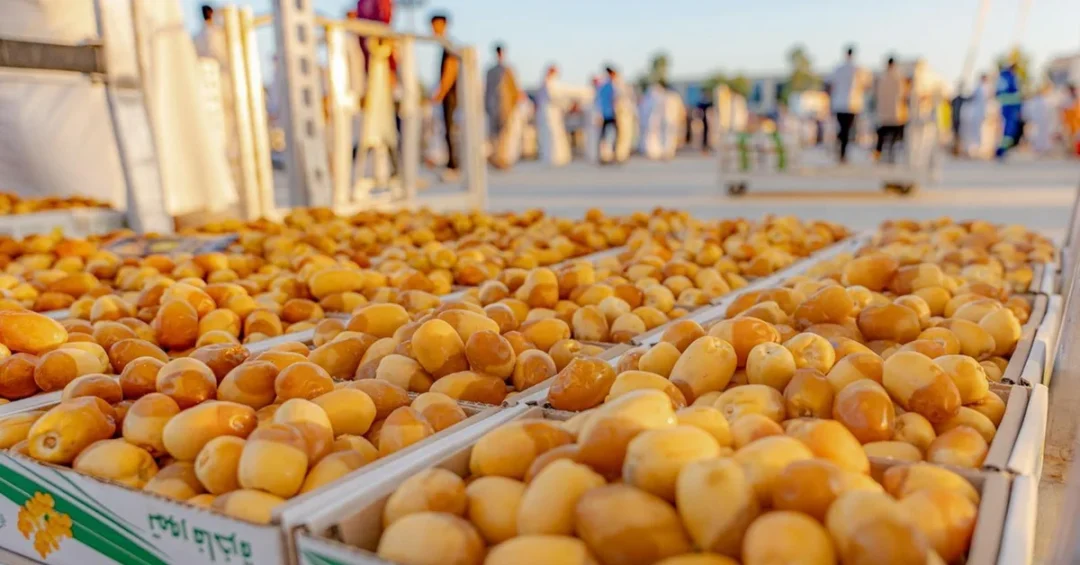
The Unaizah International Dates Season auction yard, organized by the Ministry of Environment, Water and Agriculture and supervised by the National Centre for Palms and Dates, is currently receiving 63 varieties of dates daily, according to the Saudi Press Agency (SPA). The auction, a key event in the Kingdom’s agricultural calendar, showcases the rich diversity of Saudi date production and highlights the nation’s commitment to supporting local farmers and enhancing food security.
Context and Background
The Unaizah International Dates Season is a significant annual event that celebrates Saudi Arabia’s date palm heritage and boosts the local economy. Dates are a staple of Saudi culture and cuisine, and the Kingdom is one of the world’s largest producers. The event is organized by the Ministry of Environment, Water and Agriculture, with oversight from the National Centre for Palms and Dates, reflecting the government’s dedication to the sector. The auction yard serves as a central marketplace where farmers from across the Kingdom bring their harvests to be sold to buyers from within Saudi Arabia and abroad.
Key Details
Eng. Ahmed Al-Odaibi, General Supervisor of the auction yard, stated that the most sought-after varieties include Sukkari, Barhi, Medjool, and Khudari. Other popular types such as Shishi, Segai, Rashidiya, Fankha, and Munifi are also in high demand. These dates are transported to the yard from various regions of the Kingdom, underscoring the nationwide participation in the event. To facilitate efficient trading, the season employs smart carts to display dates, allowing buyers to inspect the entire quantity before the auction begins. Additionally, designated paths for each variety help streamline the selection process, ensuring a smooth and organized experience for all participants.
Implications and Impact
The Unaizah International Dates Season has far-reaching implications for Saudi Arabia’s agricultural sector and international trade. By providing a platform for farmers to showcase their produce, the event enhances market access and promotes the quality of Saudi dates globally. It also attracts international buyers, fostering economic ties and boosting exports. Moreover, the use of smart carts and organized pathways demonstrates the integration of technology into traditional practices, improving efficiency and transparency in the auction process. This aligns with Saudi Arabia’s broader goals of modernizing agriculture and enhancing food security.
Vision 2030 Alignment
The Unaizah International Dates Season is a prime example of how Saudi Arabia’s Vision 2030 is driving sustainable development and economic diversification. By supporting the date palm sector, the Kingdom is not only preserving its cultural heritage but also creating new opportunities for farmers and entrepreneurs. The event contributes to the goals of increasing non-oil revenues, promoting local products, and strengthening international partnerships. As Saudi Arabia continues to advance its agricultural initiatives, the date industry stands as a testament to the nation’s resilience and its commitment to a prosperous future.
20 Questions
Q1. How many varieties of dates are received daily at the Unaizah International Dates Season auction yard?
A1. The auction yard receives 63 varieties of dates daily, showcasing the rich diversity of Saudi date production and providing a wide selection for buyers from across the Kingdom and beyond.
Q2. Which organization oversees the Unaizah International Dates Season?
A2. The season is organized by the Ministry of Environment, Water and Agriculture and supervised by the National Centre for Palms and Dates, ensuring high standards and support for farmers.
Q3. What are the most requested date varieties at the auction?
A3. According to Eng. Ahmed Al-Odaibi, the most requested varieties are Sukkari, Barhi, Medjool, and Khudari. These premium dates are highly prized for their quality and taste.
Q4. Who is Eng. Ahmed Al-Odaibi?
A4. Eng. Ahmed Al-Odaibi serves as the General Supervisor of the auction yard. He provides insights into the operations and popular varieties at the Unaizah International Dates Season.
Q5. What other date varieties are in demand besides the top four?
A5. Other varieties in demand include Shishi, Segai, Rashidiya, Fankha, and Munifi. These are also brought to the yard from various regions across Saudi Arabia.
Q6. Where do the dates come from for the auction?
A6. The dates are brought to the yard from all over the Kingdom, highlighting the nationwide participation and the widespread cultivation of date palms in Saudi Arabia.
Q7. How does the auction yard use technology to improve the process?
A7. The auction yard utilizes smart carts to display dates, enabling buyers to thoroughly inspect the entire quantity before entering the auction, and designates paths for each variety to streamline selection.
Q8. What is the significance of the Unaizah International Dates Season for Saudi Arabia?
A8. The season celebrates Saudi Arabia’s date palm heritage, supports local farmers, and boosts the economy. It also promotes Saudi dates internationally and aligns with Vision 2030 goals.
Q9. How does the event support Saudi farmers?
A9. The event provides a marketplace for farmers to sell their produce directly to buyers, enhancing their access to markets and increasing their income, while also preserving traditional agricultural practices.
Q10. What role does the National Centre for Palms and Dates play?
A10. The National Centre for Palms and Dates supervises the season, ensuring quality control, supporting farmers, and promoting the sustainable development of the date palm sector in line with national objectives.
Q11. How does the auction contribute to Saudi Arabia’s food security?
A11. By facilitating the trade of dates, the auction supports local production and reduces reliance on imports. Dates are a nutritious staple, and a robust domestic market strengthens food security.
Q12. What economic benefits does the Unaizah International Dates Season bring?
A12. The season stimulates local commerce, creates jobs, and attracts international buyers. It also boosts exports of Saudi dates, contributing to economic diversification and non-oil revenue.
Q13. How does the event reflect Vision 2030?
A13. The event aligns with Vision 2030 by promoting sustainable agriculture, empowering local farmers, and enhancing Saudi Arabia’s global competitiveness in date production and export.
Q14. What makes Sukkari dates so popular?
A14. Sukkari dates are known for their exquisite sweetness, soft texture, and high quality. They are a premium variety that fetches high prices and is in great demand locally and internationally.
Q15. Are there international buyers at the auction?
A15. Yes, the Unaizah International Dates Season attracts international buyers, providing Saudi farmers with access to global markets and showcasing the exceptional quality of Saudi dates worldwide.
Q16. How does the auction ensure fair trading?
A16. The auction follows transparent procedures, with all dates displayed for inspection. The designated paths for each variety and the use of smart carts help maintain order and fairness in the bidding process.
Q17. What is the duration of the Unaizah International Dates Season?
A17. The season typically runs for several weeks during the harvest period. It is a major annual event that draws participants and visitors from across Saudi Arabia and abroad.
Q18. How does the event promote Saudi culture?
A18. The event celebrates the deep-rooted tradition of date cultivation in Saudi Arabia. It highlights the cultural importance of dates in Saudi hospitality and daily life, reinforcing national identity.
Q19. What innovations are used in the auction process?
A19. The auction employs smart carts for displaying dates and organized pathways for each variety. These innovations enhance efficiency, transparency, and the overall experience for buyers and sellers.
Q20. What future developments can be expected for the date industry in Saudi Arabia?
A20. With continued government support and Vision 2030 initiatives, the date industry is poised for further growth, including increased production, enhanced quality, and expanded international market reach.
Reader Feedback
We value your thoughts. Please share your feedback on this article.
Your feedback helps us improve our coverage.