


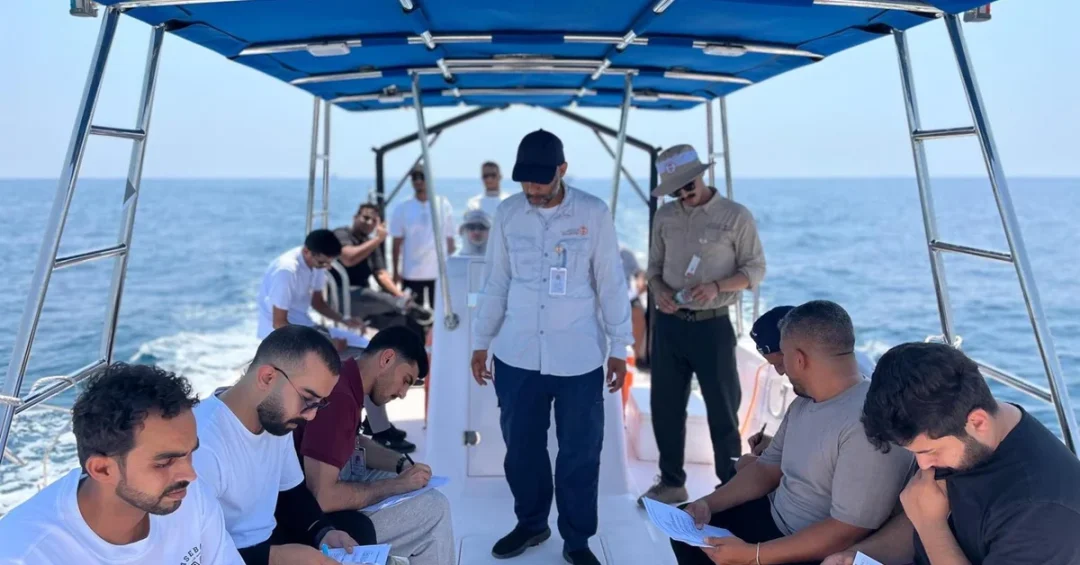
The National Center for Wildlife (NCW) announced on August 18, 2024, the successful conclusion of its “Professional Inspector Training” program, a 10-day intensive course designed to equip new inspectors with the skills needed to protect the delicate ecosystems of the Red Sea and Arabian Gulf. The program, detailed in an NCW press release, covered environmental law, health and safety, report writing, and practical field training at the Jubail Marine Protected Area, where trainees gained hands-on experience in handling environmental violations, public interaction, and safety protocols.
Context and Background
The NCW, a government agency dedicated to wildlife conservation, developed the comprehensive curriculum over seven weeks based on a thorough analysis of inspector roles and responsibilities. This initiative aligns with Saudi Arabia’s broader environmental goals under Vision 2030, which emphasizes sustainable development and the protection of natural resources. The Kingdom’s marine environments, including the Red Sea and Arabian Gulf, are vital ecological and economic assets that require robust protection.
Key Details
The training program was conducted over 10 days and included a blend of theoretical instruction and practical field exercises. Participants studied environmental law, health and safety regulations, and report writing, and then applied their knowledge at the Jubail Marine Protected Area. There, they practiced identifying and addressing environmental violations, engaging with the public, and implementing strict safety measures. The NCW aims to ensure that these inspectors are highly qualified to safeguard the Kingdom’s marine environment.
Implications and Impact
This program represents a significant step forward in Saudi Arabia’s efforts to enhance environmental enforcement and conservation. By equipping inspectors with specialized skills, the NCW is strengthening the Kingdom’s capacity to protect its marine biodiversity, which is under threat from pollution, overfishing, and climate change. The initiative also supports Saudi Arabia’s international commitments to environmental sustainability and showcases the Kingdom’s leadership in regional conservation efforts.
Vision 2030 Alignment
The “Professional Inspector Training” program directly supports Vision 2030’s objectives of environmental sustainability and the preservation of Saudi Arabia’s natural heritage. As the Kingdom continues to diversify its economy and promote eco-tourism, such initiatives are crucial for maintaining the health of marine ecosystems. By investing in the professional development of wildlife inspectors, the NCW is contributing to a sustainable future and reinforcing Saudi Arabia’s role as a global leader in environmental protection.
20 Questions
Q1. What is the National Center for Wildlife (NCW)?
A1. The NCW is a Saudi government agency responsible for wildlife conservation and environmental protection. It develops programs to safeguard the Kingdom’s natural ecosystems.
Q2. What was the purpose of the Professional Inspector Training program?
A2. The program aimed to equip new inspectors with the skills needed to protect the Red Sea and Arabian Gulf environments, including environmental law and field training.
Q3. How long did the training program last?
A3. The program was a 10-day intensive course designed to provide comprehensive training to new inspectors.
Q4. What topics were covered in the program?
A4. Topics included environmental law, health and safety, report writing, and practical field training at the Jubail Marine Protected Area.
Q5. Where was the practical field training conducted?
A5. The practical training took place at the Jubail Marine Protected Area, where trainees gained hands-on experience.
Q6. How long did it take the NCW to develop the curriculum?
A6. The curriculum was developed over seven weeks based on a thorough analysis of inspector roles and responsibilities.
Q7. What skills did trainees acquire during the program?
A7. Trainees learned to handle environmental violations, interact with the public, and implement strict safety protocols.
Q8. Why is protecting the Red Sea and Arabian Gulf important?
A8. These marine environments are vital ecological and economic assets that support biodiversity and contribute to Saudi Arabia’s sustainable development.
Q9. How does this program align with Vision 2030?
A9. It supports Vision 2030’s environmental sustainability goals and the preservation of Saudi Arabia’s natural heritage for future generations.
Q10. What is the role of NCW inspectors?
A10. Inspectors enforce environmental laws, monitor marine protected areas, and ensure compliance to protect the Kingdom’s ecosystems.
Q11. What did the NCW announce regarding the program?
A11. The NCW announced the successful conclusion of the program in a press release on August 18, 2024.
Q12. How does the program benefit Saudi Arabia’s marine environment?
A12. By training qualified inspectors, the program enhances enforcement and conservation efforts, helping to preserve marine biodiversity.
Q13. What is the Jubail Marine Protected Area?
A13. It is a designated protected area in Saudi Arabia where marine life is conserved, used for practical training in this program.
Q14. What is the significance of environmental law in the training?
A14. Environmental law provides the legal framework for inspectors to enforce regulations and address violations effectively.
Q15. How does public interaction feature in the training?
A15. Trainees learn to engage with the public respectfully, educating them about environmental regulations and fostering cooperation.
Q16. What safety protocols were emphasized?
A16. Strict safety protocols were taught to ensure inspectors can perform their duties safely in marine environments.
Q17. What is the NCW’s goal for these inspectors?
A17. The goal is to ensure inspectors are highly qualified to safeguard the Kingdom’s marine environment.
Q18. How does this program impact Saudi Arabia’s international standing?
A18. It demonstrates Saudi Arabia’s commitment to environmental protection, enhancing its leadership in global conservation efforts.
Q19. What future initiatives might follow this program?
A19. The NCW may expand training programs and conservation projects to further protect Saudi Arabia’s diverse ecosystems.
Q20. How can the public support marine conservation in Saudi Arabia?
A20. The public can support by respecting environmental laws, participating in conservation efforts, and reporting violations to authorities.
Reader Feedback
We value your thoughts. Please share your feedback on this article.
Your feedback helps us improve our coverage.