


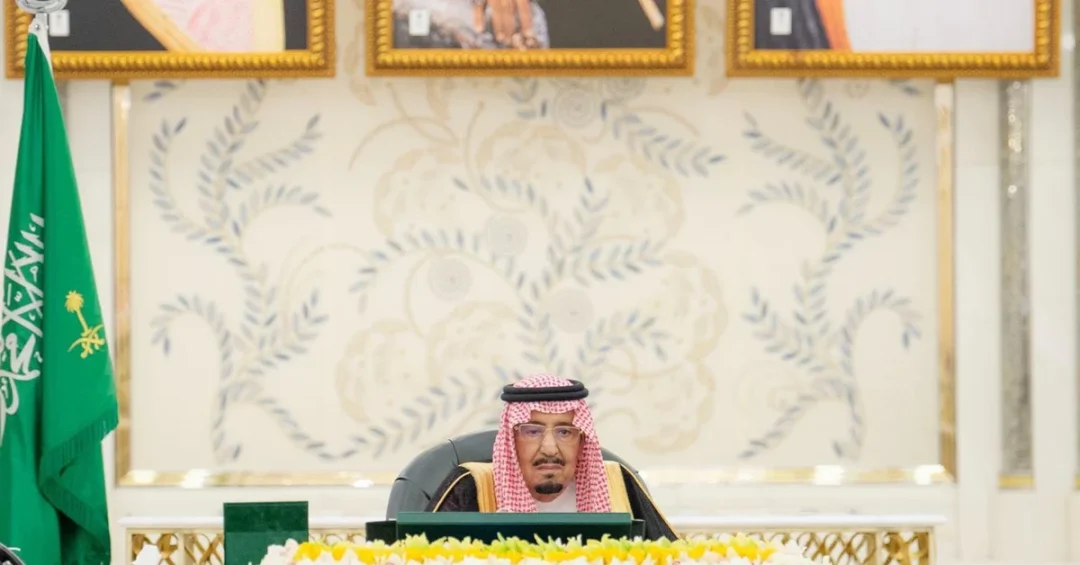
Jeddah, May 14, 2024 – Custodian of the Two Holy Mosques King Salman bin Abdulaziz Al Saud chaired the Saudi Cabinet session today in Jeddah. The session reviewed regional and international developments, issued several key decisions, and reaffirmed the Kingdom’s commitment to serving Hajj pilgrims and supporting global security.
Context and Background
At the onset of the session, King Salman welcomed the pilgrims arriving in the Kingdom for the Hajj season, emphasizing that serving the Grand Mosque and the Prophet’s Mosque, ensuring the comfort of visitors, and providing top-quality services are among the Kingdom’s highest priorities. The King directed authorities involved in Hajj plans to continue delivering the finest services at all entry points, as well as in Makkah, Madinah, and the holy sites.
Key Details
The Cabinet was apprised of recent talks between Saudi officials and representatives of other countries, including a phone call between His Royal Highness Prince Mohammed bin Salman bin Abdulaziz Al Saud, Crown Prince and Prime Minister, and the Ukrainian president, during which they reviewed bilateral relations and issues of mutual concern.
Minister of Media Salman bin Yousef Al-Dossary stated that the Cabinet discussed reports on current regional and international developments, emphasizing the Kingdom’s commitment to collaborating with the international community to ensure global security and stability. The Cabinet also reiterated Saudi Arabia’s dedication to participating in international relief efforts and advocating for issues of concern to Arab and Muslim nations.
Furthermore, the Cabinet welcomed the recent UN General Assembly resolution supporting full membership for the State of Palestine and stressed the urgency of ending Israeli military escalation and violations against civilians and humanitarian workers.
Decisions and Approvals
The Cabinet issued several decisions, including:
Authorizations: The Minister of Interior was authorized to discuss and sign a draft memorandum of understanding with the U.S. Department of Justice to exchange information on criminal records. The Minister of Industry and Mineral Resources was authorized to sign an MoU with Vietnam’s Ministry of Natural Resources and Environment. The Minister of Health was authorized to sign a health cooperation MoU with Iraq. The Minister of Education was authorized to sign a draft memorandum of scientific and educational cooperation with Bulgaria. The Minister of Transport and Chairman of the General Authority of Civil Aviation was authorized to sign an air transport services agreement with Suriname. The President of the Saudi Oversight and Anti-Corruption Authority was authorized to sign an MoU with Iraq’s Federal Integrity Commission to prevent and combat corruption.
Approvals: Agreements were approved for mutual visa exemptions with Costa Rica (diplomatic, special, and official passports) and Malta (diplomatic and special passports). An MoU between the Saudi Ministry of Finance and the Bahraini Ministry of Finance and National Economy was approved. Imam Muhammad bin Saud Islamic University’s membership in the League of Islamic Universities and its Executive Council was approved. An agreement with the Slovak Republic for the avoidance of double taxation and prevention of tax evasion was approved. An MoU between the Saudi General Court of Audit and the National Audit Office of China for cooperation in accounting, supervisory, and professional work was approved.
Implications and Impact
These decisions underscore Saudi Arabia’s active diplomacy and its role in fostering international cooperation across multiple sectors, including security, education, health, aviation, and anti-corruption. The visa exemption agreements facilitate people-to-people ties and support tourism and business travel. The double taxation agreement with Slovakia enhances economic relations. The MoU with China’s audit office strengthens transparency and good governance. The Cabinet’s stance on Palestine and relief efforts reflects its humanitarian leadership in the region and beyond.
Vision 2030 Alignment
The Cabinet’s decisions align with Saudi Arabia’s Vision 2030 by promoting international partnerships, economic diversification, and service excellence. Facilitating Hajj services and ensuring pilgrims’ comfort supports the Kingdom’s role as a global Islamic hub. Cooperation in education, health, and technology contributes to a thriving society and a diversified economy. The emphasis on transparency and anti-corruption reinforces the rule of law. This session reaffirms Saudi Arabia’s commitment to its long-term vision as a stable, open, and influential nation.
20 Questions
Q1. Who chaired the Cabinet session on May 14, 2024?
A1. The session was chaired by Custodian of the Two Holy Mosques King Salman bin Abdulaziz Al Saud, the King of Saudi Arabia, in Jeddah.
Q2. What was the King’s message at the start of the session?
A2. He welcomed pilgrims arriving for Hajj, emphasising the Kingdom’s top priority of serving the Grand Mosque and the Prophet’s Mosque and ensuring pilgrim comfort.
Q3. What instruction did the King give regarding Hajj plans?
A3. He instructed authorities to continue providing the best services to pilgrims at all entry points and in Makkah, Madinah, and the holy sites.
Q4. Which international call was mentioned?
A4. A phone call between Crown Prince Mohammed bin Salman and the Ukrainian president, reviewing relations and mutual concerns.
Q5. Who is the Saudi Minister of Media?
A5. Salman bin Yousef Al-Dossary, who gave a statement to the Saudi Press Agency after the session.
Q6. What did the Cabinet say about global security?
A6. It affirmed the Kingdom’s commitment to collaborating with the international community to ensure global security and stability.
Q7. What was the Cabinet’s stance on Palestine?
A7. It welcomed the UN General Assembly resolution supporting full membership for Palestine and stressed ending Israeli military escalation.
Q8. Which country was involved in a criminal records MoU?
A8. The United States, with the Department of Justice, to exchange information on criminal records.
Q9. With which two countries were visa exemption agreements approved?
A9. Costa Rica and Malta, for holders of diplomatic, special, and official passports.
Q10. What was the MoU with Bahrain’s Finance Ministry about?
A10. It was a memorandum of understanding between the Saudi Ministry of Finance and the Bahraini Ministry of Finance and National Economy.
Q11. What was the MoU with Vietnam’s Ministry of Natural Resources?
A11. A cooperation MoU with the Ministry of Natural Resources and Environment of Vietnam, authorized for the Minister of Industry and Mineral Resources.
Q12. Who authorized the health MoU with Iraq?
A12. The Minister of Health was authorized to discuss and sign an MoU with the Iraqi Ministry of Health for cooperation in health.
Q13. What was the education MoU with Bulgaria?
A13. A draft memorandum of scientific and educational cooperation in education, to be signed by the Minister of Education.
Q14. What was approved for Imam Muhammad bin Saud Islamic University?
A14. Its membership in the League of Islamic Universities and its Executive Council.
Q15. What was the agreement with the Slovak Republic?
A15. An agreement for the avoidance of double taxation on income and the prevention of tax evasion.
Q16. Which country was involved in the air transport agreement?
A16. Suriname, with the draft agreement in air transport services authorized for the Minister of Transport.
Q17. What was the MoU with Iraq’s anti-corruption authority?
A17. A draft memorandum of understanding to prevent and combat corruption, with the Saudi Oversight and Anti-Corruption Authority.
Q18. Which audit office was involved in the audit MoU?
A18. The National Audit Office of the People’s Republic of China, for cooperation in accounting, supervisory, and professional work.
Q19. How does this session support Vision 2030?
A19. It advances international cooperation, economic diversification, and service excellence, all pillars of Vision 2030.
Q20. What is the key takeaway from this Cabinet session?
A20. Saudi Arabia is actively enhancing its global role through strategic partnerships, humanitarian leadership, and a focus on serving pilgrims, in line with its long-term vision.
Reader Feedback
We value your thoughts. Please share your feedback on this article.
Your feedback helps us improve our coverage.