


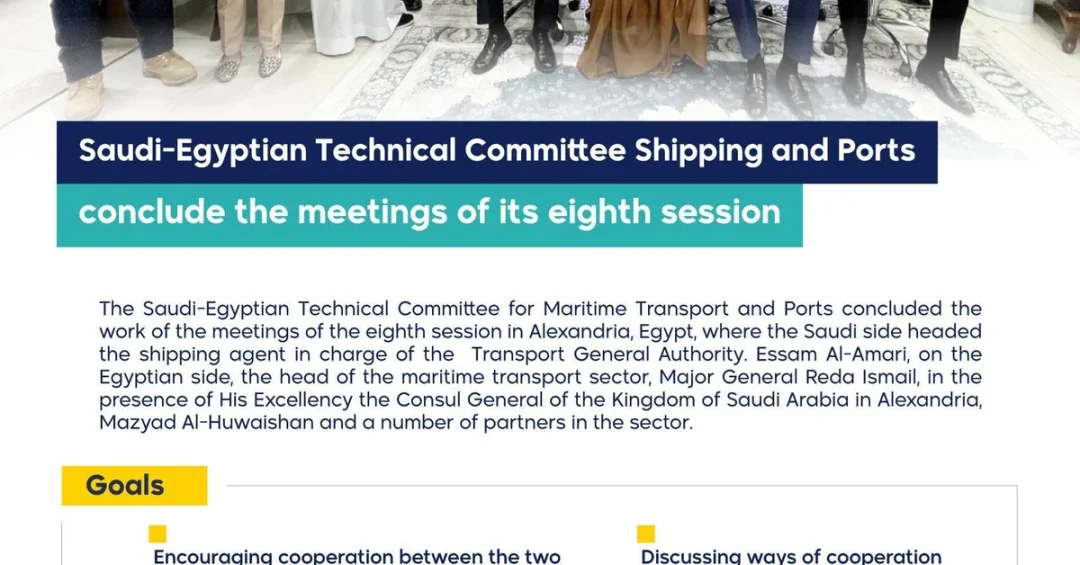
The eighth meeting of the Saudi-Egyptian Technical Committee for Maritime Transport and Ports concluded in Alexandria, Egypt, on May 14, 2024, according to a press release from the Saudi Transport General Authority. Co-led by Essam bin Mohammed Al-Amari, shipping agent in charge of the Saudi Transport General Authority, and Major General Reza Ahmed Ismail, head of the Egyptian Maritime Transport Sector, the meeting focused on enhancing bilateral cooperation in maritime transport and ports.
Context and Background
The committee, established under the framework of Saudi-Egyptian relations, convenes periodically to strengthen maritime ties between the two nations. This eighth session took place against a backdrop of expanding trade and tourism between Saudi Arabia and Egypt, with both countries increasingly recognizing the strategic importance of their Red Sea and Mediterranean coastlines.
Key Details
The meeting addressed several critical areas: developing and implementing a mechanism for the exchange of information and data on inspection and control of passenger ships, and integrating digital platforms for maritime tourism between the two countries. The committee also agreed to have specialists from both nations hold regular meetings to coordinate procedures between Saudi and Egyptian ports, emphasizing the need for cooperation and coordination in regional and international forums. Discussions included mutual support on issues raised at the International Maritime Organization (IMO).
Implications and Impact
These agreements are set to enhance maritime safety and efficiency, potentially boosting maritime tourism and trade flows. The integration of digital platforms could simplify procedures for travelers and cargo, while regular coordination between ports may reduce delays and improve supply chain reliability. By aligning positions at the IMO, Saudi Arabia and Egypt can amplify their influence on global maritime regulations, benefiting both nations’ maritime sectors.
Vision 2030 Alignment
This meeting underscores Saudi Arabia’s commitment to regional partnership and economic integration, key pillars of Vision 2030. By strengthening maritime cooperation with Egypt, the Kingdom advances its goals of diversifying the economy, boosting tourism, and positioning itself as a global logistics hub. Such collaborative efforts are essential for realizing the ambitious objectives of Vision 2030, fostering sustainable development and regional stability.
20 Questions
Q1. What was the purpose of the eighth meeting of the Saudi-Egyptian Technical Committee for Maritime Transport and Ports?
A1. The purpose was to enhance bilateral cooperation in maritime transport and ports between Saudi Arabia and Egypt, focusing on information exchange, digital integration, and coordination in international forums.
Q2. Where was the meeting held?
A2. The meeting took place in Alexandria, Egypt, a key Mediterranean port city, reflecting the maritime focus of the discussions.
Q3. Who co-led the meeting?
A3. The meeting was co-led by Essam bin Mohammed Al-Amari, representing the Saudi Transport General Authority, and Major General Reza Ahmed Ismail, head of the Egyptian Maritime Transport Sector.
Q4. What is the Saudi Transport General Authority?
A4. The Saudi Transport General Authority is the government entity responsible for regulating and developing the transport sector in Saudi Arabia, including maritime transport and ports.
Q5. What is the Egyptian Maritime Transport Sector?
A5. The Egyptian Maritime Transport Sector is a government body under Egypt’s Ministry of Transport, overseeing maritime activities, ports, and related services.
Q6. What topics were tackled during the meeting?
A6. Topics included developing a mechanism for exchanging inspection and control data on passenger ships, integrating digital platforms for maritime tourism, and coordinating procedures between Saudi and Egyptian ports.
Q7. What specific agreement was made regarding passenger ships?
A7. The committee agreed to develop and implement a mechanism for exchanging information and data on inspection and control of passenger ships, aiming to enhance safety and efficiency.
Q8. What does the integration of digital platforms for maritime tourism entail?
A8. The integration aims to link digital systems used for maritime tourism between Saudi Arabia and Egypt, potentially simplifying booking, customs, and travel procedures for tourists.
Q9. How will the regular meetings between specialists benefit the two countries?
A9. Regular meetings between specialists will facilitate continuous coordination on port procedures, reducing delays, improving communication, and fostering best practices in port management.
Q10. What is the significance of cooperation at the International Maritime Organization (IMO)?
A10. Cooperation at the IMO allows Saudi Arabia and Egypt to align their positions on global maritime regulations, increasing their collective influence on international standards and policies.
Q11. How does this meeting support Vision 2030?
A11. The meeting supports Vision 2030 by enhancing regional partnerships, promoting tourism, and strengthening the logistics and transport sectors, contributing to economic diversification.
Q12. What is the role of the Saudi Transport General Authority in this meeting?
A12. The Saudi Transport General Authority represented Saudi Arabia in the meeting, with Essam bin Mohammed Al-Amari serving as the shipping agent in charge, leading the Saudi delegation.
Q13. How might the exchange of inspection data improve maritime safety?
A13. By sharing inspection data on passenger ships, both countries can ensure vessels meet safety standards, reducing the risk of accidents and enhancing passenger protection.
Q14. What potential benefits does integration of digital platforms bring to tourists?
A14. Tourists could enjoy more streamlined processes, easier travel between the two countries, and better access to maritime tourism services, making the region more attractive.
Q15. Why is coordination between Saudi and Egyptian ports important?
A15. Coordination helps synchronize port operations, reduce turnaround times, and improve the flow of goods and passengers, boosting trade efficiency between the two nations.
Q16. What mutual support on IMO issues was discussed?
A16. The committee discussed mutual support on issues raised at the IMO, implying that Saudi Arabia and Egypt would back each other’s positions on matters like maritime safety, environmental regulations, or shipping standards.
Q17. How often does the committee meet?
A17. The committee meets regularly, with this being the eighth meeting, indicating an established pattern of periodic consultations to address ongoing maritime cooperation.
Q18. What role does Alexandria play in this context?
A18. Alexandria is Egypt’s major port city on the Mediterranean, hosting the meeting as a symbol of maritime collaboration and a practical hub for discussions.
Q19. How could these agreements affect maritime tourism?
A19. By integrating digital platforms and reducing procedural barriers, the agreements could attract more tourists, facilitate cruise and ferry travel, and boost tourism revenues for both countries.
Q20. What is the expected outcome of these collaborative efforts?
A20. The expected outcome includes stronger bilateral ties, more efficient maritime operations, and improved regional maritime cooperation, aligning with both nations’ strategic development goals.
Reader Feedback
We value your thoughts. Please share your feedback on this article.
Your feedback helps us improve our coverage.