


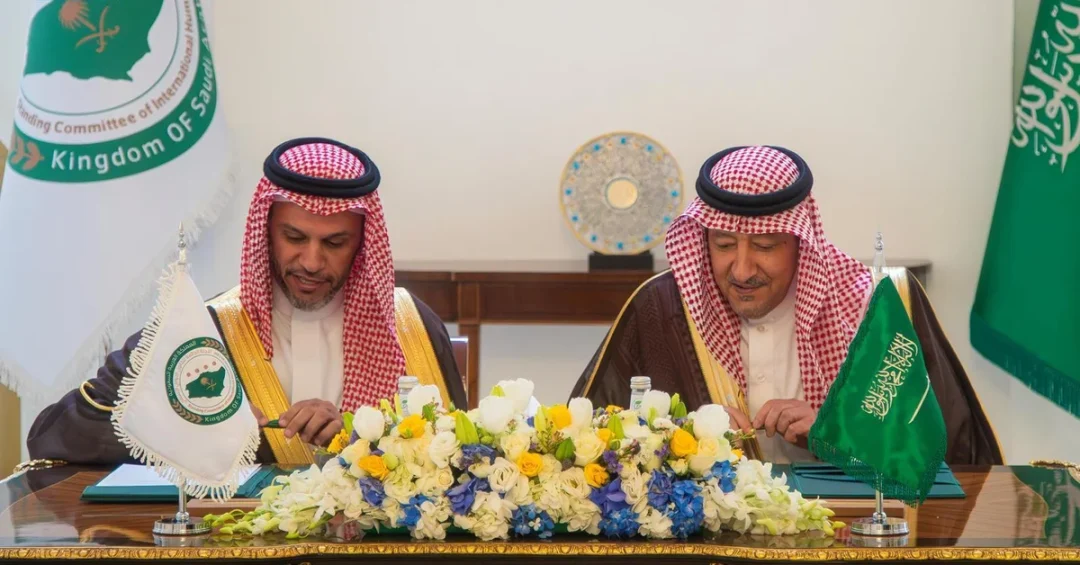
The Saudi Ministry of Foreign Affairs and the Permanent Committee for International Humanitarian Law signed a Memorandum of Understanding (MoU) in Riyadh on May 13, 2024, to enhance cooperation in the field of international humanitarian law. The agreement was signed by Eng. Waleed El-Khereiji, Vice Minister of Foreign Affairs, on behalf of the ministry, and Dr. Jalal Al-Owaisi, Chairman of the Permanent Committee for International Humanitarian Law. The MoU aims to support joint efforts, encourage the exchange of expertise in international humanitarian law, and promote a culture of humanitarian principles both domestically and internationally.
Context and Background
International humanitarian law (IHL), also known as the laws of armed conflict, is a set of rules that seeks to limit the effects of armed conflict for humanitarian reasons. It protects persons who are not or are no longer participating in hostilities and restricts the means and methods of warfare. Saudi Arabia has long been committed to upholding these principles, in line with Vision 2030, which emphasizes the Kingdom’s role as a responsible global actor and its dedication to peace and stability.
The Permanent Committee for International Humanitarian Law was established to oversee the implementation of IHL within the Kingdom and to coordinate with international organizations. The Ministry of Foreign Affairs, under the leadership of Minister Prince Faisal bin Farhan Al Saud, plays a central role in advancing Saudi Arabia’s foreign policy objectives, including the promotion of international law and humanitarian values.
Key Details
The MoU signed on May 13, 2024, formalizes cooperation between the Ministry of Foreign Affairs and the Permanent Committee for International Humanitarian Law. It outlines areas of collaboration such as organizing joint training programs, workshops, and seminars to enhance knowledge of IHL among government officials, military personnel, and the public. The agreement also seeks to facilitate the exchange of expertise with international bodies and to disseminate IHL principles through educational and media campaigns.
Eng. Waleed El-Khereiji, Vice Minister of Foreign Affairs, highlighted the importance of the MoU in strengthening the Kingdom’s commitment to international humanitarian law. Dr. Jalal Al-Owaisi, Chairman of the Permanent Committee, emphasized that the partnership will bolster efforts to integrate IHL into national policies and practices.
Implications and Impact
This MoU reflects Saudi Arabia’s ongoing efforts to align with international humanitarian standards and to contribute to global peace and security. By enhancing cooperation between key national entities, the Kingdom aims to play a more active role in promoting IHL regionally and internationally. The agreement is expected to improve the capacity of Saudi institutions to respond to humanitarian crises and to ensure compliance with international obligations.
Furthermore, the MoU underscores Saudi Arabia’s commitment to multilateralism and its support for the United Nations and other international organizations. It also reinforces the Kingdom’s position as a reliable partner in humanitarian affairs, which is essential for its diplomatic relations and global standing.
Vision 2030 Alignment
This initiative is closely aligned with Saudi Vision 2030, which seeks to diversify the economy, empower citizens, and enhance the Kingdom’s global influence. By promoting international humanitarian law, Saudi Arabia demonstrates its dedication to justice, human dignity, and sustainable development. The MoU contributes to Vision 2030’s goals of fostering a vibrant society, a thriving economy, and an ambitious nation, while also supporting the Kingdom’s aspirations to be a leader in humanitarian efforts worldwide.
20 Questions
Q1. What is the purpose of the MoU signed between the Ministry of Foreign Affairs and the Permanent Committee for International Humanitarian Law?
A1. The MoU aims to enhance cooperation in international humanitarian law by supporting joint efforts, encouraging expertise exchange, and spreading its culture.
Q2. Who signed the MoU on behalf of the Ministry of Foreign Affairs?
A2. Eng. Waleed El-Khereiji, Vice Minister of Foreign Affairs, signed on behalf of the ministry.
Q3. Who represented the Permanent Committee for International Humanitarian Law at the signing?
A3. Dr. Jalal Al-Owaisi, Chairman of the committee, represented the committee.
Q4. When and where was the MoU signed?
A4. The MoU was signed in Riyadh on May 13, 2024.
Q5. What is international humanitarian law?
A5. International humanitarian law is a set of rules that seeks to limit the effects of armed conflict for humanitarian reasons, protecting non-combatants and restricting means of warfare.
Q6. Why is this MoU significant for Saudi Arabia?
A6. It reflects Saudi Arabia’s commitment to international humanitarian standards, enhances its global standing, and aligns with Vision 2030 goals.
Q7. How does this MoU support Saudi Vision 2030?
A7. It promotes justice and human dignity, enhances the Kingdom’s global influence, and supports its role as a responsible global actor.
Q8. What are the key areas of cooperation under the MoU?
A8. Joint training programs, workshops, seminars, expertise exchange, and educational campaigns to disseminate IHL principles.
Q9. What is the Permanent Committee for International Humanitarian Law?
A9. It is a Saudi body established to oversee the implementation of IHL within the Kingdom and coordinate with international organizations.
Q10. How does the MoU benefit Saudi government officials and military personnel?
A10. It provides them with enhanced knowledge and training on international humanitarian law, improving compliance and capacity in humanitarian responses.
Q11. Will the MoU involve collaboration with international organizations?
A11. Yes, it seeks to facilitate expertise exchange with international bodies to promote IHL principles globally.
Q12. What role does the Ministry of Foreign Affairs play in this partnership?
A12. The ministry leads Saudi Arabia’s foreign policy, advances international law, and coordinates with the committee to implement the MoU.
Q13. How does this MoU impact Saudi Arabia’s regional and international relations?
A13. It strengthens the Kingdom’s position as a reliable partner in humanitarian affairs and enhances diplomatic relations.
Q14. What are the expected outcomes of the MoU?
A14. Improved capacity of Saudi institutions to respond to humanitarian crises and ensure compliance with international obligations.
Q15. Does the MoU include educational initiatives?
A15. Yes, it includes educational and media campaigns to spread awareness of international humanitarian law.
Q16. How does this MoU reflect Saudi Arabia’s commitment to multilateralism?
A16. It underscores support for the United Nations and other international organizations, promoting global peace and security.
Q17. What is the significance of the timing of this MoU?
A17. It comes amid ongoing global conflicts, highlighting Saudi Arabia’s proactive role in promoting humanitarian principles.
Q18. Who is Eng. Waleed El-Khereiji?
A18. He is the Vice Minister of Foreign Affairs of Saudi Arabia, representing the ministry in this agreement.
Q19. Who is Dr. Jalal Al-Owaisi?
A19. He is the Chairman of the Permanent Committee for International Humanitarian Law, representing the committee.
Q20. How does this MoU contribute to global peace and security?
A20. By promoting adherence to international humanitarian law, it helps limit the effects of armed conflict and protects human dignity worldwide.
Reader Feedback
We value your thoughts. Please share your feedback on this article.
Your feedback helps us improve our coverage.