


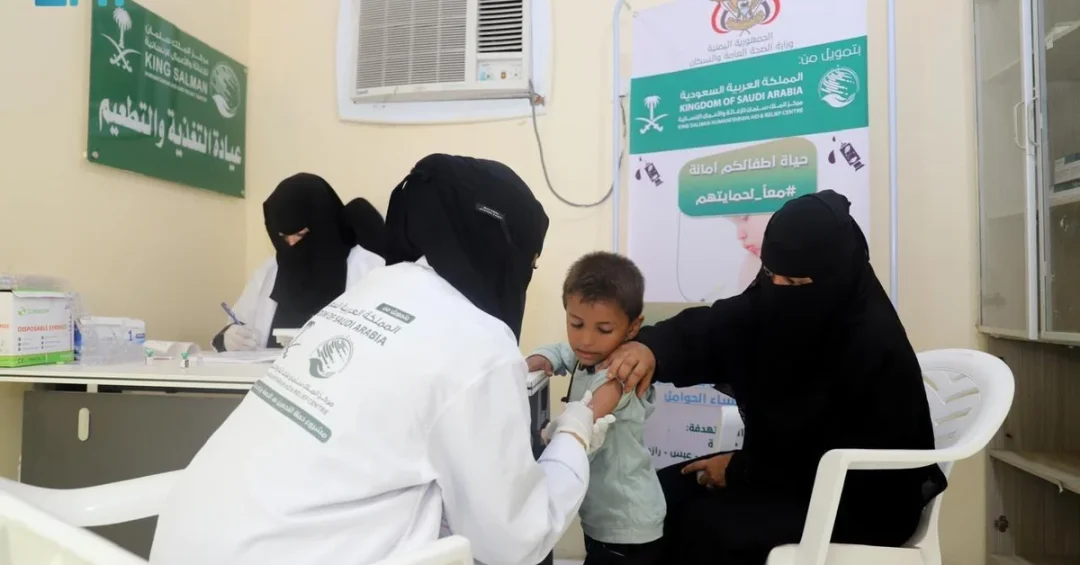
A measles vaccination campaign supported by the King Salman Humanitarian Aid and Relief Center (KSrelief) has immunized 4,322 children in Yemen’s Hajjah and Saada governorates during the week of April 29 to May 4, 2024, according to the Saudi Press Agency (SPA). The initiative, which also registers and monitors pregnant women, represents a critical health intervention in a region where access to medical care remains severely limited. The campaign targeted children in several directorates, including Hiran, Haradh, Abs, and Midi in Hajjah, and Razih in Saada, delivering vital protection against a preventable disease.
Context and Background
Yemen has endured years of conflict and instability, leaving its healthcare infrastructure fragile and millions of children vulnerable to disease outbreaks. Measles, a highly contagious viral infection, can lead to severe complications such as pneumonia, encephalitis, and even death, particularly among malnourished children. In response, KSrelief, a Saudi humanitarian arm known for its global relief efforts, has consistently supported vaccination drives and maternal health programs in Yemen. This campaign is part of Saudi Arabia’s broader commitment to alleviating suffering and promoting health security in the region.
Key Details
The campaign’s breakdown highlights its wide reach: in Hajjah, 2,441 children were vaccinated in Hiran, 843 in Haradh, 357 in Abs, and 663 in Midi. Additionally, 28 children in Razih directorate, Saada, received vaccinations. Beyond immunization, the campaign registered and monitored pregnant women, ensuring they receive essential prenatal care. This dual approach addresses both immediate health needs and long-term maternal well-being. The operation was carried out in coordination with local health authorities, demonstrating effective partnership in challenging environments.
Implications and Impact
This campaign significantly reduces the risk of measles outbreaks in targeted communities, protecting thousands of children from a preventable disease. By also focusing on pregnant women, it contributes to lowering maternal and infant mortality rates. The success of this week-long effort underscores the importance of sustained humanitarian access and international collaboration. It also reinforces Saudi Arabia’s role as a leading donor and provider of aid in Yemen, countering extremism and instability through compassionate action. The positive outcomes are expected to encourage further health initiatives in the region.
Vision 2030 Alignment
Saudi Arabia’s Vision 2030 emphasizes humanitarian leadership and global responsibility as pillars of its foreign policy. KSrelief’s work in Yemen exemplifies this vision by extending a helping hand to neighboring communities in need, fostering stability, and promoting health as a foundation for development. Such efforts not only save lives but also strengthen regional ties and showcase the Kingdom’s commitment to a prosperous and secure future for all.
20 Questions
Q1. What is the KSrelief-backed campaign mentioned in the article?
A1. The campaign is a measles vaccination initiative supported by the King Salman Humanitarian Aid and Relief Center (KSrelief) in Yemen’s Hajjah and Saada governorates, aimed at immunizing children and monitoring pregnant women.
Q2. How many children benefited from the campaign?
A2. A total of 4,322 children received vaccinations during the campaign, which ran from April 29 to May 4, 2024, according to the Saudi Press Agency.
Q3. In which governorates did the campaign take place?
A3. The campaign was conducted in Hajjah and Saada governorates, specifically targeting children in several directorates including Hiran, Haradh, Abs, Midi, and Razih.
Q4. What additional service did the campaign provide besides vaccinations?
A4. The campaign also registered and monitored pregnant women in the two governorates, ensuring they receive necessary prenatal care and support.
Q5. How many children were vaccinated in Hiran directorate?
A5. In Hiran, 2,441 children were vaccinated, making it the directorate with the highest number of beneficiaries in the campaign.
Q6. How many children were vaccinated in Haradh directorate?
A6. A total of 843 children received vaccinations in Haradh, contributing to the overall success of the health initiative.
Q7. How many children were vaccinated in Abs directorate?
A7. In Abs, 357 children were vaccinated as part of the campaign’s efforts to protect vulnerable populations from measles.
Q8. How many children were vaccinated in Midi directorate?
A8. The campaign reached 663 children in Midi, ensuring they received protection against measles.
Q9. How many children were vaccinated in Saada’s Razih directorate?
A9. In Razih directorate, 28 children were vaccinated, extending the campaign’s reach to remote areas in Saada governorate.
Q10. What is the significance of measles vaccination in Yemen?
A10. Measles vaccination is crucial in Yemen due to the country’s fragile healthcare system and high malnutrition rates, which increase the risk of severe complications and death from the disease.
Q11. Who is KSrelief and what is its role?
A11. KSrelief is the King Salman Humanitarian Aid and Relief Center, a Saudi organization that provides humanitarian assistance worldwide, including health, food, and shelter support in crisis-affected countries like Yemen.
Q12. When did the campaign take place?
A12. The campaign was conducted from April 29 to May 4, 2024, as reported by the Saudi Press Agency.
Q13. Why are pregnant women included in the campaign?
A13. Including pregnant women ensures they receive prenatal care, which is essential for reducing maternal and infant mortality and improving overall community health.
Q14. How does this campaign reflect Saudi Arabia’s humanitarian efforts?
A14. It demonstrates Saudi Arabia’s commitment to global health and relief through KSrelief, showcasing the Kingdom’s leadership in addressing humanitarian crises in Yemen and beyond.
Q15. What challenges might the campaign face in Yemen?
A15. Challenges include limited access to remote areas, security concerns, and infrastructure damage, but KSrelief and local partners work to overcome these to deliver aid effectively.
Q16. How does the campaign align with Vision 2030?
A16. Vision 2030 emphasizes humanitarian leadership and global responsibility; this campaign exemplifies Saudi Arabia’s role in promoting stability and health in the region, aligning with the vision’s goals.
Q17. What impact does the campaign have on the local communities?
A17. It protects children from measles, reduces disease outbreaks, and supports maternal health, contributing to healthier and more resilient communities in Hajjah and Saada.
Q18. Are there plans to expand such campaigns in Yemen?
A18. KSrelief continues to assess needs and implement health initiatives across Yemen; while specific plans are not detailed in the report, the success of this campaign supports future efforts.
Q19. How does the international community view Saudi Arabia’s aid efforts?
A19. Saudi Arabia’s aid efforts through KSrelief are widely recognized and appreciated, enhancing the Kingdom’s standing as a key humanitarian donor and partner in global relief.
Q20. What is the ultimate goal of the campaign?
A20. The ultimate goal is to immunize children against measles and improve maternal health, contributing to the overall well-being and stability of Yemeni communities.
Reader Feedback
We value your thoughts. Please share your feedback on this article.
Your feedback helps us improve our coverage.