


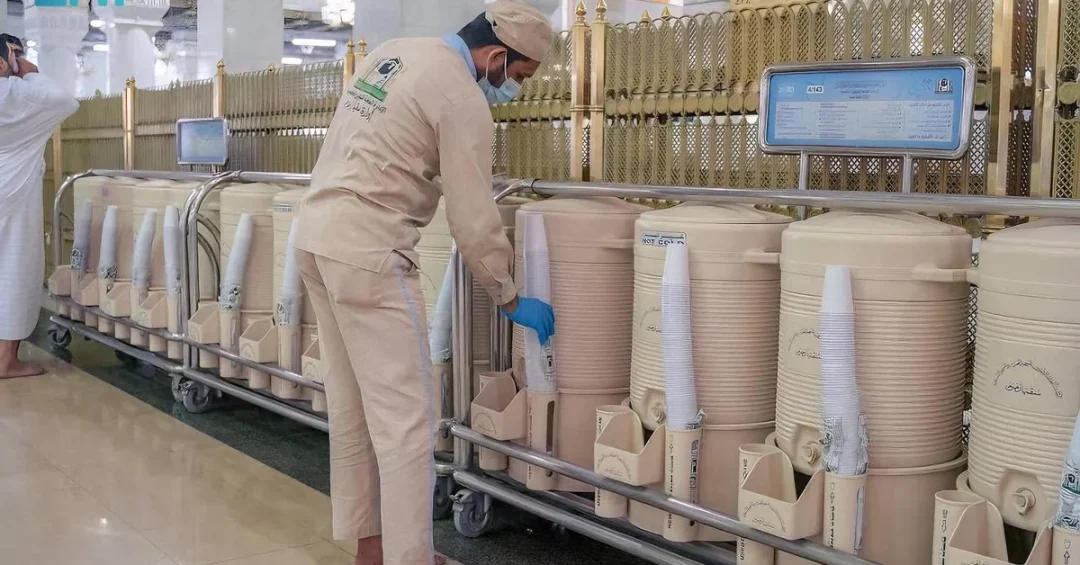
The General Presidency for the Affairs of the Grand Mosque and the Prophet’s Mosque has established a state-of-the-art laboratory dedicated to analyzing Zamzam water and overseeing all sterilization stages, ensuring its cleanliness and purity for pilgrims and worshippers. This initiative underscores the Kingdom of Saudi Arabia’s unwavering commitment to the well-being of visitors to the Two Holy Mosques and reflects the highest standards of public health and safety.
Context and Background
Zamzam water holds profound spiritual significance for Muslims worldwide, and its purity is of paramount importance. The General Presidency, responsible for the care of the Grand Mosque in Makkah and the Prophet’s Mosque in Madinah, has long been entrusted with the stewardship of the Zamzam well. Since 1400 Hijri, the Zamzam water department at the Grand Mosque has overseen the well, providing cooled and continuous water in clean containers. The new laboratory represents a significant leap forward in ensuring that this sacred water remains free from contaminants, utilizing cutting-edge technology and rigorous scientific protocols.
Key Details
The sterilization process employs ultraviolet (UV) rays, with no chemical substances added, thus preserving the water’s natural color, taste, and smell. This method achieves a 99.77% eradication rate of bacteria and viruses, with one kilowatt of electricity sterilizing 12,000 gallons of water. To maintain safety, Zamzam water is pumped from the well through a closed circuit of rustproof stainless steel pipes and fully enclosed tanks equipped with filters that block sands and impurities, preventing any chemical reaction or microbiological activity. The water then passes through initial sterilization devices. When pumped to the Grand Mosque, it undergoes additional filtration to prevent residue seepage, followed by a second UV sterilization. Specialized laboratories conduct analyses to detect any chemical or microbiological pollutants. Furthermore, health certificates are required from all personnel involved in distributing Zamzam water to ensure they do not carry infectious diseases, and the bases on which containers are placed are continuously cleaned. The Grand Mosque currently has over 20,000 containers, with numbers increasing during Ramadan and Hajj seasons. There are also 1,073 Zamzam water taps and 223 tanks provided during peak seasons. The water is cooled at the Al-Qashashiah cooling station.
Implications and Impact
This advanced laboratory and comprehensive sterilization system have far-reaching implications for the millions of pilgrims who visit the Grand Mosque annually. By ensuring the purity of Zamzam water, Saudi Arabia reinforces its role as the custodian of the Two Holy Mosques and demonstrates its dedication to providing a safe and spiritually fulfilling experience. The measures also align with global health standards and contribute to the overall well-being of visitors. The continuous oversight and testing reflect a proactive approach to public health, mitigating potential risks and upholding the sanctity of the pilgrimage.
Vision 2030 Alignment
This initiative is a testament to Saudi Arabia’s Vision 2030, which prioritizes the enhancement of services for pilgrims and the modernization of infrastructure. By investing in state-of-the-art laboratories and sterilization technologies, the Kingdom not only safeguards the health of millions but also showcases its capacity for innovation and excellence in service delivery. As Saudi Arabia continues to welcome the world to its holy sites, such measures will further solidify its reputation for hospitality, safety, and spiritual care.
20 Questions
Q1. What is the purpose of the laboratory established by the General Presidency?
A1. The laboratory analyzes Zamzam water and supervises all sterilization stages to ensure its cleanliness and purity for pilgrims and worshippers.
Q2. How is Zamzam water sterilized?
A2. It is sterilized using ultraviolet rays, with no chemical substances added, ensuring no change in color, taste, or smell.
Q3. What percentage of bacteria and viruses does the sterilization eradicate?
A3. The sterilization process eradicates 99.77% of bacteria and viruses, ensuring high-level purity.
Q4. How much water can one kilowatt of electricity sterilize?
A4. One kilowatt of electricity can sterilize 12,000 gallons of Zamzam water.
Q5. What measures are taken to preserve the safety of Zamzam water?
A5. Measures include pumping water through rustproof stainless steel pipes, enclosed tanks with filters, and multiple UV sterilization stages.
Q6. How does the water prevent chemical reactions or microbiological activity?
A6. The closed circuit of stainless steel pipes and fully enclosed tanks with filters prevent any chemical reaction or microbiological activity.
Q7. What happens when water is pumped from the tanks to the Grand Mosque?
A7. It passes through filters again to prevent residues, then undergoes UV sterilization once more.
Q8. Where are analyses of Zamzam water conducted?
A8. Analyses are conducted in specialized laboratories to detect any chemical or microbiological pollutants.
Q9. What is required from those involved in distributing Zamzam water?
A9. They must provide health certificates to ensure they do not carry infectious diseases.
Q10. How often are the bases for containers cleaned?
A10. The bases on which containers are placed are continuously cleaned to maintain hygiene.
Q11. Since when has the Zamzam water department overseen the well?
A11. The department has overseen the Zamzam well since 1400 Hijri.
Q12. How many containers are at the Grand Mosque?
A12. There are over 20,000 containers, with numbers increasing during Ramadan and Hajj seasons.
Q13. How many Zamzam water taps are there?
A13. There are 1,073 Zamzam water taps available at the Grand Mosque.
Q14. How many tanks are provided during Ramadan and Hajj?
A14. 223 tanks are provided during Ramadan and Hajj seasons to meet increased demand.
Q15. Where is Zamzam water cooled?
A15. Zamzam water is cooled at the Al-Qashashiah cooling station.
Q16. Does the sterilization process use any chemicals?
A16. No, the process uses only ultraviolet rays, with no chemical substances added.
Q17. What is the significance of the closed circuit system?
A17. The closed circuit system prevents contamination and ensures water remains pure from the well to the taps.
Q18. How does the laboratory ensure the water is free from pollutants?
A18. Specialized laboratories conduct regular analyses to detect and eliminate any chemical or microbiological pollutants.
Q19. What is the role of the General Presidency in this process?
A19. The General Presidency oversees the entire process, from sterilization to distribution, ensuring the highest standards of purity and safety.
Q20. How does this initiative align with Saudi Vision 2030?
A20. It enhances services for pilgrims, showcases innovation, and reflects the Kingdom’s commitment to excellence and care for visitors, aligning with Vision 2030 goals.
Reader Feedback
We value your thoughts. Please share your feedback on this article.
Your feedback helps us improve our coverage.