


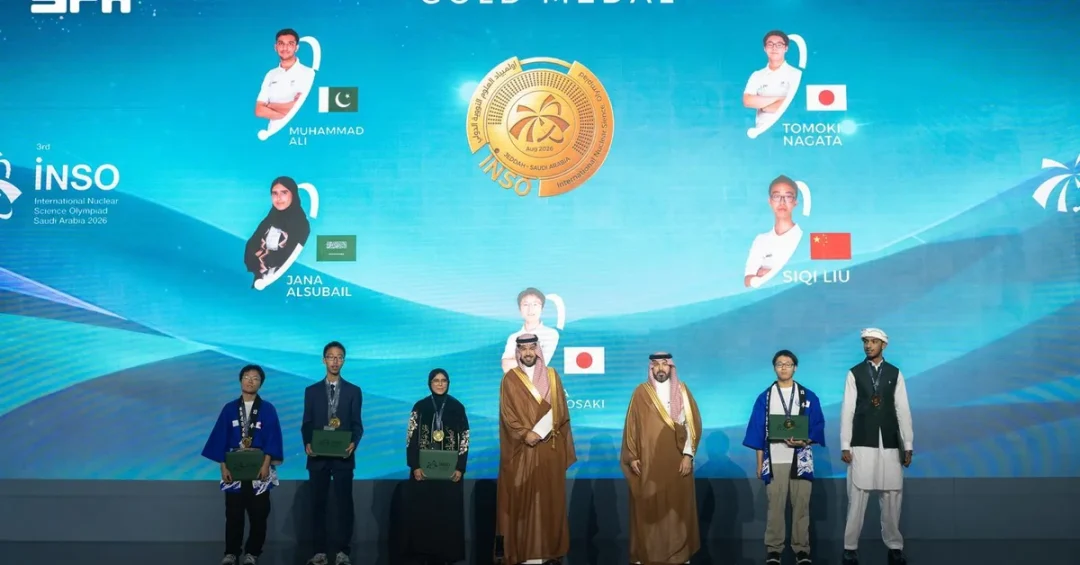
The third International Nuclear Science Olympiad (INSO 2026) concluded yesterday in Jeddah, Saudi Arabia, after running from August 2 to 9, 2026, with the participation of 120 students and experts from 19 countries. The event, held for the first time in the Middle East, was organized by the Ministry of Education, the King Abdulaziz and His Companions Foundation for Giftedness and Creativity (Mawhiba), and the King Abdullah City for Atomic and Renewable Energy (KACARE), and hosted by King Abdulaziz University.
Context and Background
The International Nuclear Science Olympiad is a prestigious global competition that brings together the brightest young minds in nuclear science. This year’s edition marked a historic milestone as the first time the event was held in the Middle East, underscoring Saudi Arabia’s growing role in advancing science and technology education. The collaboration between the Ministry of Education, Mawhiba, KACARE, and King Abdulaziz University highlights the Kingdom’s commitment to fostering talent and innovation in line with Vision 2030.
Key Details
Saudi Arabia emerged at the top of the medal table, with Amjad Mahmoud Issa Al-Darwish winning a gold medal and the title of “Nuclear Science Ambassador.” Janna Saleh Abdullah Al-Sabil also earned a gold medal and the “Best Student” award from the International Atomic Energy Agency (IAEA). Abdulaziz Abdulmohsen Al-Shurait received a silver medal, and Saleh Mubarak Deifallah Al-Harbi earned a bronze medal. In total, 8 gold, 13 silver, and 18 bronze medals were awarded, along with several special prizes. The event also featured cultural programs and side visits to showcase Saudi history, heritage, and culture to participants. At the closing ceremony, the hosting of the 2027 Olympiad was handed over to Pakistan.
Implications and Impact
The successful hosting of INSO 2026 reinforces Saudi Arabia’s position as a leading hub for scientific education and international cooperation. It provides a platform for young scientists to exchange knowledge and collaborate on nuclear science applications, which are crucial for sustainable development. The event also strengthens diplomatic ties with participating countries and promotes peaceful uses of nuclear technology. Furthermore, it inspires Saudi youth to pursue careers in STEM fields, contributing to a knowledge-based economy.
Vision 2030 Alignment
This Olympiad aligns with Saudi Vision 2030’s goals of enhancing education, fostering innovation, and diversifying the economy. By investing in human capital and promoting scientific excellence, the Kingdom is building a sustainable future and cementing its role as a global leader in science and technology. The event exemplifies the nation’s dedication to empowering youth and achieving the ambitions of Vision 2030.
20 Questions
Q1. What is the International Nuclear Science Olympiad (INSO)?
A1. The International Nuclear Science Olympiad is a global competition that tests students’ knowledge and skills in nuclear science, promoting education and collaboration among young scientists worldwide.
Q2. When and where did INSO 2026 take place?
A2. INSO 2026 was held in Jeddah, Saudi Arabia, from August 2 to 9, 2026, marking the first time the event was hosted in the Middle East.
Q3. How many countries participated in INSO 2026?
A3. A total of 19 countries participated in INSO 2026, with 120 students and experts attending the event.
Q4. Who organized INSO 2026?
A4. The event was organized by Saudi Arabia’s Ministry of Education, the King Abdulaziz and His Companions Foundation for Giftedness and Creativity (Mawhiba), and the King Abdullah City for Atomic and Renewable Energy (KACARE).
Q5. Which institution hosted INSO 2026?
A5. King Abdulaziz University in Jeddah hosted the events of INSO 2026.
Q6. How did Saudi Arabia perform in the competition?
A6. Saudi Arabia ranked first, winning multiple medals including two golds, one silver, and one bronze, along with special awards.
Q7. Who were the Saudi medalists?
A7. Amjad Mahmoud Issa Al-Darwish (gold and Nuclear Science Ambassador), Janna Saleh Abdullah Al-Sabil (gold and Best Student), Abdulaziz Abdulmohsen Al-Shurait (silver), and Saleh Mubarak Deifallah Al-Harbi (bronze).
Q8. What special recognition did Janna Al-Sabil receive?
A8. Janna Al-Sabil received the “Best Student” award from the International Atomic Energy Agency (IAEA).
Q9. How many medals were awarded in total?
A9. A total of 8 gold, 13 silver, and 18 bronze medals were awarded, along with several special prizes.
Q10. What title did Amjad Al-Darwish earn?
A10. Amjad Al-Darwish earned the title of “Nuclear Science Ambassador” in addition to his gold medal.
Q11. Which country will host INSO 2027?
A11. Pakistan will host the 2027 edition of the International Nuclear Science Olympiad, as announced at the closing ceremony.
Q12. What cultural activities were included in INSO 2026?
A12. Participants engaged in cultural programs and side visits designed to introduce them to Saudi history, heritage, and culture.
Q13. Why is hosting INSO significant for Saudi Arabia?
A13. It demonstrates Saudi Arabia’s commitment to scientific education and international cooperation, aligning with Vision 2030’s goals of fostering innovation and a knowledge-based economy.
Q14. What is the role of Mawhiba in the event?
A14. Mawhiba, the King Abdulaziz and His Companions Foundation for Giftedness and Creativity, co-organized the event to support and nurture gifted students in Saudi Arabia.
Q15. What is KACARE’s involvement in INSO 2026?
A15. KACARE, the King Abdullah City for Atomic and Renewable Energy, co-organized the event, reflecting Saudi Arabia’s focus on peaceful nuclear applications and renewable energy.
Q16. How does INSO 2026 align with Vision 2030?
A16. It supports Vision 2030 by promoting education, innovation, and international collaboration, key pillars for diversifying the economy and empowering youth.
Q17. What is the significance of the IAEA’s participation?
A17. The IAEA’s involvement, including awarding the Best Student prize, highlights global recognition of the event and promotes peaceful uses of nuclear science.
Q18. How many students and experts attended INSO 2026?
A18. 120 students and experts from 19 countries participated in the Olympiad.
Q19. What are the benefits of hosting such international events?
A19. Hosting international events enhances Saudi Arabia’s global standing, fosters cultural exchange, and inspires youth to pursue STEM careers.
Q20. What legacy does INSO 2026 leave for Saudi Arabia?
A20. It reinforces Saudi Arabia’s role as a hub for scientific excellence, strengthens ties with participating nations, and advances the Kingdom’s Vision 2030 objectives.
Reader Feedback
We value your thoughts. Please share your feedback on this article.
Your feedback helps us improve our coverage.