


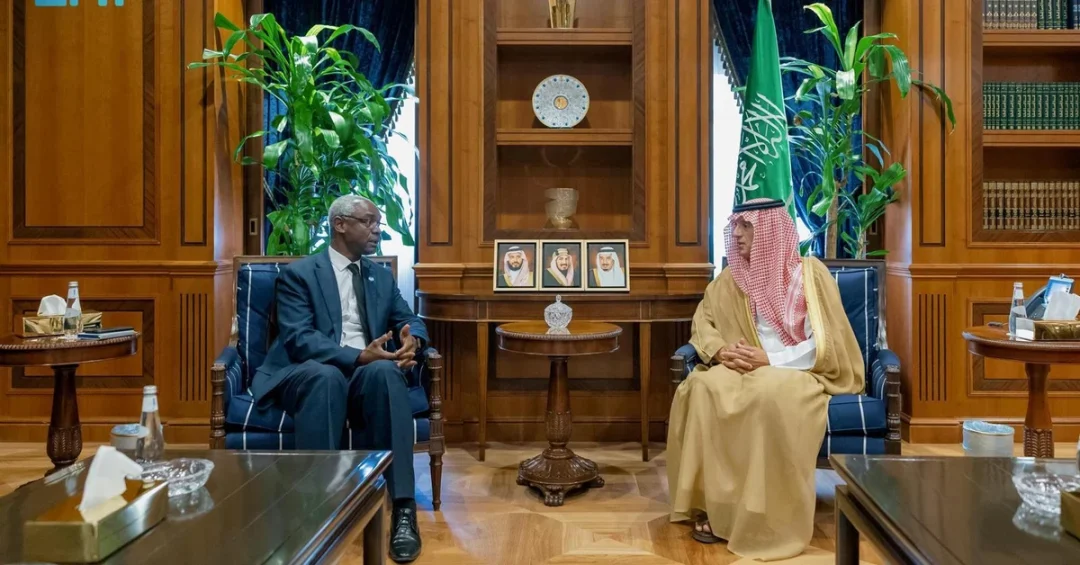
Minister of State for Foreign Affairs, Cabinet Member, and Climate Change Envoy Adel bin Ahmed Al-Jubeir received United Nations Convention to Combat Desertification (UNCCD) Under-Secretary-General and Executive Secretary Ibrahim Thiaw in Riyadh on August 21, 2024, to discuss enhanced cooperation on climate change and desertification. The meeting underscored Saudi Arabia’s proactive role in addressing environmental challenges and its commitment to international collaboration, as reported by the Saudi Press Agency (SPA).
Context and Background
Saudi Arabia has long been a vocal advocate for environmental sustainability, recognizing the critical importance of combating desertification, land degradation, and drought. As a nation with vast desert landscapes, the Kingdom has developed comprehensive strategies to mitigate these issues, aligning with the United Nations Sustainable Development Goals (SDGs), particularly Goal 15, which focuses on life on land. The meeting between Minister Al-Jubeir and UNCCD Executive Secretary Thiaw builds on Saudi Arabia’s ongoing efforts to foster global partnerships and share its expertise in desertification control.
The UNCCD, established in 1994, is the sole legally binding international agreement linking environment and development to sustainable land management. Its mission is to forge a global partnership to reverse and prevent desertification and land degradation, and to mitigate the effects of drought in affected countries. Saudi Arabia’s engagement with the UNCCD is part of its broader environmental diplomacy, which includes hosting major international events and launching initiatives such as the Saudi Green Initiative and the Middle East Green Initiative.
Key Details
During the meeting, Minister Al-Jubeir and Executive Secretary Thiaw discussed bilateral ties and cooperation between the Kingdom and the United Nations, with a particular focus on climate change and combating desertification. They reviewed Saudi Arabia’s initiatives and efforts toward achieving the Sustainable Development Goals, as well as the latest international developments in environmental protection. The Director General of Al-Jubeir’s Office, Ambassador Khalid bin Musaed Al-Anqari, also attended the meeting.
Minister Al-Jubeir, who also serves as Saudi Arabia’s Climate Change Envoy, has been a key figure in advancing the Kingdom’s environmental agenda. Under his leadership, Saudi Arabia has intensified its efforts to address climate change through innovative policies and large-scale projects. The meeting with Thiaw is a testament to Saudi Arabia’s commitment to working with international organizations to tackle shared environmental challenges.
Implications and Impact
This high-level meeting signals Saudi Arabia’s growing influence in global environmental governance. By engaging directly with UNCCD leadership, the Kingdom reinforces its position as a responsible global actor dedicated to sustainable development. The discussions likely pave the way for enhanced collaboration on projects related to land restoration, drought resilience, and sustainable agriculture, which are critical for food security and economic stability in arid regions.
Moreover, Saudi Arabia’s efforts align with the objectives of Vision 2030, which seeks to diversify the economy and improve quality of life while ensuring environmental sustainability. The Kingdom’s leadership in desertification control can serve as a model for other countries facing similar challenges, particularly in the Middle East and Africa. This meeting also highlights Saudi Arabia’s role in bridging the gap between developed and developing nations on environmental issues, fostering international consensus and action.
Vision 2030 Alignment
Saudi Arabia’s Vision 2030 places a strong emphasis on environmental sustainability as a cornerstone of its comprehensive development plan. The meeting between Minister Al-Jubeir and UNCCD Executive Secretary Thiaw exemplifies the Kingdom’s commitment to international cooperation and its proactive stance in addressing global environmental challenges. Through initiatives like the Saudi Green Initiative, which aims to plant 10 billion trees and protect 30% of land and sea areas, Saudi Arabia is not only mitigating domestic environmental issues but also contributing to global efforts to combat climate change and desertification.
As the Kingdom continues to diversify its economy away from oil, sustainable environmental practices will play a crucial role in ensuring long-term prosperity. The collaboration with the UNCCD underscores Saudi Arabia’s dedication to achieving the Sustainable Development Goals and its vision of a greener, more sustainable future. By leveraging its resources and influence, Saudi Arabia is positioning itself as a leader in the global fight against desertification, aligning with Vision 2030’s goals of a vibrant society, a thriving economy, and an ambitious nation.
20 Questions
Q1. What was the main purpose of the meeting between Minister Al-Jubeir and Ibrahim Thiaw?
A1. The meeting aimed to discuss cooperation between Saudi Arabia and the UN on climate change and combating desertification, and to review the Kingdom’s initiatives toward achieving the Sustainable Development Goals.
Q2. Who is Ibrahim Thiaw?
A2. Ibrahim Thiaw is the Under-Secretary-General and Executive Secretary of the United Nations Convention to Combat Desertification (UNCCD), leading global efforts to address land degradation and drought.
Q3. What is the UNCCD?
A3. The UNCCD is a United Nations treaty that addresses desertification and land degradation, aiming to mitigate the effects of drought through international cooperation and sustainable land management.
Q4. Why is desertification a critical issue for Saudi Arabia?
A4. Saudi Arabia’s desert climate makes it vulnerable to desertification, which threatens agricultural productivity and water resources, making it a key priority for environmental policy.
Q5. How does Saudi Arabia contribute to the UNCCD’s goals?
A5. Saudi Arabia supports UNCCD goals through initiatives like the Saudi Green Initiative, which includes tree planting, land restoration, and sustainable land management practices.
Q6. What are the Sustainable Development Goals mentioned in the meeting?
A6. The Sustainable Development Goals (SDGs) are a set of 17 global goals adopted by the UN, including Goal 15 on life on land, which focuses on combating desertification and halting biodiversity loss.
Q7. Who is Adel bin Ahmed Al-Jubeir?
A7. Adel bin Ahmed Al-Jubeir is Saudi Arabia’s Minister of State for Foreign Affairs, Cabinet Member, and Climate Change Envoy, playing a key role in the Kingdom’s environmental diplomacy.
Q8. What is Saudi Arabia’s role in international environmental diplomacy?
A8. Saudi Arabia actively engages in international environmental diplomacy through participation in UN agreements, hosting conferences, and launching initiatives like the Middle East Green Initiative.
Q9. How does this meeting align with Vision 2030?
A9. Vision 2030 emphasizes environmental sustainability; this meeting supports that by advancing cooperation on desertification and climate change, key aspects of the Vision’s sustainability goals.
Q10. What are the Saudi Green Initiative and Middle East Green Initiative?
A10. These initiatives aim to combat climate change, improve air quality, and restore land. The Saudi Green Initiative targets planting 10 billion trees and protecting 30% of land and sea areas.
Q11. What might be the outcomes of this meeting?
A11. The meeting could lead to enhanced collaboration on land restoration projects, knowledge sharing, and joint efforts to address drought and desertification in the region and globally.
Q12. How does desertification affect global food security?
A12. Desertification reduces arable land, leading to lower crop yields and food shortages, which can exacerbate poverty and instability, making it a global concern.
Q13. What are some of Saudi Arabia’s environmental protection efforts?
A13. Saudi Arabia has implemented policies to reduce emissions, increase renewable energy use, and protect biodiversity, including the establishment of nature reserves and sustainable agricultural practices.
Q14. How does Saudi Arabia cooperate with the UN on climate change?
A14. Saudi Arabia participates in UN climate conferences, supports the Paris Agreement, and collaborates with UN agencies on projects related to climate adaptation and mitigation.
Q15. What is the significance of the Director General of Al-Jubeir’s Office attending the meeting?
A15. The attendance of Ambassador Khalid bin Musaed Al-Anqari signifies the importance of the meeting and ensures follow-up on the discussed cooperation and initiatives.
Q16. How does combating desertification contribute to economic diversification?
A16. Combating desertification supports sustainable agriculture and tourism, creating economic opportunities beyond oil, in line with Vision 2030’s diversification goals.
Q17. What international developments in environmental protection were reviewed?
A17. The officials likely discussed global climate accords, upcoming UN environmental summits, and innovative technologies for land restoration and drought resilience.
Q18. What role does Saudi Arabia play in the Middle East regarding environmental issues?
A18. Saudi Arabia leads regional environmental efforts through the Middle East Green Initiative, fostering cooperation among countries to address shared challenges like desertification and water scarcity.
Q19. How can other countries benefit from Saudi Arabia’s experience?
A19. Other countries can learn from Saudi Arabia’s large-scale land restoration projects, water management strategies, and its model of integrating environmental goals into national development plans.
Q20. What is the expected impact of this meeting on Saudi Arabia’s environmental policy?
A20. The meeting reinforces Saudi Arabia’s commitment to international cooperation, likely leading to strengthened policies and new partnerships that advance the Kingdom’s environmental sustainability goals.
Reader Feedback
We value your thoughts. Please share your feedback on this article.
Your feedback helps us improve our coverage.