


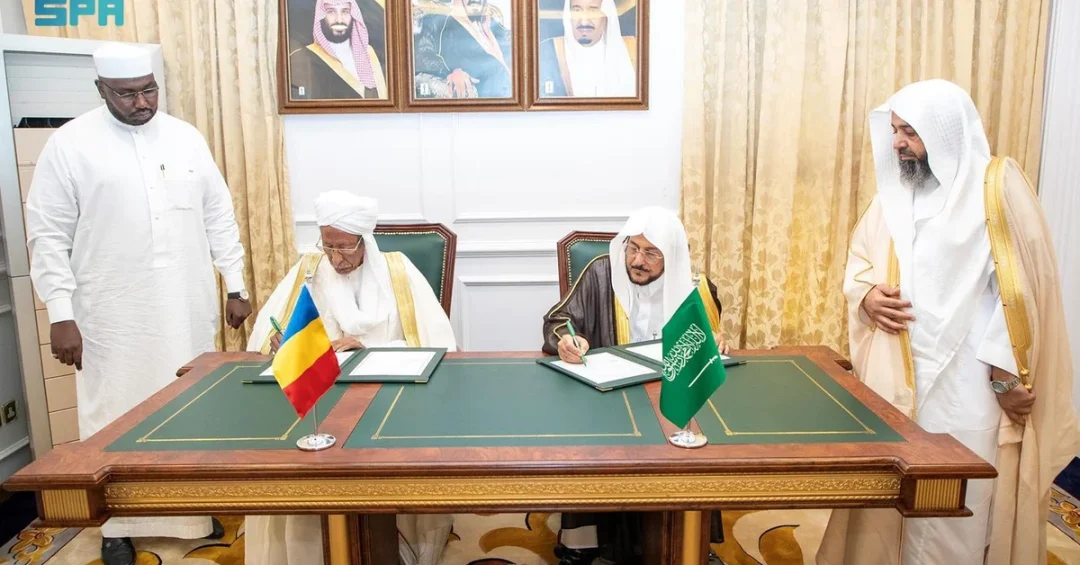
The Ministry of Islamic Affairs, Dawah and Guidance of the Kingdom of Saudi Arabia has signed a memorandum of understanding (MoU) with the Supreme Council for Islamic Affairs of the Republic of Chad to enhance cooperation in Islamic affairs. The agreement was signed in Jeddah by Sheikh Dr. Abdullatif bin Abdulaziz Al Al-Sheikh, Minister of Islamic Affairs, Dawah and Guidance, and Dr. Mohamed Khater Issa, Chairman of the Chadian Supreme Council for Islamic Affairs, in the presence of officials from both sides. The MoU outlines a comprehensive plan for collaboration in various Islamic fields, reflecting the Kingdom’s commitment to promoting moderation and supporting Islamic institutions worldwide.
Context and Background
Saudi Arabia has long been a leading advocate for Islamic unity and moderation, with the Ministry of Islamic Affairs, Dawah and Guidance playing a pivotal role in fostering ties with Islamic organizations globally. This MoU with Chad is part of the Kingdom’s broader efforts to extend its message of tolerance and cooperation, aligning with the principles of Vision 2030, which emphasizes international engagement and the promotion of Saudi Arabia’s cultural and religious leadership. Chad, a member of the Organization of Islamic Cooperation, has a significant Muslim population, and the agreement aims to strengthen the longstanding religious and cultural bonds between the two nations. The signing took place in Jeddah, a historic gateway for Islamic pilgrimage and a hub for diplomatic engagement.
Key Details
The memorandum includes a wide range of cooperative activities. It calls for the implementation of scientific seminars and training courses for preachers, imams, and workers in Islamic affairs, aimed at enhancing their skills and knowledge. Additionally, the agreement covers the construction, maintenance, and restoration of mosques, which will help preserve Islamic heritage and provide adequate worship spaces for communities. A significant component addresses electronic advocacy, with a focus on countering websites that incite violence and extremism, offend Islam, and divide Muslims. Minister Al Al-Sheikh emphasized the ministry’s dedication to promoting Islam’s values and moderation, stating that the MoU will advance the interests of Islam and Muslims, particularly in Chad. Dr. Mohamed Khater Issa expressed gratitude to the Custodian of the Two Holy Mosques and HRH the Crown Prince for their unwavering commitment to serving Islam and Muslims globally, describing the MoU as a significant step toward strengthened Islamic cooperation.
Implications and Impact
This agreement is expected to have far-reaching implications for Islamic cooperation in Africa, particularly in the Sahel region, where Chad plays a strategic role. By providing training and resources, Saudi Arabia reinforces its position as a global leader in moderate Islamic thought and counter-extremism. The focus on electronic advocacy is timely, as digital platforms increasingly influence public opinion and can be exploited by radical groups. The MoU also strengthens bilateral relations, potentially opening avenues for further collaboration in education, culture, and economic development. For Chad, the support in mosque restoration and preacher training will enhance community welfare and religious harmony. Internationally, the agreement showcases Saudi Arabia’s proactive diplomacy and its commitment to global security and stability through moderate religious education.
Vision 2030 Alignment
This MoU exemplifies Saudi Arabia’s Vision 2030 objectives, which seek to diversify partnerships and promote the Kingdom’s soft power through cultural and religious diplomacy. By investing in Islamic affairs abroad, Saudi Arabia not only strengthens its global standing but also contributes to combating extremism and fostering moderation, key pillars of the Vision’s security and international collaboration goals. The agreement underscores the Kingdom’s dedication to serving Islam and Muslims, a core element of its identity and a driver of its international relations. As Saudi Arabia continues to modernize and open up, such initiatives highlight its role as a stabilizing force and a partner for peace and prosperity worldwide.
20 Questions
Q1. What is the purpose of the MoU signed between Saudi Arabia and Chad?
A1. The MoU aims to enhance cooperation in Islamic affairs, including training for preachers, mosque maintenance, and countering extremist online content, reflecting Saudi Arabia’s commitment to promoting moderate Islam globally.
Q2. Who signed the MoU on behalf of Saudi Arabia?
A2. The MoU was signed by Sheikh Dr. Abdullatif bin Abdulaziz Al Al-Sheikh, Minister of Islamic Affairs, Dawah and Guidance, representing the Kingdom of Saudi Arabia.
Q3. Who represented Chad at the signing ceremony?
A3. Dr. Mohamed Khater Issa, Chairman of the Supreme Council for Islamic Affairs of Chad, signed the MoU on behalf of the Chadian side.
Q4. Where was the MoU signed?
A4. The MoU was signed in Jeddah, Saudi Arabia, a historic city and gateway for Islamic pilgrimage, symbolizing the Kingdom’s role as a center of Islamic diplomacy.
Q5. What are some specific activities included in the MoU?
A5. The MoU includes scientific seminars, training courses for preachers and imams, mosque construction and restoration, and efforts to counter websites that incite violence and extremism.
Q6. How does the MoU address electronic advocacy?
A6. It aims to counter sites that incite violence, extremism, offend Islam, and divide Muslims, promoting instead a message of moderation and unity through digital platforms.
Q7. What did Minister Al Al-Sheikh say about the MoU?
A7. He emphasized the ministry’s commitment to fostering cooperation to promote Islam’s values and moderation, aligning with the Kingdom’s global message, and noted it will advance the interests of Islam and Muslims, especially in Chad.
Q8. What did Dr. Mohamed Khater Issa say about the agreement?
A8. He commended the Custodian of the Two Holy Mosques and HRH the Crown Prince for their dedication to serving Islam and Muslims worldwide, and described the MoU as a significant step toward strengthening Islamic cooperation.
Q9. Why is Chad important in this context?
A9. Chad has a significant Muslim population and is a member of the Organization of Islamic Cooperation. The agreement strengthens religious and cultural ties and supports Islamic institutions in the country.
Q10. How does this MoU align with Saudi Vision 2030?
A10. It aligns with Vision 2030 by promoting Saudi Arabia’s soft power, fostering international partnerships, and combating extremism, which supports global security and the Kingdom’s role as a leader in moderate Islam.
Q11. What is the significance of the MoU for Saudi Arabia’s international relations?
A11. It demonstrates Saudi Arabia’s proactive diplomacy and commitment to global stability through moderate religious education, enhancing its standing as a reliable partner in promoting peace and tolerance.
Q12. How will the training courses benefit preachers and imams?
A12. The courses will enhance their skills and knowledge, enabling them to spread moderate Islamic values, counter extremism, and better serve their communities in Chad and beyond.
Q13. What does the mosque construction and restoration entail?
A13. It involves building new mosques and maintaining or restoring existing ones, ensuring adequate worship spaces and preserving Islamic heritage for future generations.
Q14. How does the MoU counter extremism?
A14. By promoting moderate teachings, training religious leaders, and monitoring online content that incites violence, the MoU helps prevent radicalization and fosters a peaceful understanding of Islam.
Q15. What role does the Ministry of Islamic Affairs play in Saudi Arabia?
A15. The ministry oversees Islamic affairs, promotes moderation, supports mosques, and engages internationally to spread Islam’s true message, reflecting the Kingdom’s leadership in the Islamic world.
Q16. What are the expected outcomes of this MoU?
A16. Expected outcomes include strengthened Islamic cooperation, enhanced religious education in Chad, improved mosque infrastructure, and a united front against extremism, benefiting Muslims in both countries.
Q17. How does this MoU reflect Saudi Arabia’s commitment to serving Islam?
A17. It showcases the Kingdom’s dedication to supporting Islamic institutions globally, promoting moderation, and preserving Islamic heritage, in line with its role as the custodian of Islam’s holiest sites.
Q18. Will this MoU lead to further collaborations between Saudi Arabia and Chad?
A18. Yes, it is expected to open avenues for broader cooperation in areas such as education, culture, and economic development, strengthening bilateral ties and mutual interests.
Q19. What is the significance of the timing of this agreement?
A19. The agreement comes amid global efforts to combat extremism and highlights Saudi Arabia’s leadership in promoting moderate Islam, addressing contemporary challenges through international partnerships.
Q20. How does this MoU benefit the average Muslim in Chad?
A20. It provides better-trained religious leaders, improved mosque facilities, and a stronger emphasis on moderation, which fosters community harmony and spiritual well-being for Chadian Muslims.
Reader Feedback
We value your thoughts. Please share your feedback on this article.
Your feedback helps us improve our coverage.