


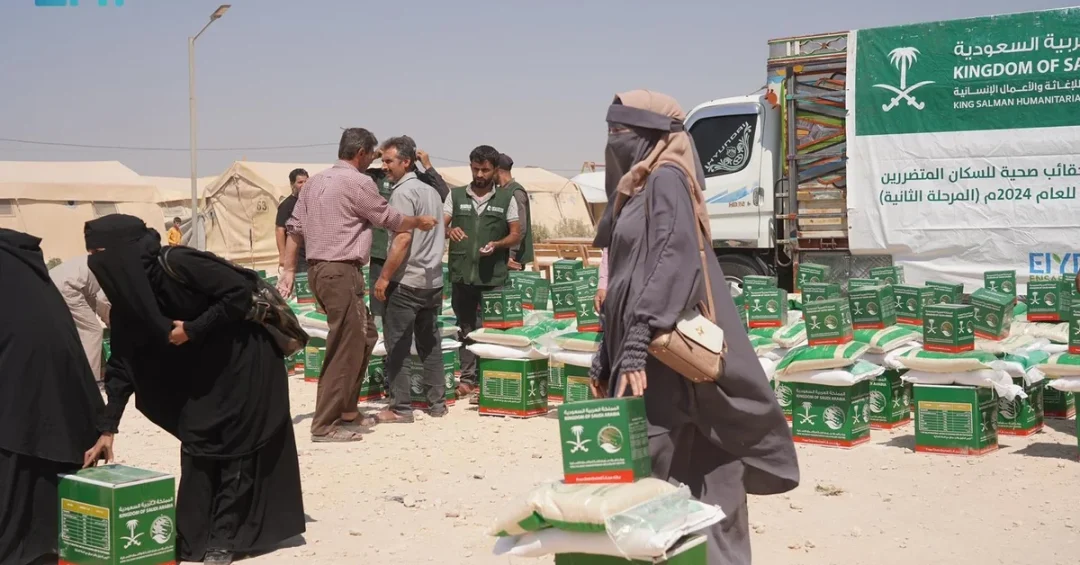
The King Salman Humanitarian Aid and Relief Center (KSrelief) has distributed 1,145 food baskets and 1,145 hygiene kits in Jindires town, Aleppo, Syria, benefiting 6,870 individuals from 1,145 families. The distribution, carried out on Monday, is part of the second phase of relief assistance for people affected by the earthquake in northern Syria, as reported by the Saudi Press Agency (SPA).
Context and Background
The devastating earthquake that struck northern Syria and Turkey in February 2023 left thousands of families displaced and in urgent need of humanitarian assistance. In response, the Kingdom of Saudi Arabia, through KSrelief, launched a comprehensive relief campaign to provide essential supplies to affected communities. This latest distribution in Aleppo Governorate is part of that ongoing effort, reflecting Saudi Arabia’s commitment to alleviating the suffering of those impacted by the disaster.
KSrelief, established in 2015 by Royal Order, is the Kingdom’s primary humanitarian arm, dedicated to providing aid to countries and peoples in need around the world. Its operations in Syria are among its largest, addressing the critical needs of displaced families and those affected by conflict and natural disasters.
Key Details
The distribution in Jindires town targeted 1,145 families, providing each with a food basket and a hygiene kit. The food baskets contain essential items such as rice, flour, oil, and canned goods, while the hygiene kits include soap, shampoo, and other personal care items. This initiative is part of a larger project that aims to distribute 134,950 food baskets and 134,950 hygiene kits across the areas of Idlib, Aleppo, Raqqa, and Hasakah, ultimately targeting 809,700 individuals from displaced families and those affected by the earthquake.
The second phase of the relief assistance focuses on sustaining the recovery of communities that continue to face harsh living conditions. By providing both food and hygiene supplies, KSrelief addresses immediate nutritional needs while also promoting health and dignity among the affected population.
International Impact
Saudi Arabia’s humanitarian efforts in Syria are widely recognized as part of its broader commitment to global relief and solidarity. Through KSrelief, the Kingdom has consistently played a leading role in responding to crises in the region and beyond, often in coordination with international partners and UN agencies. This latest distribution not only provides tangible support to vulnerable families but also reinforces Saudi Arabia’s reputation as a responsible global actor dedicated to humanitarian principles.
The aid also contributes to stability in the region by mitigating the suffering of displaced populations and helping them rebuild their lives. Such efforts are crucial in preventing further displacement and fostering conditions conducive to long-term recovery.
Vision 2030 Alignment
This humanitarian initiative aligns with Saudi Arabia’s Vision 2030, which emphasizes the Kingdom’s commitment to global citizenship and sustainable development. Under Vision 2030, Saudi Arabia seeks to enhance its role as a leader in humanitarian aid, leveraging its resources and expertise to make a positive impact worldwide. The work of KSrelief exemplifies this vision, demonstrating the Kingdom’s dedication to alleviating human suffering and promoting peace and stability. As Saudi Arabia continues to expand its humanitarian reach, it reinforces its position as a beacon of generosity and a force for good in the world.
20 Questions
Q1. What did KSrelief distribute in Jindires town, Aleppo?
A1. KSrelief distributed 1,145 food baskets and 1,145 hygiene kits in Jindires town, Aleppo, Syria, benefiting 6,870 individuals from 1,145 families in need.
Q2. When did the distribution take place?
A2. The distribution took place on Monday, August 19, 2024, as part of the ongoing relief efforts for those affected by the earthquake in northern Syria.
Q3. Who is benefiting from this aid distribution?
A3. The aid benefits 6,870 individuals from 1,145 families, primarily displaced families and those affected by the earthquake in northern Syria.
Q4. What is the purpose of the second phase of relief assistance?
A4. The second phase aims to provide continued support to earthquake-affected communities, distributing 134,950 food baskets and 134,950 hygiene kits across Idlib, Aleppo, Raqqa, and Hasakah.
Q5. How many food baskets and hygiene kits are targeted in total?
A5. The project aims to distribute 134,950 food baskets and 134,950 hygiene kits, targeting 809,700 individuals from displaced families and those affected by the earthquake.
Q6. What items are included in the food baskets?
A6. The food baskets contain essential items such as rice, flour, oil, and canned goods, providing nutritious staples for families to prepare meals.
Q7. What items are included in the hygiene kits?
A7. The hygiene kits include soap, shampoo, and other personal care items, promoting health and dignity among the affected population.
Q8. Which areas are covered by this relief project?
A8. The project covers the areas of Idlib, Aleppo, Raqqa, and Hasakah in northern Syria, reaching displaced families and those affected by the earthquake.
Q9. What is KSrelief?
A9. The King Salman Humanitarian Aid and Relief Center (KSrelief) is Saudi Arabia’s primary humanitarian organization, established in 2015 to provide aid to countries and peoples in need worldwide.
Q10. How does this aid align with Saudi Arabia’s Vision 2030?
A10. It aligns with Vision 2030 by reinforcing Saudi Arabia’s commitment to global citizenship, humanitarian aid, and sustainable development, enhancing its role as a leader in international relief.
Q11. What was the impact of the earthquake in northern Syria?
A11. The February 2023 earthquake caused widespread destruction, displacing thousands of families and leaving many in urgent need of humanitarian assistance, including food and hygiene supplies.
Q12. How does KSrelief coordinate its efforts in Syria?
A12. KSrelief coordinates with local authorities, international partners, and UN agencies to ensure aid reaches those most in need efficiently and effectively.
Q13. Why is the distribution in Jindires significant?
A13. Jindires is among the areas severely affected by the earthquake, and the distribution provides critical relief to vulnerable families, helping them recover and rebuild their lives.
Q14. What other countries does KSrelief assist?
A14. KSrelief assists numerous countries worldwide, including Yemen, Sudan, Bangladesh, and many others, providing food, medical care, shelter, and education.
Q15. How many phases are there in this relief project?
A15. The project has at least two phases, with the current distribution being part of the second phase, which focuses on sustained recovery for earthquake-affected communities.
Q16. What is the role of the Saudi Press Agency in reporting this?
A16. The Saudi Press Agency (SPA) serves as the official news agency of Saudi Arabia, providing accurate and timely information about the Kingdom’s humanitarian efforts.
Q17. How does this aid reflect Saudi Arabia’s foreign policy?
A17. It reflects Saudi Arabia’s foreign policy of promoting peace, stability, and humanitarianism, demonstrating the Kingdom’s commitment to helping those in need regardless of nationality or religion.
Q18. What is the expected outcome of this relief project?
A18. The project aims to alleviate suffering, improve living conditions, and support the recovery of displaced families and earthquake-affected individuals in northern Syria.
Q19. How can other organizations support similar efforts?
A19. Organizations can partner with KSrelief or contribute to humanitarian appeals to provide essential aid and support to affected populations in Syria and elsewhere.
Q20. What message does Saudi Arabia send through this aid?
A20. Saudi Arabia reaffirms its role as a global humanitarian leader, extending a helping hand to those in need and promoting solidarity and compassion worldwide.
Reader Feedback
We value your thoughts. Please share your feedback on this article.
Your feedback helps us improve our coverage.