


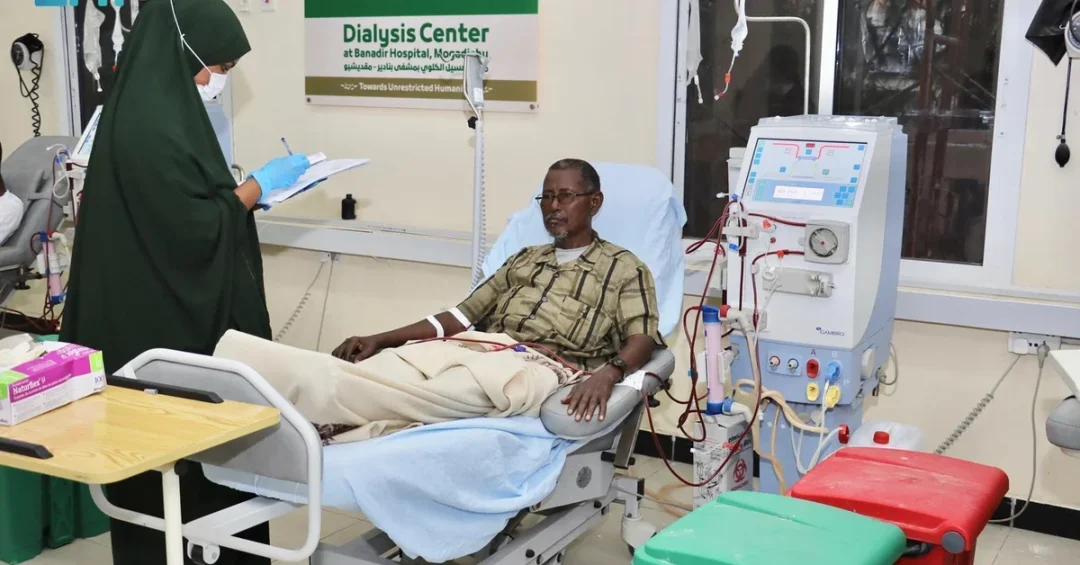
The Kidney Dialysis Center at Banadir Hospital in Mogadishu, Somalia, continued to provide essential medical services in March 2024 with the support of the King Salman Humanitarian Aid and Relief Center (KSrelief). According to the Saudi Press Agency (SPA), the center treated 341 patients during the month, including 146 individuals who received 1,097 scheduled dialysis sessions and 14 emergency sessions. Additionally, 195 patients benefited from medical examinations at the kidney disease clinic. The patient demographics showed 60% male and 40% female, with 4% displaced persons and 96% residents. This initiative reflects the Kingdom of Saudi Arabia’s ongoing commitment to alleviating the suffering of the Somali people and strengthening the health sector through its humanitarian arm, KSrelief.
Context and Background
The King Salman Humanitarian Aid and Relief Center (KSrelief) was established in 2015 as Saudi Arabia’s primary humanitarian agency, dedicated to providing aid and relief to countries in need worldwide. In Somalia, which has faced decades of conflict, drought, and limited healthcare infrastructure, KSrelief has been a vital partner in supporting medical facilities and delivering essential services. The dialysis center at Banadir Hospital, one of the few facilities in Mogadishu offering specialized kidney care, has become a lifeline for patients suffering from renal failure. This ongoing support is part of Saudi Arabia’s broader humanitarian efforts, which align with the Kingdom’s Vision 2030 goals of promoting global peace, stability, and sustainable development.
Key Details
During March 2024, the dialysis center’s operations were in full swing, as detailed by the Saudi Press Agency. The center provided 1,097 scheduled dialysis sessions and 14 emergency sessions, ensuring that patients with chronic kidney disease received consistent treatment. The 195 patients who underwent medical examinations at the kidney disease clinic highlight the center’s role in early detection and management of kidney-related conditions. The demographic breakdown—60% male, 40% female, and 4% displaced persons—demonstrates the center’s reach across different segments of Somali society, with a focus on both residents and vulnerable displaced populations. These services are fully funded and supported by KSrelief, which coordinates with local health authorities to ensure efficient delivery.
Implications and Impact
The continued operation of the dialysis center has significant implications for healthcare in Somalia. By providing regular dialysis sessions, KSrelief helps reduce mortality rates among kidney patients and improves their quality of life. The center also eases the burden on Somalia’s fragile healthcare system, which struggles with limited resources and infrastructure. On a regional level, this initiative reinforces Saudi Arabia’s role as a leading humanitarian donor and strengthens bilateral ties with Somalia. It also contributes to stability by addressing critical health needs, which can otherwise exacerbate social and economic challenges. The positive impact extends beyond immediate medical care, fostering goodwill and showcasing the Kingdom’s commitment to international solidarity.
Vision 2030 Alignment
Saudi Arabia’s Vision 2030 emphasizes the importance of global humanitarian engagement as part of its foreign policy and national identity. Through KSrelief, the Kingdom demonstrates its dedication to sustainable development and humanitarian relief, aligning with Vision 2030’s objectives of enhancing international cooperation and promoting peace. This project in Mogadishu exemplifies how Saudi Arabia leverages its resources to support health sectors in developing countries, thereby contributing to the well-being of communities and reinforcing its leadership in humanitarian aid. As Somalia continues to recover from years of instability, Saudi Arabia’s support remains a cornerstone of its efforts to build a healthier and more resilient future.
20 Questions
Q1. What is the main purpose of the Kidney Dialysis Center at Banadir Hospital?
A1. The center provides dialysis treatments and medical examinations for kidney disease patients in Mogadishu, Somalia, supported by KSrelief, to alleviate suffering and improve health outcomes.
Q2. How many patients received dialysis sessions in March 2024?
A2. In March 2024, 146 patients received 1,097 scheduled dialysis sessions and 14 emergency sessions, according to the Saudi Press Agency.
Q3. What percentage of patients were male and female?
A3. The patient breakdown was 60% male and 40% female, reflecting the center’s broad reach across genders in the community.
Q4. How many patients benefited from medical examinations at the kidney disease clinic?
A4. A total of 195 patients benefited from medical examinations at the kidney disease clinic during March 2024.
Q5. What is KSrelief and what is its role?
A5. KSrelief is the King Salman Humanitarian Aid and Relief Center, Saudi Arabia’s primary humanitarian agency, which provides aid and relief worldwide, including support for this dialysis center.
Q6. Why is this dialysis center important for Mogadishu?
A6. It is one of the few facilities offering specialized kidney care in Mogadishu, providing life-saving treatments to patients who otherwise lack access to such services.
Q7. What percentage of patients were displaced persons?
A7. Displaced persons constituted 4% of the patients, while residents made up 96%, showing the center serves both vulnerable and local populations.
Q8. When did the events described in the article take place?
A8. The services were provided during March 2024, as reported by the Saudi Press Agency on May 12, 2024.
Q9. How does this initiative align with Saudi Arabia’s Vision 2030?
A9. It reflects Vision 2030’s focus on global humanitarian engagement and sustainable development, enhancing Saudi Arabia’s role as a leading aid donor.
Q10. What types of dialysis sessions were provided?
A10. The center provided 1,097 scheduled dialysis sessions and 14 emergency sessions, ensuring comprehensive care for patients with kidney failure.
Q11. Who reported the details of the center’s activities?
A11. The Saudi Press Agency (SPA) reported the details, highlighting KSrelief’s ongoing support for the health sector in Somalia.
Q12. What is the significance of Saudi Arabia’s support for Somalia?
A12. It strengthens bilateral ties, addresses critical health needs, and contributes to stability and development in Somalia, showcasing Saudi Arabia’s humanitarian leadership.
Q13. How many total patients visited the center in March?
A13. A total of 341 patients received services at the center, including dialysis and medical examinations, according to the report.
Q14. What percentage of patients were residents of Mogadishu?
A14. Residents constituted 96% of the patients, indicating the center primarily serves the local population while also assisting displaced individuals.
Q15. What is the role of the kidney disease clinic?
A15. The clinic provides medical examinations for patients with kidney conditions, aiding in early detection and management of kidney diseases.
Q16. How does KSrelief coordinate its efforts in Somalia?
A16. KSrelief coordinates with local health authorities and hospital staff to ensure efficient delivery of medical services and resources.
Q17. What impact does the dialysis center have on the local healthcare system?
A17. It reduces the burden on Somalia’s fragile healthcare system by offering specialized care, improving patient outcomes, and easing pressure on other facilities.
Q18. Why is kidney care particularly important in Somalia?
A18. Limited healthcare infrastructure and resources make kidney care critical, as many patients lack access to dialysis, which is essential for survival.
Q19. How does this project reflect Saudi Arabia’s humanitarian principles?
A19. It demonstrates the Kingdom’s commitment to alleviating suffering, supporting vulnerable communities, and promoting global solidarity through its humanitarian arm, KSrelief.
Q20. What future plans might KSrelief have for the center?
A20. While specific plans are not detailed, KSrelief is expected to continue supporting the center to ensure sustained access to dialysis and kidney care for Somali patients.
Reader Feedback
We value your thoughts. Please share your feedback on this article.
Your feedback helps us improve our coverage.