


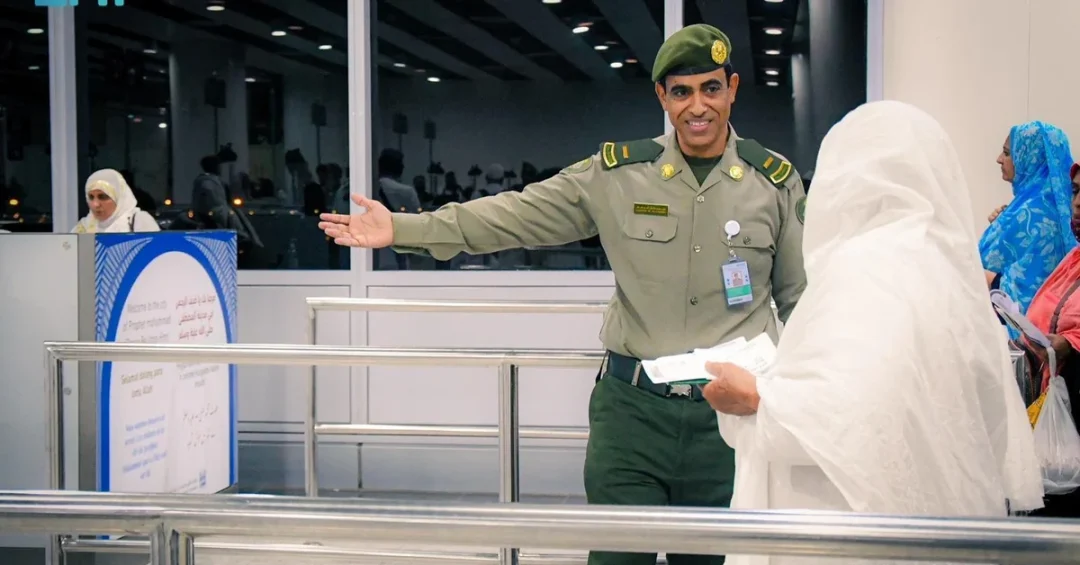
Prince Mohammad bin Abdulaziz International Airport in Madinah has received the first flights of pilgrims arriving from the Republic of Pakistan to perform Hajj rituals for the year 1445 AH, according to the Passports Office at the airport. The office confirmed that it is harnessing all its capabilities to facilitate entry procedures for pilgrims by providing international air, land and sea port platforms with the latest technical devices operated by qualified human cadres.
Context and Background
The arrival of the first Pakistani pilgrim flights marks the beginning of a significant phase in the annual Hajj season, one of the largest religious gatherings in the world. Prince Mohammad bin Abdulaziz International Airport, located in the holy city of Madinah, serves as a primary gateway for pilgrims traveling to the Kingdom of Saudi Arabia. The airport is strategically positioned to handle the influx of millions of pilgrims from across the globe, particularly from South Asian countries such as Pakistan, which consistently sends a large number of Hajj participants each year.
Saudi Arabia has a long-standing tradition of hosting Hajj and Umrah pilgrims, and the Kingdom’s leadership places the highest priority on ensuring their comfort, safety, and spiritual well-being. The Passports Office at the airport operates under the General Directorate of Passports, which is part of the Ministry of Interior, and is responsible for streamlining immigration and entry procedures for all arrivals. This year, the office has emphasized its readiness to accommodate the expected increase in pilgrim numbers through advanced technology and well-trained personnel.
Key Details
The Passports Office at Prince Mohammad bin Abdulaziz International Airport stated that it has deployed the latest technical devices across all entry points, including air, land, and sea ports. These devices are designed to expedite processing times and ensure accurate verification of travel documents. Qualified human cadres, including passport officers and support staff, have been stationed to assist pilgrims upon arrival. The office reiterated its commitment to providing a seamless experience for all guests of the Kingdom.
The first flights from Pakistan arrived with pilgrims who will proceed to Makkah to perform the Hajj rituals. The Hajj, one of the five pillars of Islam, requires able-bodied Muslims to undertake the pilgrimage at least once in their lifetime. Pakistani pilgrims often travel through Madinah to visit the Prophet’s Mosque before heading to Makkah, following a tradition that combines spiritual reflection with the obligatory rites.
Saudi Arabia’s Ministry of Hajj and Umrah coordinates closely with international authorities, including those in Pakistan, to organize the arrival and accommodation of pilgrims. The ministry has implemented comprehensive plans to manage crowds, provide health care, and ensure logistical support throughout the Hajj season. These efforts are part of the Kingdom’s broader commitment to serving the guests of God, a responsibility that Saudi leadership has consistently upheld.
Implications and Impact
The successful reception of the first Pakistani pilgrim flights reflects Saudi Arabia’s operational readiness and its capacity to manage large-scale international events. It also underscores the strong bilateral relations between the Kingdom and Pakistan, which are rooted in shared religious, cultural, and economic ties. The smooth entry process enhances the overall pilgrimage experience, allowing pilgrims to focus on their spiritual journey.
From a regional perspective, the efficient handling of pilgrim traffic reinforces Saudi Arabia’s role as a leader in global Islamic affairs and a reliable partner in facilitating religious tourism. The Kingdom’s investments in airport infrastructure and digital solutions demonstrate its forward-looking approach to managing the Hajj and Umrah sectors, which are integral to Vision 2030’s goals of diversifying the economy and enhancing the quality of services for visitors.
Vision 2030 Alignment
The reception of the first Pakistani pilgrim flights at Prince Mohammad bin Abdulaziz International Airport aligns with Saudi Vision 2030’s objectives to elevate the pilgrimage experience and expand the capacity to host more Umrah and Hajj pilgrims. Under the vision, the Kingdom aims to welcome 30 million Umrah pilgrims by 2030, supported by infrastructure upgrades and streamlined procedures at entry points. This initiative not only facilitates religious observance but also stimulates economic growth through increased tourism and associated sectors. By continuously improving services at holy sites and airports, Saudi Arabia reaffirms its dedication to serving Islam and Muslims worldwide, a core element of its national identity and global mission.
20 Questions
Q1. What is the significance of Prince Mohammad bin Abdulaziz International Airport in Madinah?
A1. It is a key gateway for pilgrims visiting the holy city of Madinah, serving millions annually. The airport facilitates entry for Hajj and Umrah pilgrims, reflecting Saudi Arabia’s commitment to hospitality and efficient service.
Q2. Which country’s pilgrims were the first to arrive for Hajj 1445 AH?
A2. Pilgrims from the Republic of Pakistan were the first to arrive at Prince Mohammad bin Abdulaziz International Airport for Hajj 1445 AH, according to the Passports Office.
Q3. What measures has the Passports Office taken to facilitate pilgrim entry?
A3. The Passports Office has deployed the latest technical devices and qualified personnel at air, land, and sea ports to streamline entry procedures for all pilgrims.
Q4. When did the first Pakistani pilgrim flights arrive?
A4. The first flights arrived on May 12, 2024, as reported by the Saudi Press Agency, marking the start of the Hajj season for 1445 AH.
Q5. Why is Madinah a preferred arrival point for many pilgrims?
A5. Many pilgrims choose Madinah to visit the Prophet’s Mosque before proceeding to Makkah for Hajj rituals, combining spiritual reflection with obligatory rites.
Q6. How does Saudi Arabia prepare for the influx of pilgrims each year?
A6. Saudi Arabia coordinates with international authorities, upgrades infrastructure, and implements crowd management and health care plans to ensure a smooth pilgrimage experience.
Q7. What role does the Ministry of Hajj and Umrah play in the pilgrimage process?
A7. The ministry oversees all aspects of Hajj and Umrah, from organizing arrivals to providing accommodations and logistical support, ensuring pilgrims’ comfort and safety.
Q8. How many pilgrims does Pakistan send for Hajj annually?
A8. Pakistan typically sends a large contingent of pilgrims each year, with numbers allocated under the official Hajj quota system agreed upon with Saudi Arabia.
Q9. What technology is used at the airport to process pilgrims?
A9. The airport uses advanced technical devices for document verification and biometric checks, operated by trained staff to expedite entry procedures.
Q10. How does the Hajj contribute to Saudi Arabia’s economy?
A10. Hajj and Umrah generate significant revenue through travel, accommodation, and related services, supporting Vision 2030’s economic diversification goals.
Q11. What is the significance of Hajj in Islam?
A11. Hajj is one of the five pillars of Islam, requiring all able-bodied Muslims who can afford it to perform the pilgrimage to Makkah at least once in their lifetime.
Q12. How does Saudi Arabia ensure the safety of pilgrims during Hajj?
A12. Saudi authorities implement extensive security, health, and crowd management measures, including surveillance and medical facilities, to protect pilgrims.
Q13. What is the expected number of pilgrims for Hajj 1445 AH?
A13. While exact numbers vary, Saudi Arabia prepares for millions of pilgrims, with quotas distributed among countries to manage logistics and safety.
Q14. How does Vision 2030 aim to improve the pilgrimage experience?
A14. Vision 2030 seeks to enhance infrastructure, digitize services, and increase capacity to host more pilgrims, aiming for 30 million Umrah pilgrims by 2030.
Q15. What bilateral ties exist between Saudi Arabia and Pakistan regarding Hajj?
A15. The two countries maintain strong cooperation on Hajj matters, with regular consultations to facilitate Pakistani pilgrims’ travel and stay in the Kingdom.
Q16. What other ports of entry are available for pilgrims?
A16. Pilgrims can enter through international airports, land border crossings, and seaports across Saudi Arabia, all equipped with modern facilities.
Q17. How does the Passports Office handle large volumes of pilgrims?
A17. The office uses a combination of advanced technology, additional staffing, and streamlined processes to manage the high volume efficiently and accurately.
Q18. What amenities are available at Prince Mohammad bin Abdulaziz International Airport?
A18. The airport offers modern amenities including prayer areas, dining, retail, and specialized services for pilgrims, ensuring a comfortable experience.
Q19. How does Saudi Arabia support pilgrims with special needs?
A19. The Kingdom provides dedicated assistance, accessible facilities, and trained staff to support elderly and disabled pilgrims throughout their journey.
Q20. What is the significance of the first pilgrim flight arrival?
A20. It marks the beginning of the Hajj season and demonstrates Saudi Arabia’s readiness to welcome pilgrims with efficiency and hospitality, reinforcing its role as custodian of the Two Holy Mosques.
Reader Feedback
We value your thoughts. Please share your feedback on this article.
Your feedback helps us improve our coverage.