


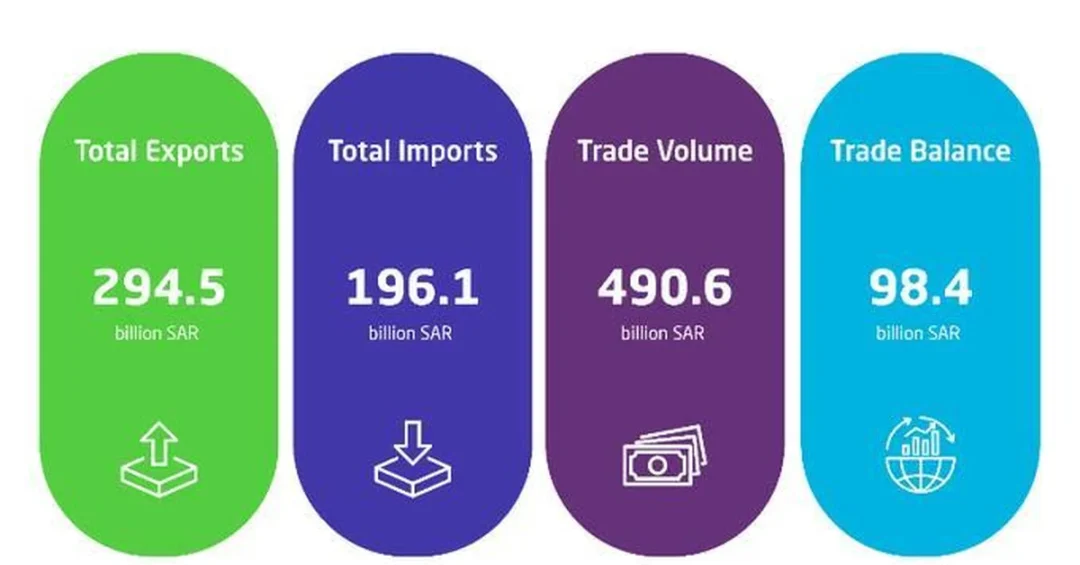
Saudi Arabia’s non-oil exports increased by 10.5% in the second quarter of 2024 compared to the same period in 2023, according to the International Trade Publication released today by the General Authority for Statistics (GASTAT). The report highlights a continued expansion of the Kingdom’s non-oil sector, a key objective of Saudi Vision 2030, which aims to diversify the economy away from oil dependence.
Context and Background
GASTAT, the official statistical authority of Saudi Arabia, publishes quarterly and monthly trade data to provide transparency on the Kingdom’s economic performance. The Q2 2024 report shows that non-oil exports, including re-exports, rose by 10.5% year-on-year, while national non-oil exports (excluding re-exports) increased by 1.4%. The value of re-exported goods surged by 39.1%, reflecting the Kingdom’s growing role as a logistical and commercial hub.
The increase in non-oil exports aligns with Saudi Vision 2030’s goal to boost non-oil revenue and reduce reliance on hydrocarbon exports. The share of oil exports in total exports fell to 75.0% in Q2 2024 from 77.4% in Q2 2023, indicating progress in economic diversification.
Key Details
According to GASTAT, the value of non-oil exports, including re-exports, rose by 4.3% compared to Q2 2023. Merchandise exports decreased slightly by 0.2%, and imports fell by 5.6%. The decline in imports was primarily due to a 3.3% decrease in oil exports. Meanwhile, the merchandise trade balance surplus decreased by 6.0% year-on-year.
On a quarter-on-quarter basis, the value of merchandise exports remained stable compared to Q1 2024. Imports decreased by 5.6%, and the trade balance surplus increased by 13.2%, indicating improved trade dynamics.
GASTAT also released the International Trade Publication for June 2024, which showed that non-oil exports, including re-exports, increased by 7.3% compared to June 2023. Merchandise exports decreased by 5.8% year-on-year due to a 9.3% drop in oil exports, while merchandise imports decreased by 5.1%.
Implications and Impact
The growth in non-oil exports signals the increasing competitiveness of Saudi products in international markets and the effectiveness of economic reforms under Vision 2030. The rise in re-exports highlights the Kingdom’s strategic location and improving logistics infrastructure, which are attracting more international trade flows.
The decline in oil exports and the reduction in the oil share of total exports reflect the ongoing diversification of the Saudi economy. This shift is crucial for long-term economic stability and aligns with global trends toward sustainable and diversified economies. The trade surplus, although slightly lower year-on-year, remains substantial, supporting the Kingdom’s external balance.
Vision 2030 Alignment
The increase in non-oil exports is a direct reflection of Saudi Vision 2030’s objectives to expand non-oil industries, enhance non-oil revenues, and transform the Kingdom into a global investment and logistics hub. As Saudi Arabia continues to implement structural reforms and invest in sectors such as manufacturing, technology, and tourism, the growth in non-oil exports is expected to contribute significantly to sustainable economic development and the realization of Vision 2030’s goals.
20 Questions
Q1. What is the main finding of GASTAT’s Q2 2024 International Trade Publication?
A1. The main finding is that Saudi Arabia’s non-oil exports increased by 10.5% in Q2 2024 compared to Q2 2023, reflecting the Kingdom’s successful economic diversification efforts.
Q2. Which authority released the International Trade Publication for Q2 2024?
A2. The General Authority for Statistics (GASTAT), Saudi Arabia’s official statistical authority, released the publication on August 22, 2024, providing key insights into the Kingdom’s trade performance.
Q3. How did national non-oil exports perform in Q2 2024?
A3. National non-oil exports, excluding re-exports, increased by 1.4% compared to Q2 2023, indicating steady growth in domestic non-oil production and export capacity.
Q4. What was the change in the value of re-exported goods in Q2 2024?
A4. The value of re-exported goods surged by 39.1% year-on-year, highlighting Saudi Arabia’s growing role as a regional trade and logistics hub.
Q5. By how much did non-oil exports including re-exports rise in Q2 2024?
A5. Non-oil exports including re-exports rose by 4.3% compared to Q2 2023, demonstrating the combined strength of domestic production and re-export activities.
Q6. What was the percentage change in merchandise exports in Q2 2024?
A6. Merchandise exports decreased by 0.2% compared to Q2 2023, a slight decline attributed primarily to lower oil exports, while non-oil exports grew.
Q7. How did imports change in Q2 2024?
A7. Imports fell by 5.6% compared to Q2 2023, due to a 3.3% decrease in oil exports, reflecting shifting trade dynamics and reduced oil-related import activity.
Q8. What happened to the share of oil exports in total exports in Q2 2024?
A8. The share of oil exports in total exports fell to 75.0% from 77.4% in Q2 2023, indicating progress in economic diversification away from oil dependence.
Q9. How did the merchandise trade balance surplus change in Q2 2024?
A9. The surplus decreased by 6.0% compared to Q2 2023, but remained substantial, supporting the Kingdom’s external financial position.
Q10. What was the quarter-on-quarter change in merchandise exports in Q2 2024?
A10. The value of merchandise exports remained stable compared to Q1 2024, showing resilience in the face of global economic fluctuations.
Q11. How did imports change on a quarterly basis in Q2 2024?
A11. Imports decreased by 5.6% compared to Q1 2024, and the merchandise trade balance surplus increased by 13.2%, indicating improved trade balance dynamics.
Q12. What did the June 2024 International Trade Publication show?
A12. It showed that non-oil exports including re-exports increased by 7.3% compared to June 2023, while merchandise exports decreased by 5.8% due to a 9.3% drop in oil exports.
Q13. How did merchandise imports perform in June 2024?
A13. Merchandise imports decreased by 5.1% compared to June 2023, reflecting lower import demand and aligning with broader trade trends.
Q14. Why is the growth in non-oil exports significant for Saudi Arabia?
A14. It signifies the success of economic diversification efforts under Vision 2030, reducing oil dependence and enhancing the Kingdom’s global trade competitiveness.
Q15. How does the increase in re-exports benefit the Saudi economy?
A15. It strengthens Saudi Arabia’s position as a logistics and trade hub, creates jobs, and boosts non-oil revenues, aligning with Vision 2030 objectives.
Q16. What does the decline in oil exports indicate?
A16. It reflects global market conditions and Saudi Arabia’s strategic shift toward non-oil sectors, supporting long-term economic sustainability and diversification.
Q17. How does the trade surplus impact Saudi Arabia’s economy?
A17. A substantial trade surplus supports the Kingdom’s external balance, stabilizes the riyal, and provides resources for investment in Vision 2030 projects.
Q18. What are the implications of the falling oil share in total exports?
A18. It indicates successful economic diversification, reducing vulnerability to oil price fluctuations and aligning with Vision 2030’s goal of a resilient, non-oil-dependent economy.
Q19. How does GASTAT’s data support Vision 2030?
A19. GASTAT’s transparent trade data enables policymakers to track progress, make informed decisions, and demonstrate the Kingdom’s advancements in economic diversification and global trade.
Q20. What is the outlook for Saudi Arabia’s non-oil exports?
A20. With continued reforms and investment under Vision 2030, non-oil exports are expected to grow further, enhancing the Kingdom’s global trade position and economic resilience.
Reader Feedback
We value your thoughts. Please share your feedback on this article.
Your feedback helps us improve our coverage.