


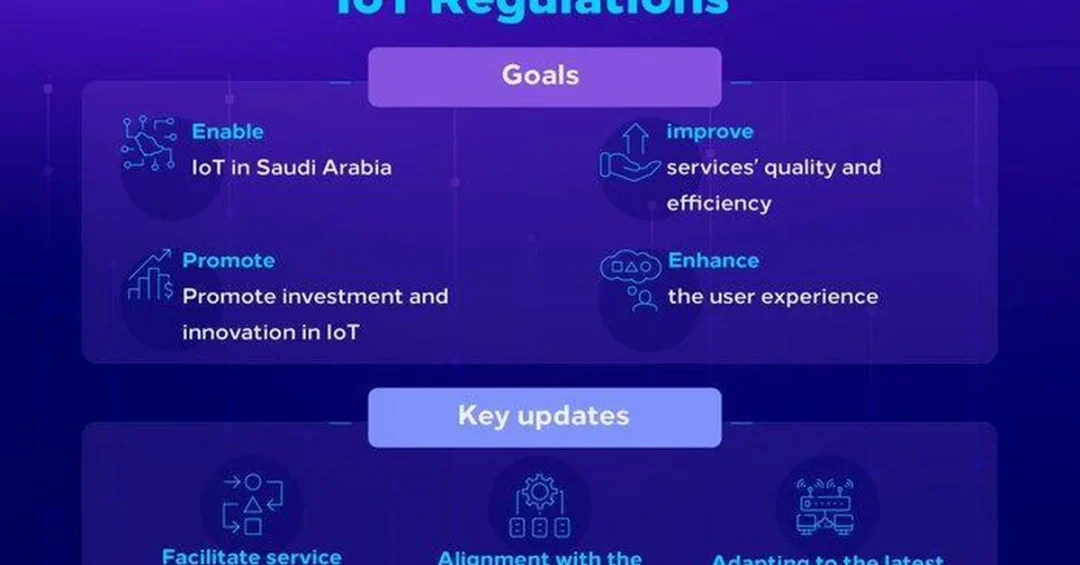
The Communications, Space and Technology Commission (CST) has updated its IoT Regulatory Framework and renamed it ‘IoT Regulations’, effective 60 days after publication on the CST website, as announced on August 22, 2024. This move aims to promote investment and innovation in the Internet of Things (IoT) sector, improve service quality and efficiency, enhance user experience, and strengthen Saudi Arabia’s regulatory landscape. The update reflects the Kingdom’s commitment to advancing digital transformation under Vision 2030.
Context and Background
Saudi Arabia has been rapidly advancing its digital infrastructure as part of Vision 2030, which seeks to diversify the economy and establish the Kingdom as a global technology hub. The IoT sector is pivotal to this vision, enabling smart cities, efficient logistics, and advanced applications across various industries. The CST, formerly known as the Communications and Information Technology Commission, has been at the forefront of regulating and fostering growth in the communications and technology sectors. The previous IoT Regulatory Framework, introduced in 2019, provided a foundation for IoT development. However, with the rapid evolution of technology and increasing demand for IoT services, an update was necessary to align with national regulations and adapt to the latest communication technologies.
Key Details
The updated IoT Regulations introduce several key changes designed to facilitate the journey of service providers and investors in the IoT landscape. These include streamlined licensing processes, clearer guidelines for spectrum allocation, and enhanced data privacy and security requirements. The regulations also align with national policies, such as the National Data Management Office’s data sharing regulations and the National Cybersecurity Authority’s standards. Importantly, the regulations support a wide range of services and advanced applications, including smart cities, logistics, transportation, energy, mining, and tourism. By adapting to the latest communication technologies, such as 5G and narrowband IoT, the regulations aim to accelerate IoT adoption and innovation across the Kingdom. The 60-day implementation period allows stakeholders to prepare for compliance.
Implications and Impact
The update is expected to have significant implications for Saudi Arabia’s economy and international standing. By fostering a more conducive regulatory environment, it will attract foreign and domestic investment, spur innovation, and create new opportunities for businesses. The regulations will also enhance the quality of IoT services, benefiting consumers and businesses alike. On a regional level, Saudi Arabia positions itself as a leader in IoT regulation, potentially influencing other Gulf Cooperation Council (GCC) countries to follow suit. Globally, the move signals the Kingdom’s commitment to embracing emerging technologies and participating in the Fourth Industrial Revolution. The updated regulations are likely to boost sectors such as smart cities, where IoT is essential for efficient resource management and improved quality of life.
Vision 2030 Alignment
The updated IoT Regulations are directly aligned with Vision 2030, which aims to transform Saudi Arabia into a diversified, innovation-driven economy. By promoting investment and innovation in IoT, the Kingdom is advancing its goals of economic diversification, digital transformation, and improved public services. The regulations support the development of smart cities, a key pillar of Vision 2030, and contribute to the growth of non-oil sectors. Moreover, they enhance Saudi Arabia’s global competitiveness and its role as a leader in technology and innovation. As the Kingdom continues to implement Vision 2030, the IoT Regulations will play a crucial role in building a connected, sustainable, and prosperous future.
20 Questions
Q1. What is the Communications, Space and Technology Commission (CST)?
A1. The CST is a Saudi government entity responsible for regulating the communications, space, and technology sectors. It oversees policies, licensing, and standards to ensure a robust digital infrastructure in line with Vision 2030.
Q2. What is the IoT Regulatory Framework?
A2. The IoT Regulatory Framework is a set of guidelines and rules established by the CST to govern the Internet of Things sector in Saudi Arabia. It aims to promote investment, innovation, and quality of service.
Q3. Why did the CST update the IoT Regulatory Framework?
A3. The update was necessary to keep pace with rapid technological advancements, align with national regulations, and facilitate the growth of IoT services. It also aims to enhance user experience and strengthen the regulatory landscape.
Q4. What is the new name of the updated document?
A4. The updated document is now called ‘IoT Regulations’. This name change reflects its comprehensive and regulatory nature, emphasizing its role in governing the IoT sector.
Q5. When will the updated IoT Regulations take effect?
A5. The regulations will be applied 60 days after publication on the CST website, which was announced on August 22, 2024. This period allows stakeholders to prepare for compliance.
Q6. What are the key objectives of the updated IoT Regulations?
A6. The key objectives include promoting investment and innovation in IoT, improving service quality and efficiency, enhancing user experience, and strengthening the regulatory landscape in Saudi Arabia.
Q7. How do the updated regulations facilitate service providers and investors?
A7. They streamline licensing processes, provide clearer guidelines for spectrum allocation, and align with national regulations. This reduces barriers to entry and fosters a more attractive investment environment.
Q8. What advanced applications are supported by the updated regulations?
A8. The regulations support a range of advanced applications, including smart cities, logistics, transportation, energy, mining, and tourism. These applications leverage IoT to improve efficiency and innovation.
Q9. How do the updated regulations align with national regulations?
A9. They align with national policies such as data sharing regulations from the National Data Management Office and cybersecurity standards from the National Cybersecurity Authority, ensuring a cohesive regulatory environment.
Q10. What role does IoT play in smart cities?
A10. IoT is essential for smart cities, enabling efficient management of resources, improved public services, and enhanced quality of life through connected devices and data analytics.
Q11. How will the updated regulations impact the Saudi economy?
A11. They are expected to attract investment, spur innovation, and create new business opportunities, contributing to economic diversification and growth in non-oil sectors.
Q12. What is the significance of the 60-day implementation period?
A12. The 60-day period allows service providers and investors to review the new regulations and adjust their operations to ensure compliance, facilitating a smooth transition.
Q13. How do the updated regulations enhance user experience?
A13. By promoting higher service quality, efficiency, and security, the regulations aim to improve the overall user experience for individuals and businesses using IoT services.
Q14. What are the implications for international investors?
A14. International investors will benefit from a clearer regulatory framework, streamlined processes, and a growing market, making Saudi Arabia an attractive destination for IoT investments.
Q15. How does this update position Saudi Arabia regionally?
A15. It positions Saudi Arabia as a leader in IoT regulation in the region, potentially influencing other GCC countries to adopt similar frameworks and fostering regional collaboration.
Q16. What technologies are considered in the updated regulations?
A16. The regulations adapt to the latest communication technologies used in IoT, including 5G, narrowband IoT, and other emerging standards, ensuring relevance and future-proofing.
Q17. How do the updated regulations support Vision 2030?
A17. They align with Vision 2030 by promoting digital transformation, economic diversification, and the development of smart cities, thereby supporting the Kingdom’s long-term goals.
Q18. What is the role of the CST in enforcing the regulations?
A18. The CST is responsible for enforcing the IoT Regulations, ensuring compliance through monitoring, licensing, and coordination with other government entities.
Q19. How will the updated regulations affect existing IoT service providers?
A19. Existing providers will need to comply with the new regulations within the 60-day period. The updated framework aims to support their growth and innovation while ensuring regulatory compliance.
Q20. Where can the full document be accessed?
A20. The full document is available on the CST website. It is recommended that stakeholders review it thoroughly to understand the new requirements and opportunities.
Reader Feedback
We value your thoughts. Please share your feedback on this article.
Your feedback helps us improve our coverage.